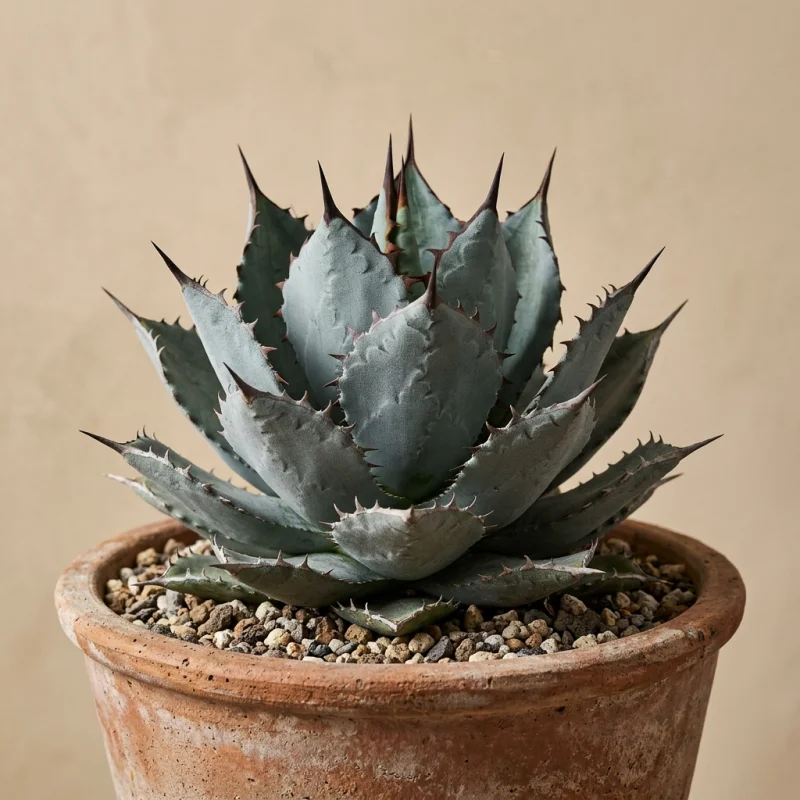
Spineless yucca
Yucca giganteaUpdated
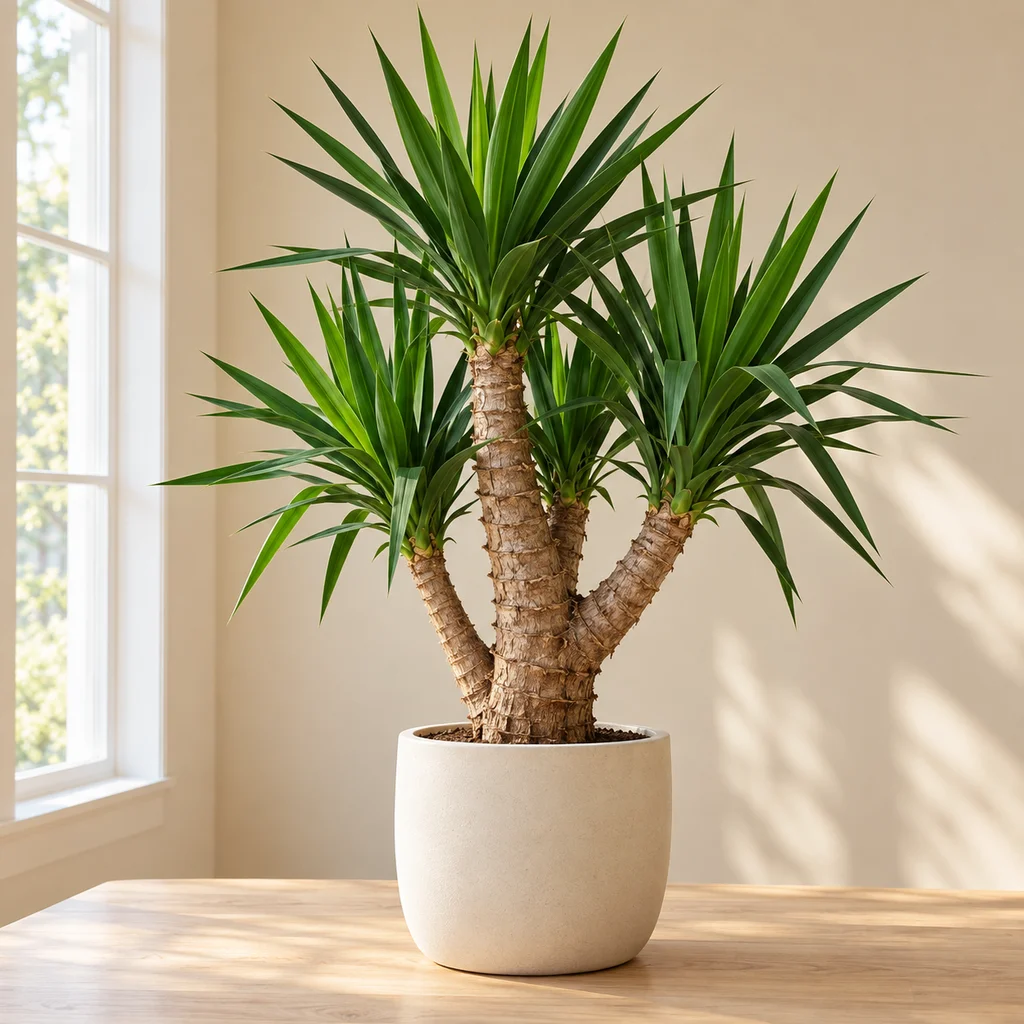
Architectural indoor tree with stout woody canes and sword-like leaves. Demands maximum daylight, infrequent watering, and dry winter dormancy.
Essential care to help it thrive
Light and placement
Choose a very bright place and acclimatise gradually to direct sun.
Climate and season
Protect a potted plant from frost and secure the tall, heavy container.
Soil and repotting
Gritty, fast-draining mix. Plant in heavy terracotta pots to prevent top-heavy toppling.
Conditions vary with pot, season and location. Always check the mix and your plant's response.
Spineless yucca: when to check the soil
Let part of the mix dry before watering; do not leave the trunk in waterlogged soil.
Let Grovia remind you when to check your Spineless yuccaSave the plant, get watering reminders and adjust the rhythm as the seasons change. Free on iPhone and Android.
See table by pot size
| Ø | Summer | Winter |
|---|---|---|
| 10 cm | 5–7 days | 10–13 days |
| 15 cm | 6–8 days | 12–17 days |
| 25 cm | 8–11 days | 16–22 days |
How to identify it
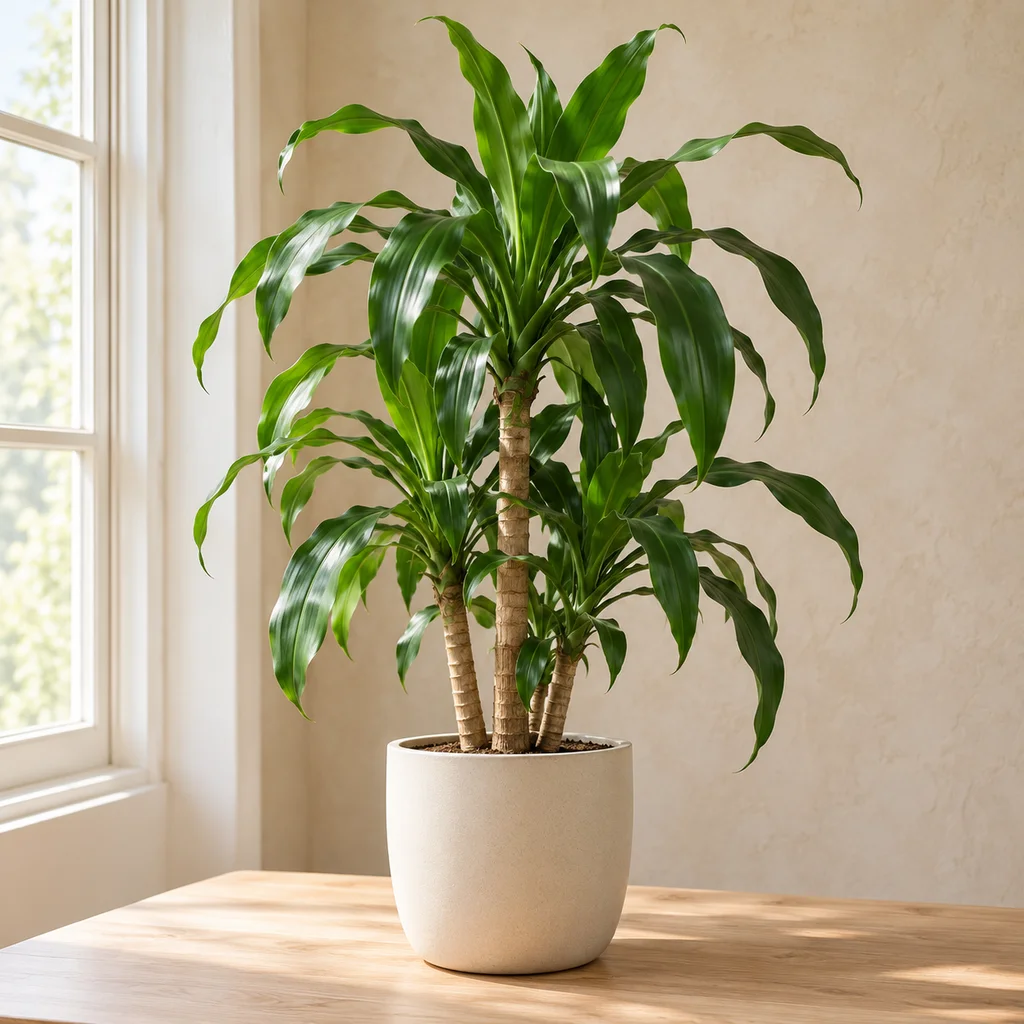
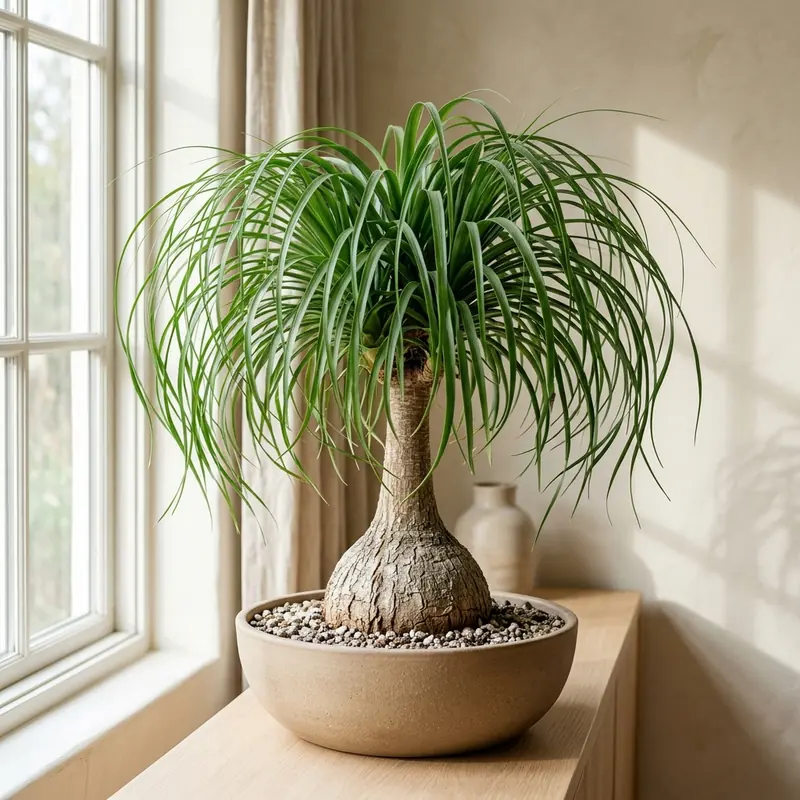
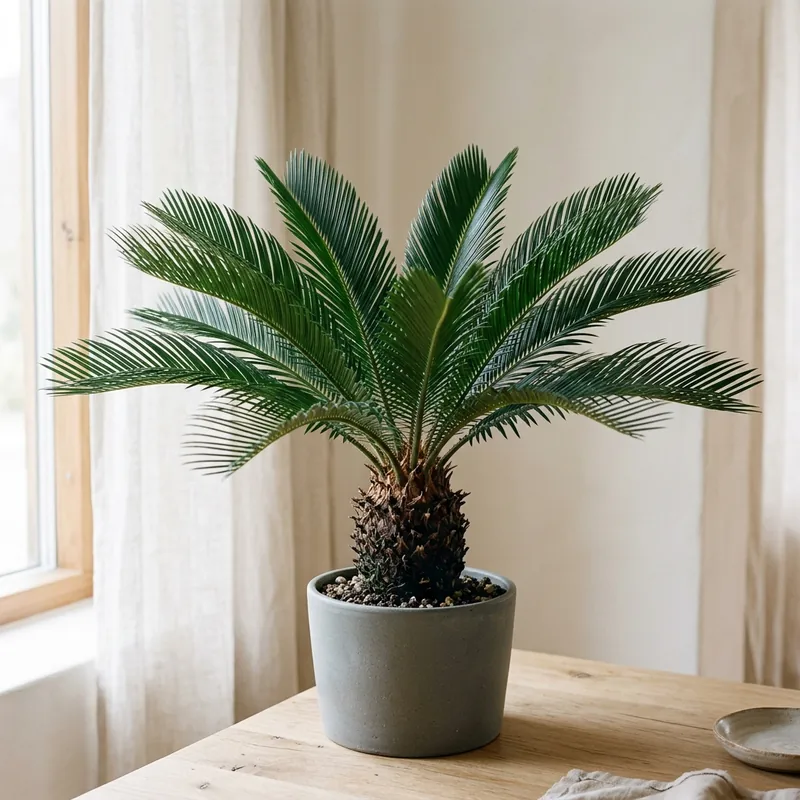
A woody cane bears rosettes of long, firm leaves. Yucca elephantipes is a commercial synonym used in the RHS profile.
Botanical sheet
- Family
- Asparagaceae
- Origin
- Mexico · Central America
- Size
- 1.5–3 m upright cane
- Climate
- 15–28 °C · min. 5 °C
What's wrong with your plant?
Pet safety Toxic to pets
ASPCA lists this species as toxic to cats and dogs. Keep pets from chewing it; contact a veterinarian if ingestion is suspected.
Toxic principles and clinical signs quoted from the ASPCA database.
See the ASPCA entryCommon questions
Is it a dracaena?
No. Its shape can resemble a dracaena, but it belongs to Yucca.
How do you shorten a yucca that is too tall?
Saw the woody cane cleanly at your chosen height in spring; the stump flushes new rosettes and the top can be rerooted.
How often should it be watered in winter?
Only once every 4 to 6 weeks in cool indoor spots; allow the entire pot to dry thoroughly to prevent root rot.