Elephant's foot
Dioscorea elephantipesUpdated
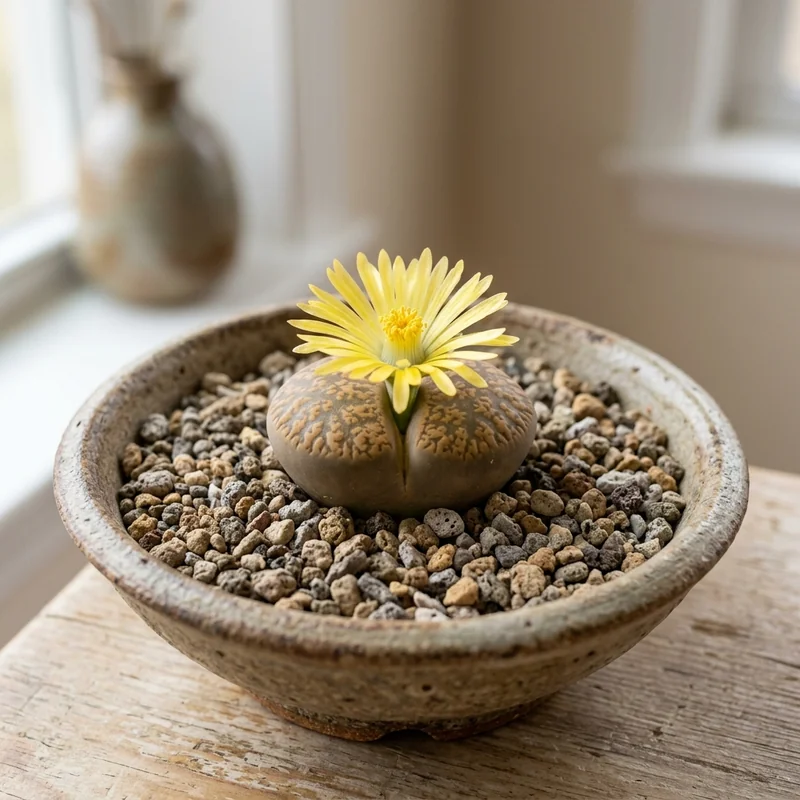
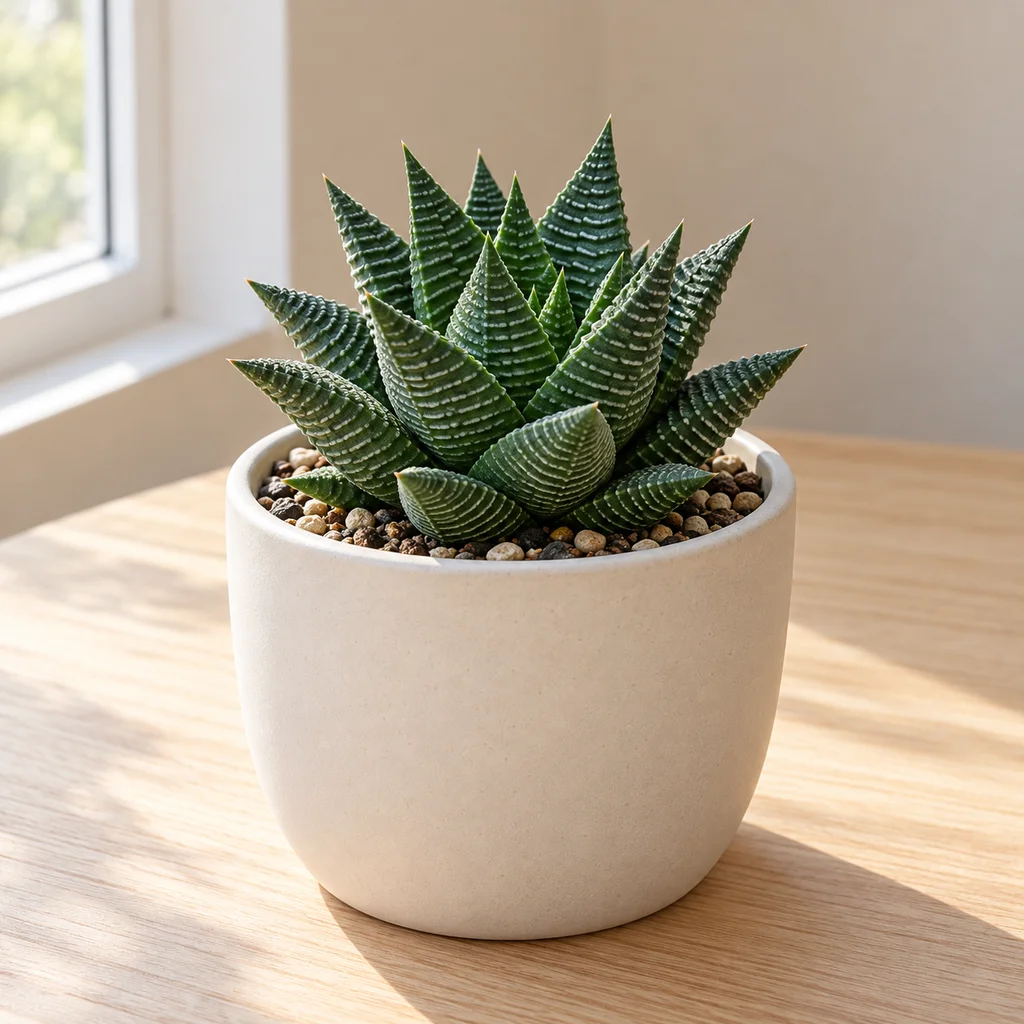
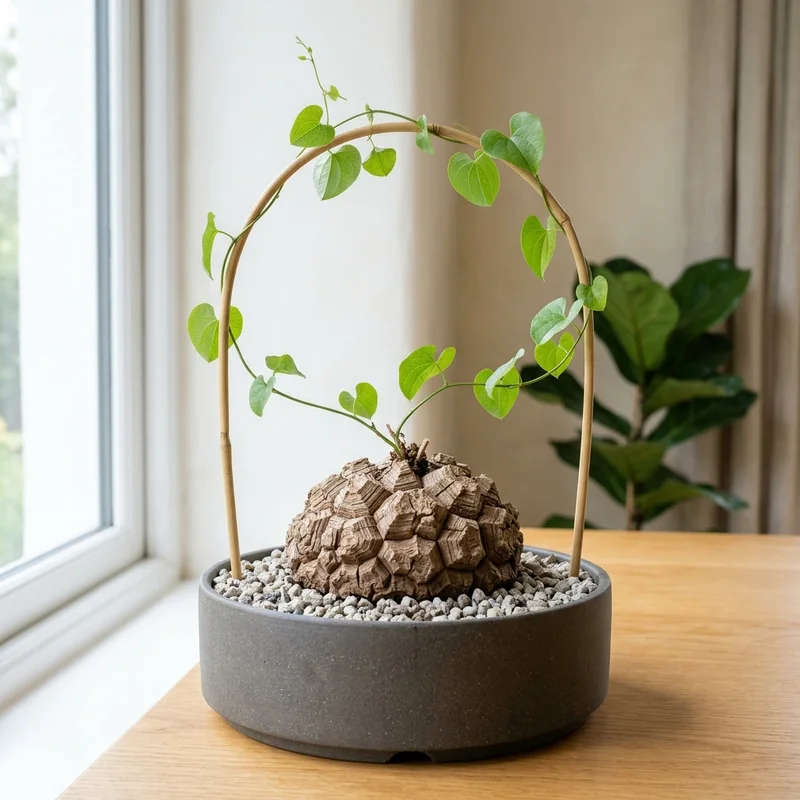
South African caudiciform with a cracked tortoise-shell caudex. Grows twining vines in autumn–winter and rests completely dry in summer.
Essential care to help it thrive
Light and placement
Give full bright light to active winter vines, while shading the exposed woody caudex from scorching afternoon sun behind glass.
Climate and season
Keep frost-free (above 5 °C) with a small trellis. RHS notes it is toxic if eaten and a skin irritant, so wear gloves and keep away from pets.
Soil and repotting
Sharp gritty succulent blend top-dressed with gravel; seat the caudex mostly above soil.
Conditions vary with pot, season and location. Always check the mix and your plant's response.
Elephant's foot: when to check the soil
Active growth runs autumn–winter: water moderately as grit dries. Stop watering during dry summer dormancy when vines naturally yellow and die back.
This plant is not watered in a pot
Its watering routine does not fit a soil-check interval: follow the care sheet.
Let Grovia remind you when to check your Elephant's footSave the plant, get watering reminders and adjust the rhythm as the seasons change. Free on iPhone and Android.
How to identify it
Formerly named Testudinaria elephantipes: a woody dome-like caudex split into corky polygonal plates sends up slender heart-leaved climbing vines.
Botanical sheet
- Family
- Dioscoreaceae
- Origin
- South Africa
- Size
- 0.5–1 m climbing
- Climate
- 12–24 °C · min. 5 °C
What's wrong with your plant?
Pet safety Toxicity unverified
There is no species-specific toxicity verification for this plant on ASPCA. Check with your veterinarian or search the ASPCA directory before keeping it within reach of pets.
Open the toxicity checkerCommon questions
Why do all the vines die back in summer?
Normal seasonal cycle: this South African winter-grower rests completely dry and leafless in summer before sprouting again in autumn.
Should the corky Testudinaria caudex be buried?
No. Keep most of the tessellated tuber resting above a mineral gravel collar so moisture drains away from the crown.
When does it need a trellis and feeding?
Add a slim wire support as soon as autumn vines emerge, feeding lightly every 2–3 weeks only while leafy growth is active.