Crown of thorns (Euphorbia milii)
Euphorbia miliiUpdated
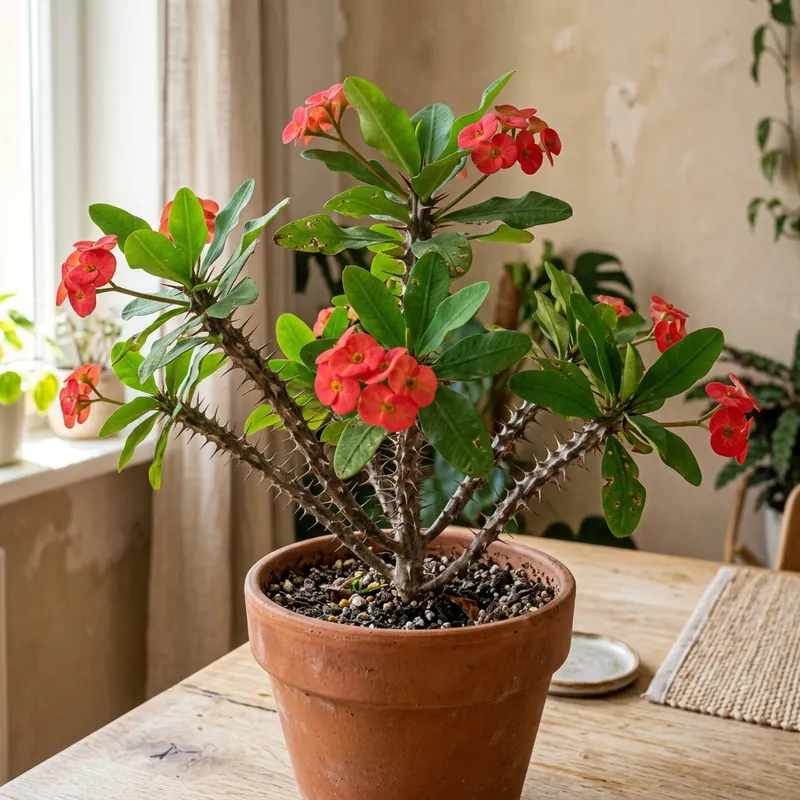
Spiny Malagasy shrubby succulent producing colourful cupped bracts nearly year-round in full sun. Milky sap irritates skin and eyes; hates cold dampness.
Essential care to help it thrive
Light and placement
Position in full light with several hours of direct daily sunshine indoors; generous sun keeps growth compact and encourages continuous colourful bracts.
Climate and season
Keep warm and frost-free above 10 °C (15–28 °C preferred). Dry indoor air suits it well provided airflow prevents stagnant humidity.
Soil and repotting
Blend three parts peat-free loam-based potting compost with one part horticultural grit or pumice in a heavy terracotta pot with drainage holes.
Conditions vary with pot, season and location. Always check the mix and your plant's response.
Crown of thorns (Euphorbia milii): when to check the soil
Water sparingly in active growth only after the mix dries out completely, feeding monthly with a low-nitrogen fertiliser; keep dry through winter.
Let Grovia remind you when to check your Crown of thorns (Euphorbia milii)Save the plant, get watering reminders and adjust the rhythm as the seasons change. Free on iPhone and Android.
See table by pot size
| Ø | Summer | Winter |
|---|---|---|
| 10 cm | 7–10 days | No water |
| 15 cm | 9–12 days | No water |
| 25 cm | 11–16 days | No water |
How to identify it
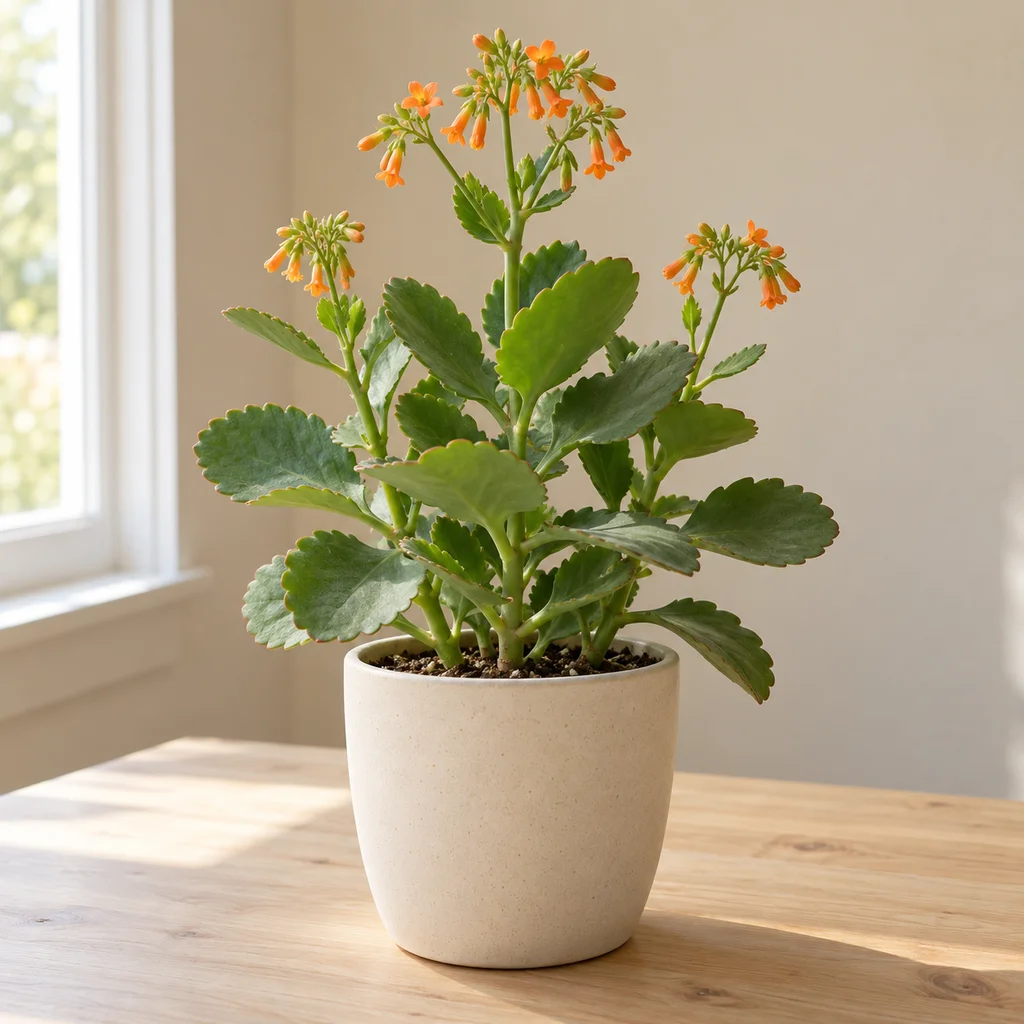
Spiny woody succulent shrub (formerly Euphorbia splendens) with milky sap, oval green leaves near stem tips, and small flowers framed by bright cupped bracts.
Botanical sheet
- Family
- Euphorbiaceae
- Origin
- Madagascar
- Size
- 50–100 cm shrubby
- Climate
- 15–28 °C · min. 10 °C
What's wrong with your plant?
Pet safety Toxicity unverified
There is no species-specific toxicity verification for this plant on ASPCA. Check with your veterinarian or search the ASPCA directory before keeping it within reach of pets.
Open the toxicity checkerCommon questions
Why must you wear gloves when pruning Euphorbia milii?
RHS warns its milky white sap irritates skin and eyes and is harmful if ingested; wear gloves and wash tools cleanly after handling.
How much water does it need during winter rest?
Keep the potting mix dry over winter at 10–15 °C, resuming sparse soakings only once daylight lengthens and spring warmth returns.
Why are the lower leaves turning yellow and dropping?
Some lower leaf shed is normal in winter rest, though soggy soil or sudden dark spots speed it up; check soil dryness before watering.