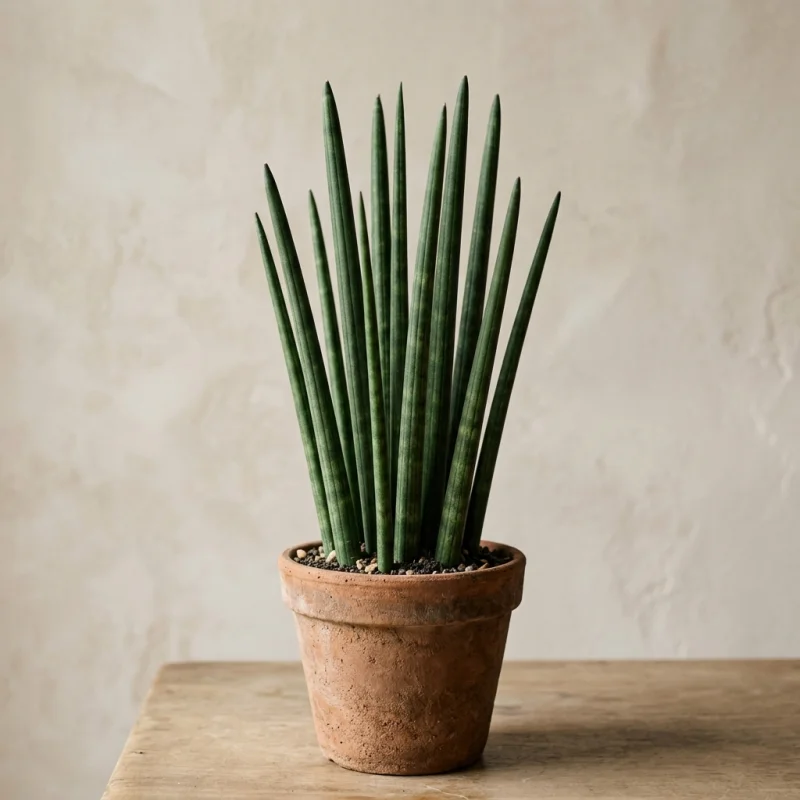
African spear (Cylindrical snake)
Dracaena angolensisUpdated
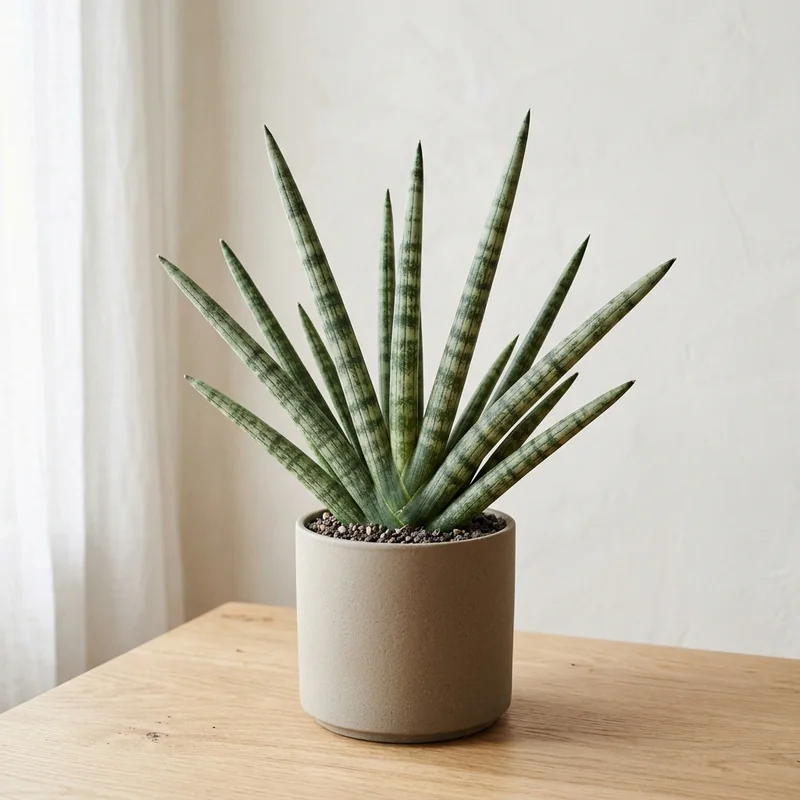
Sculptural succulent of stiff upright cylindrical striped spears rising cleanly from a stout rhizome. Adapts widely in light and thrives on gritty fully dried soil.
Essential care to help it thrive
Light and placement
Thrives in bright indirect light or gentle morning sun, while comfortably tolerating medium indoor shade with noticeably slower rhizome expansion.
Climate and season
Very happy in standard dry household air between 15 and 28 °C strictly above 10 °C, well away from icy winter window glass.
Soil and repotting
Fast-draining sandy mineral cactus media enriched with coarse pumice and perlite.
Conditions vary with pot, season and location. Always check the mix and your plant's response.
African spear (Cylindrical snake): when to check the soil
Check all the way to the bottom every 14–21 days in warm weather and soak only once bone-dry; water very rarely through cool dark winters.
Let Grovia remind you when to check your African spear (Cylindrical snake)Save the plant, get watering reminders and adjust the rhythm as the seasons change. Free on iPhone and Android.
See table by pot size
| Ø | Summer | Winter |
|---|---|---|
| 10 cm | 5–7 days | 10–13 days |
| 15 cm | 6–8 days | 12–17 days |
| 25 cm | 8–11 days | 16–22 days |
How to identify it
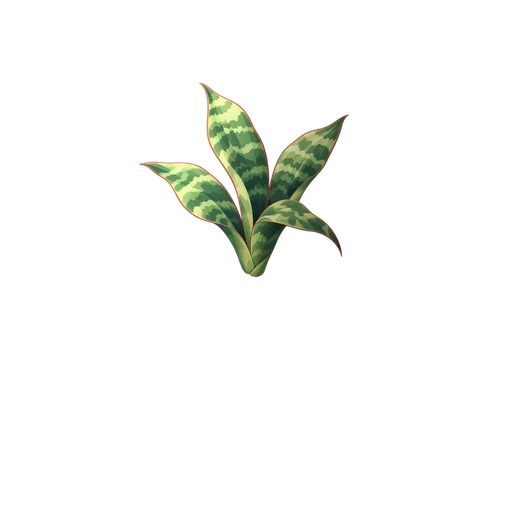
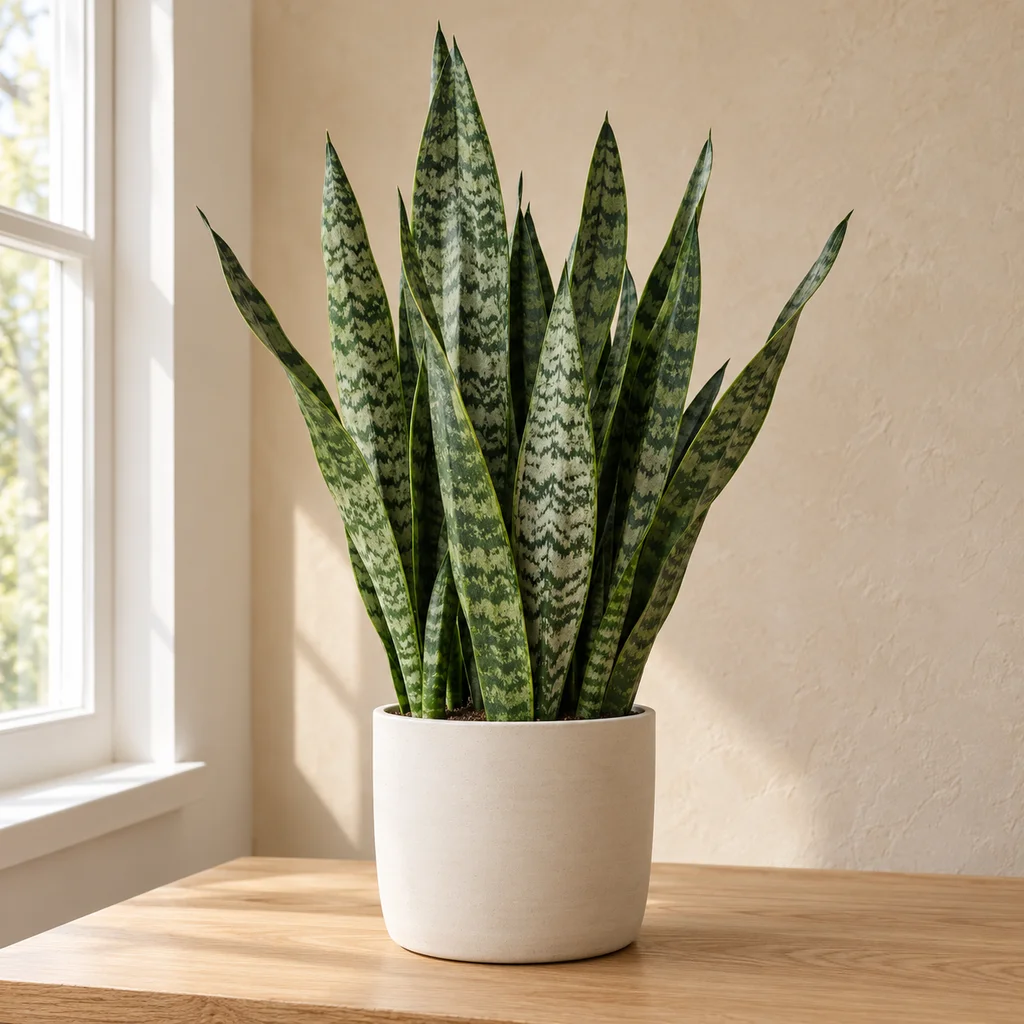
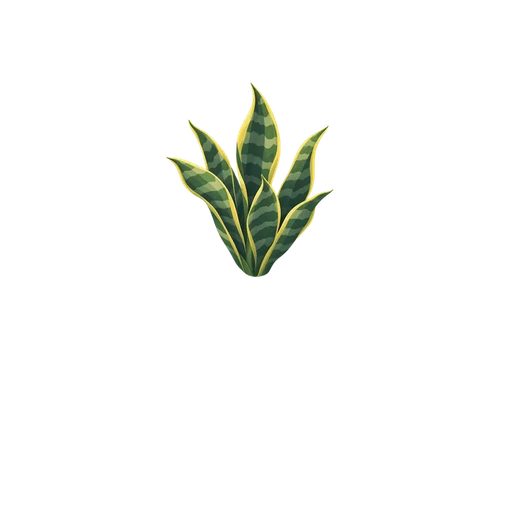
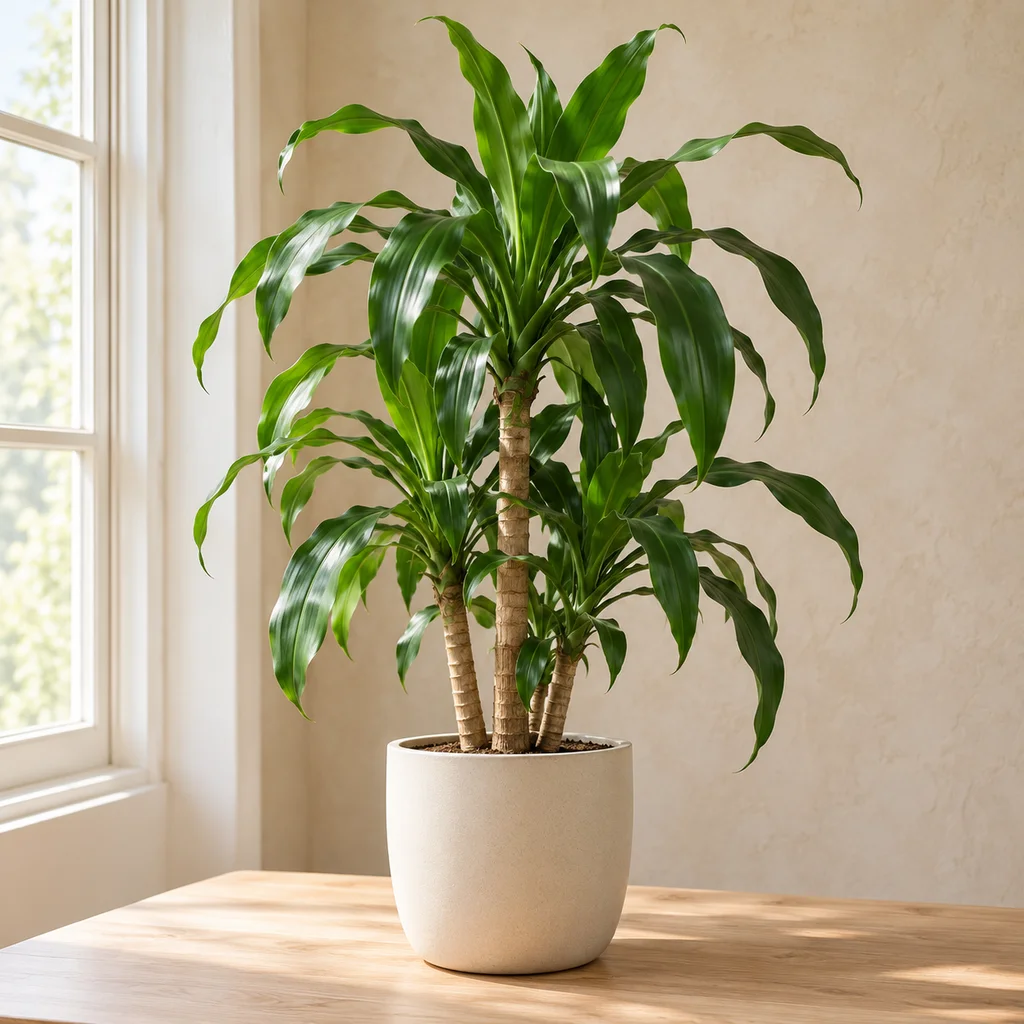
Solid 3 cm thick rounded cylindrical green leaves banded crosswise with paler silver-green stripes; long marketed as Sansevieria cylindrica.
Botanical sheet
- Family
- Asparagaceae
- Origin
- Angola
- Size
- 1–1.5 m upright spears
- Climate
- 15–28 °C · min 10 °C
What's wrong with your plant?
Pet safety Toxicity unverified
There is no species-specific toxicity verification for this plant on ASPCA. Check with your veterinarian or search the ASPCA directory before keeping it within reach of pets.
Open the toxicity checkerCommon questions
Why are commercial cylindrical snake plants often sold braided?
Nurseries weave young pliable stems together decoratively, though mature rhizomes naturally push stout upright new spears independently beside the braid.
Is Dracaena angolensis harmful if chewed by pets?
Yes: RHS warns it is harmful if eaten and it has no safe ASPCA listing, so wear gloves when dividing and place well out of pets' reach.
Should I repot cylindrical snake plant frequently?
No: it enjoys slightly snug heavy terracotta pots and needs potting up only every 2–3 years when stout rhizomes deform the container.