Snake plant
Dracaena trifasciataUpdated
Botanically reclassified into Dracaena by Kew POWO. Stores water for weeks in thick blades — winter wetness is its main hazard.
Essential care to help it thrive
Light and placement
Handles low light well; brighter filtered light keeps leaf banding crisp while shielding foliage from scorching summer sun.
Climate and season
Keep frost-free (above 12 °C); typical dry household air suits it well.
Soil and repotting
Choose an ultra-gritty succulent mix in a weighty terracotta pot.
Conditions vary with pot, season and location. Always check the mix and your plant's response.
Snake plant: when to check the soil
Wait until the free-draining mix dries completely top to bottom before soaking. Water only every 4–5 weeks in winter.
Let Grovia remind you when to check your Snake plantSave the plant, get watering reminders and adjust the rhythm as the seasons change. Free on iPhone and Android.
See table by pot size
| Ø | Summer | Winter |
|---|---|---|
| 10 cm | 11–15 days | 21–29 days |
| 15 cm | 13–18 days | 27–37 days |
| 25 cm | 18–24 days | 30–42 days |
How to identify it
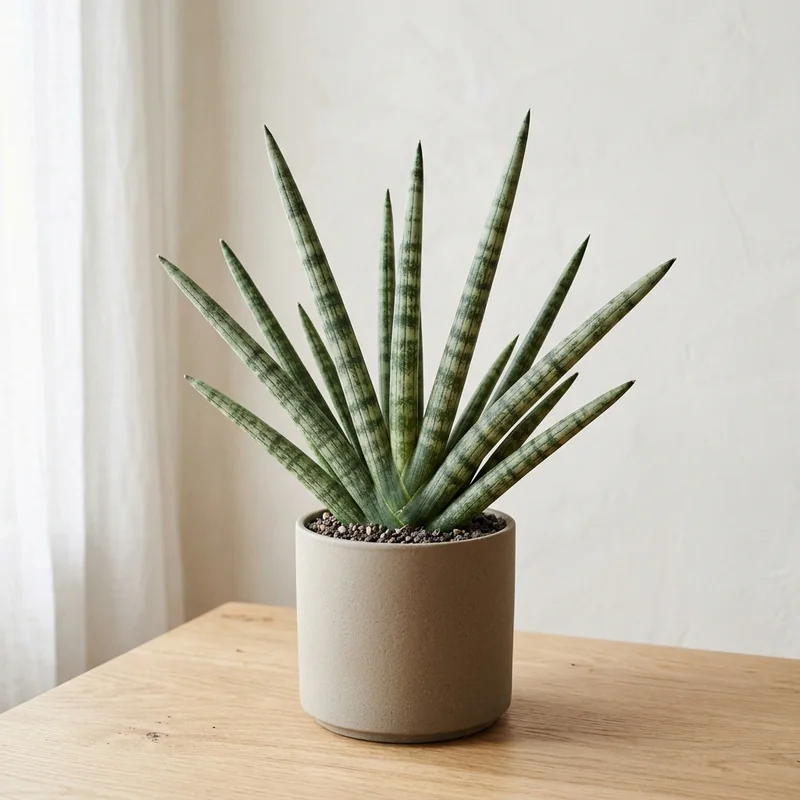
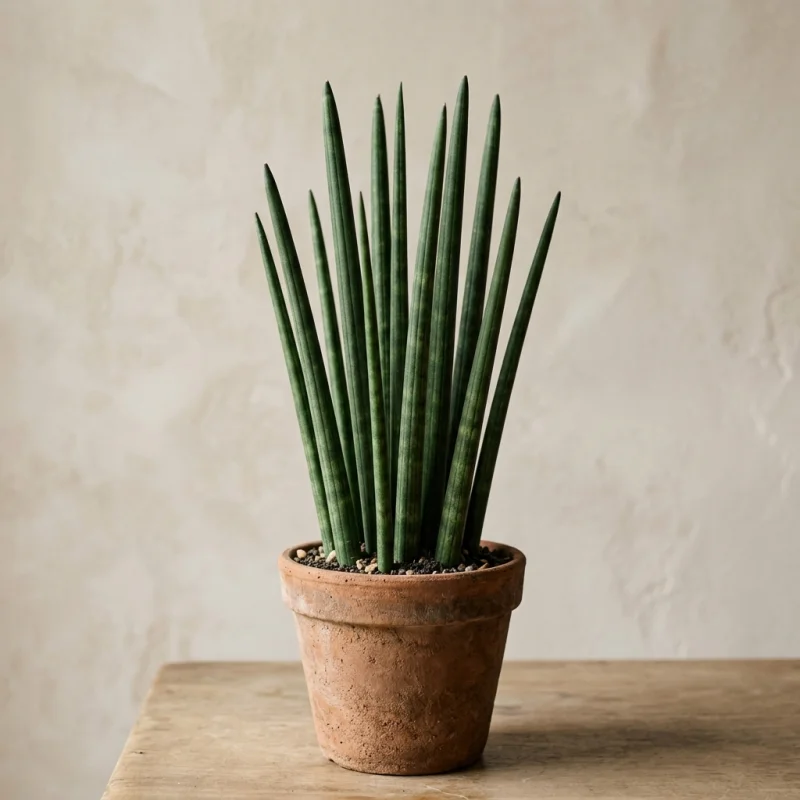
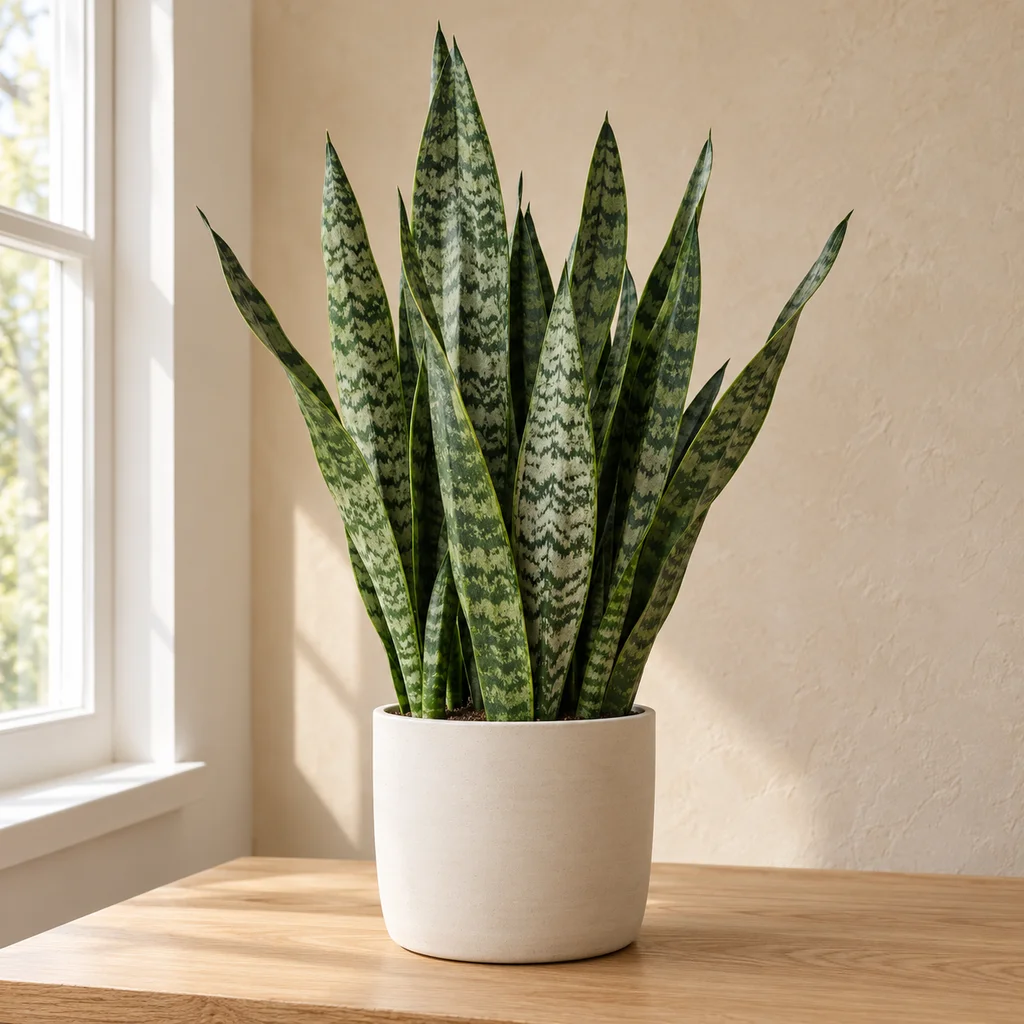
Stiff, upright, sword-shaped leaves carry grey-green bands. Also widely sold as Sansevieria trifasciata.
Botanical sheet
- Family
- Asparagaceae
- Origin
- West Africa · DR Congo
- Size
- 45–100 cm upright
- Climate
- 16–27 °C · min. 12 °C
What's wrong with your plant?
Pet safety Toxic to pets
ASPCA lists this species as toxic to cats and dogs. Keep pets from chewing it; contact a veterinarian if ingestion is suspected.
Toxic principles and clinical signs quoted from the ASPCA database.
See the ASPCA entryCommon questions
Does it need repotting every year?
No fixed schedule: RHS advises repotting every 2–4 years only when roots become pot-bound.
Is it Sansevieria or Dracaena?
The same species: Kew POWO merged Sansevieria into genus Dracaena.
Can it thrive in a windowless bathroom?
It endures low light for weeks, though daily indirect daylight keeps foliage stiff and healthy.