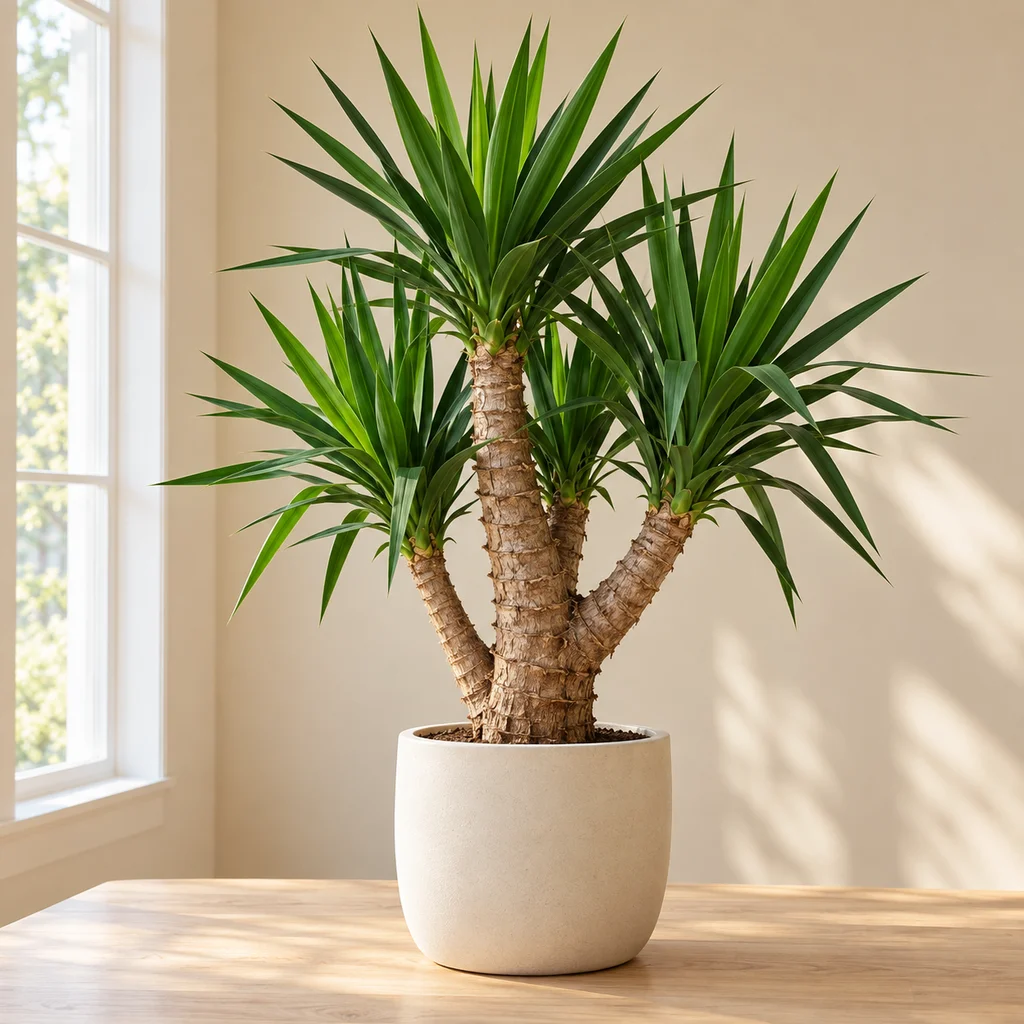
Corn plant
Dracaena fragransUpdated
Sturdy cane dracaena for bright indirect rooms: thrives on steady warmth, medium drying between waterings, and fluoride-free water.
Essential care to help it thrive
Light and placement
Place in indirect light; harsh sun can mark leaves.
Climate and season
Give stable warmth; RHS notes fluoride in tap water can damage dracaenas.
Soil and repotting
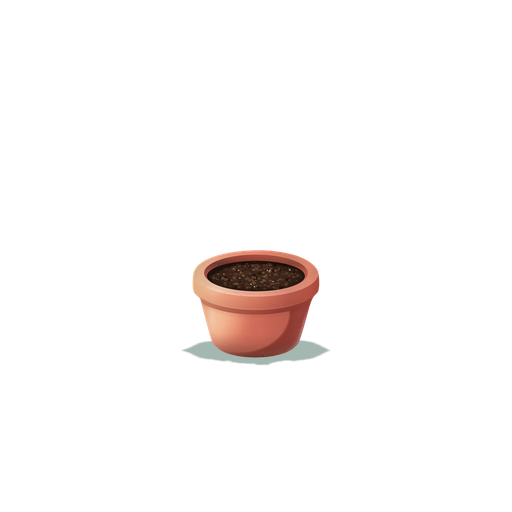
Free-draining houseplant compost lightened with 25% perlite or pumice in a heavy, stable pot that keeps tall canes upright.
Conditions vary with pot, season and location. Always check the mix and your plant's response.
Corn plant: when to check the soil
Check the mix between waterings and let it drain; moderate water during slower growth.
Let Grovia remind you when to check your Corn plantSave the plant, get watering reminders and adjust the rhythm as the seasons change. Free on iPhone and Android.
See table by pot size
| Ø | Summer | Winter |
|---|---|---|
| 10 cm | 5–7 days | 10–13 days |
| 15 cm | 6–8 days | 12–17 days |
| 25 cm | 8–11 days | 16–22 days |
How to identify it
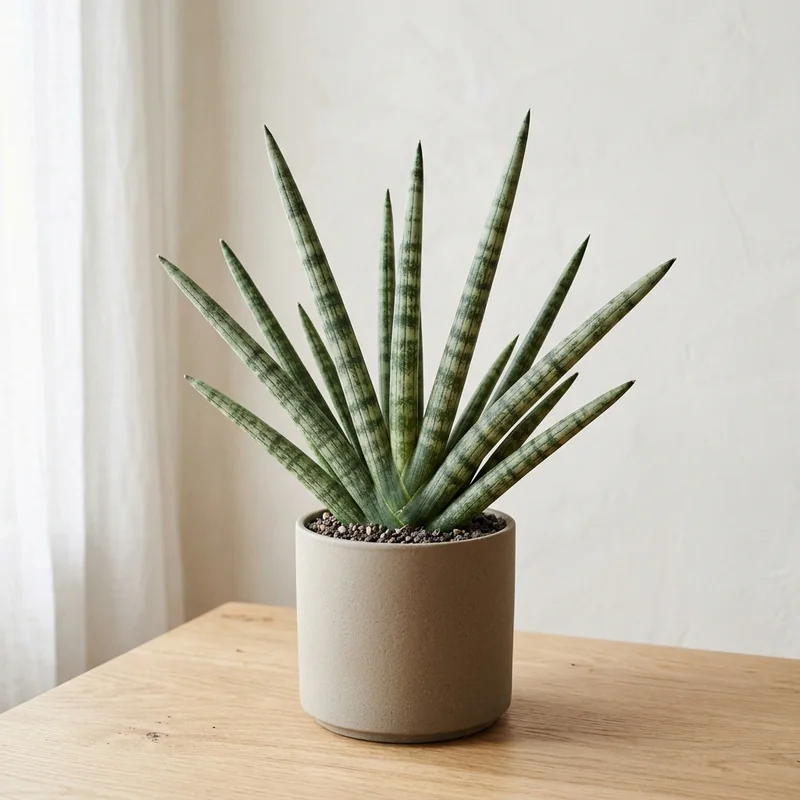
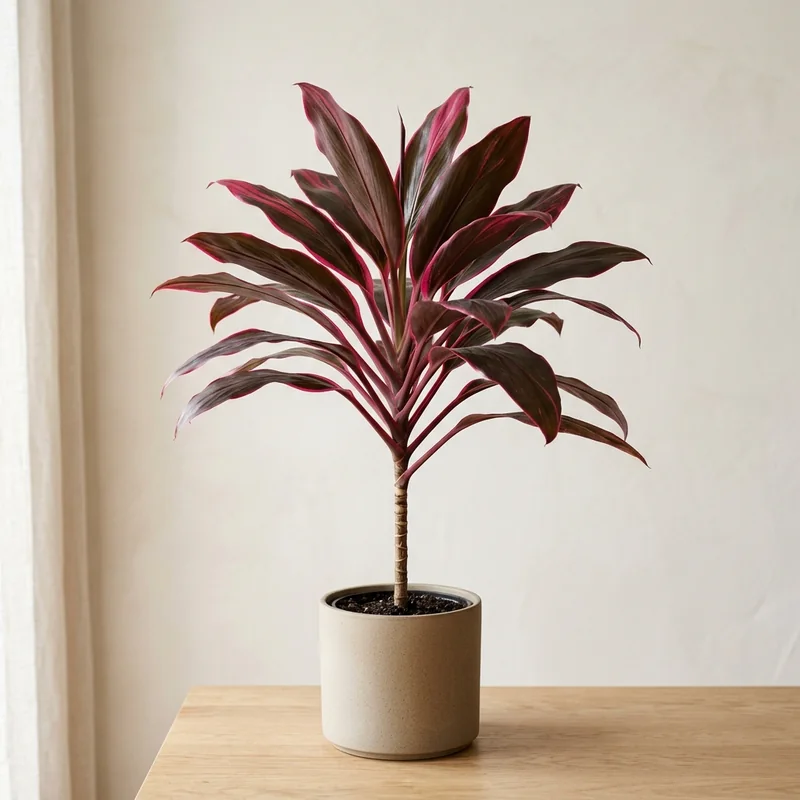
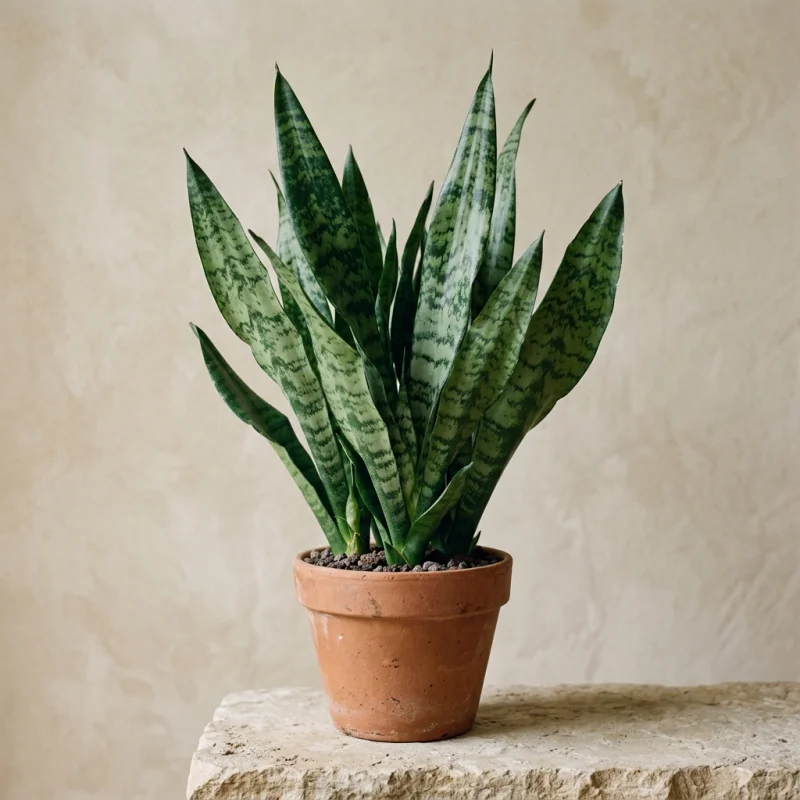
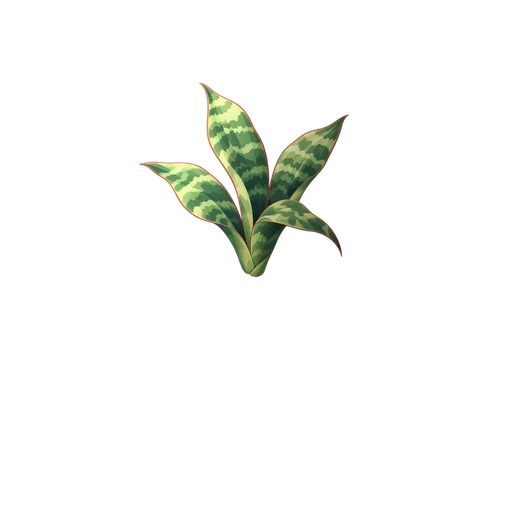
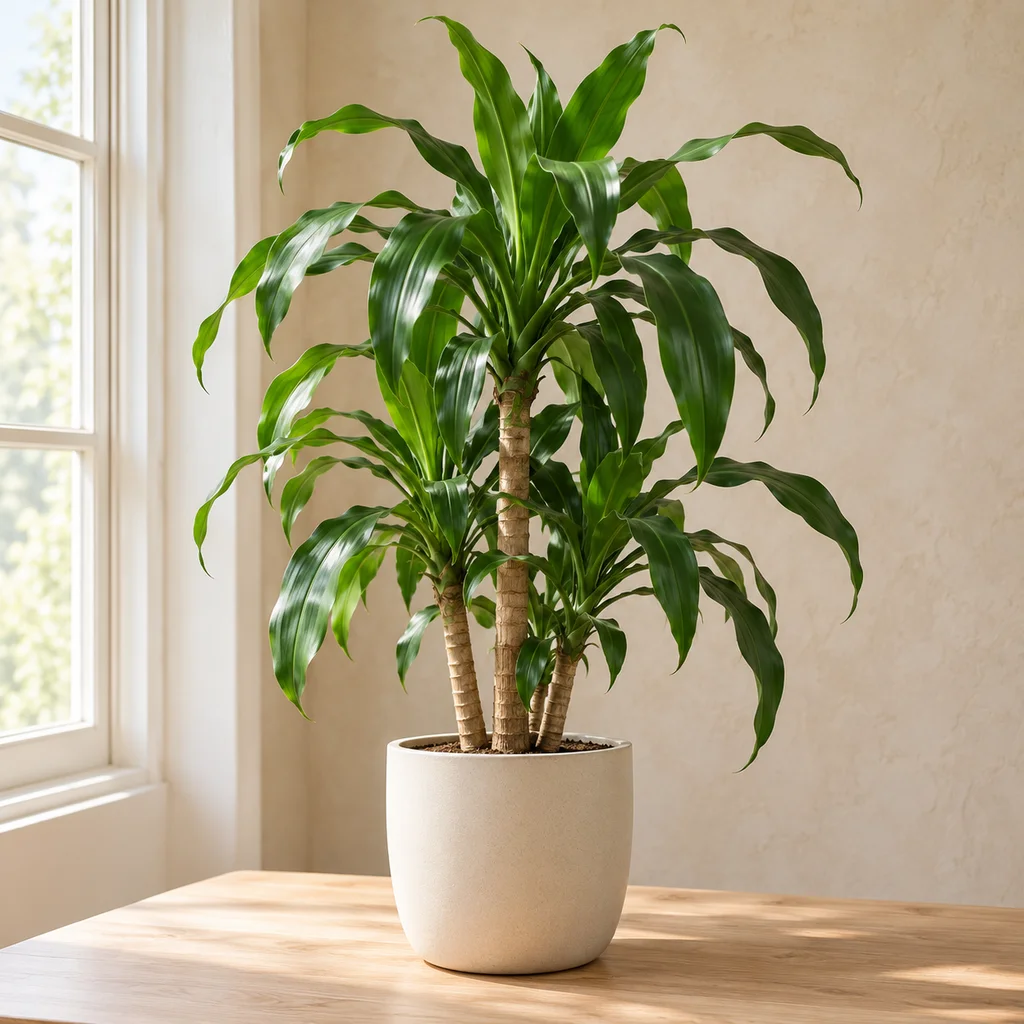
Cane-like stems carry long glossy strap-shaped leaves; stripe patterns depend on cultivar.
Botanical sheet
- Family
- Asparagaceae
- Origin
- Tropical Africa
- Size
- 1.5–2.5 m indoors
- Climate
- 16–26 °C · min. 10 °C
What's wrong with your plant?
Pet safety Toxic to pets
ASPCA lists this species as toxic to cats and dogs. Keep pets from chewing it; contact a veterinarian if ingestion is suspected.
Toxic principles and clinical signs quoted from the ASPCA database.
See the ASPCA entryCommon questions
How do I tell cultivars apart?
Observe leaf colour and pattern, but verify the cultivar label; the species name alone does not guarantee stripes.
Why do corn plant leaf tips turn brown?
Dracaenas react to fluoride and mineral salts in tap water as well as dry winter heating air; rainwater or filtered water prevents tip burn.
How often should you water in winter?
Cooler rooms slow uptake—check the upper compost roughly every 12–17 days before watering again.