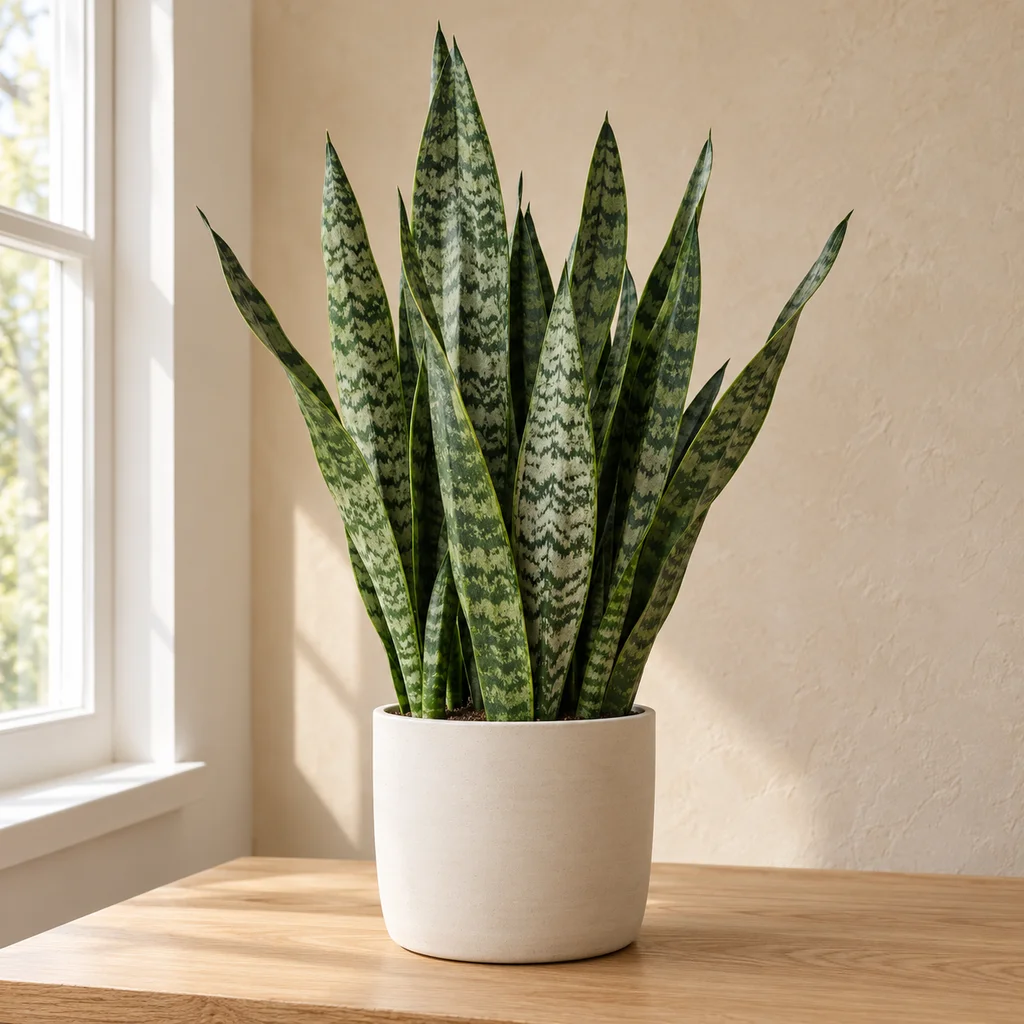
Ponytail palm
Beaucarnea recurvataUpdated
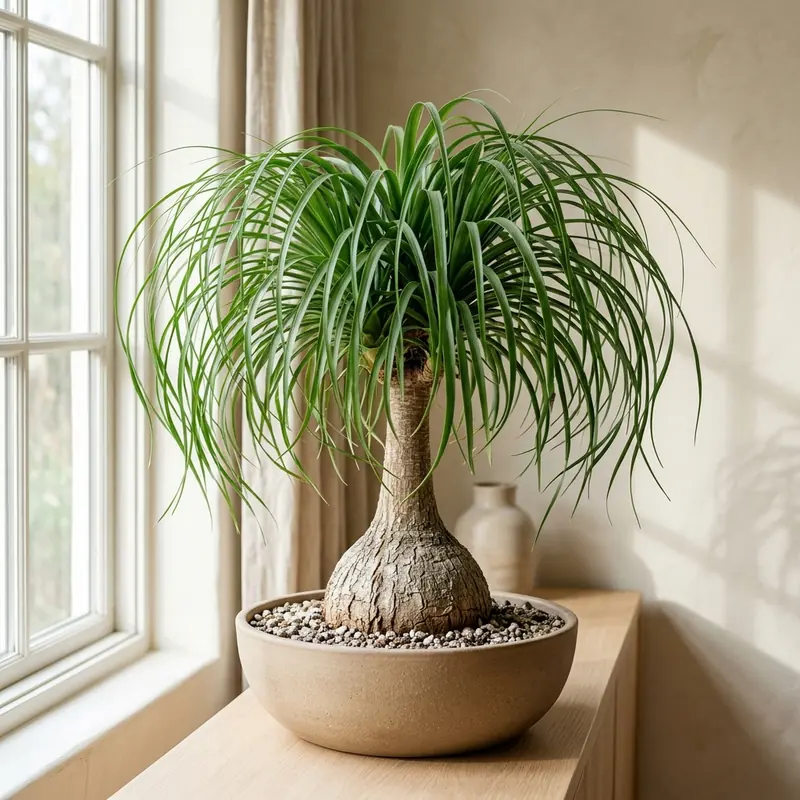
Despite its name, this Mexican succulent stores water in a swollen bottle-like caudex topped by arching leaves. Thrives on full light and dry pauses.
Essential care to help it thrive
Light and placement
Give full bright light right beside a sunny window; poor indoor light weakens the arching rosette and leads to pale, limp growth.
Climate and season
Keep frost-free above 7 °C; normal dry room air suits it fine. No pruning needed, and top-dressing or potting on is only needed every few years.
Soil and repotting
Plant in sharply drained loam-based, peat-free compost inside a sturdy shallow pot.
Conditions vary with pot, season and location. Always check the mix and your plant's response.
Ponytail palm: when to check the soil
Check the deep mix dries 100% before watering again. Water moderately while actively growing and keep barely moist to nearly dry in winter.
Let Grovia remind you when to check your Ponytail palmSave the plant, get watering reminders and adjust the rhythm as the seasons change. Free on iPhone and Android.
See table by pot size
| Ø | Summer | Winter |
|---|---|---|
| 10 cm | 7–10 days | 14–19 days |
| 15 cm | 9–12 days | 17–24 days |
| 25 cm | 11–16 days | 23–32 days |
How to identify it
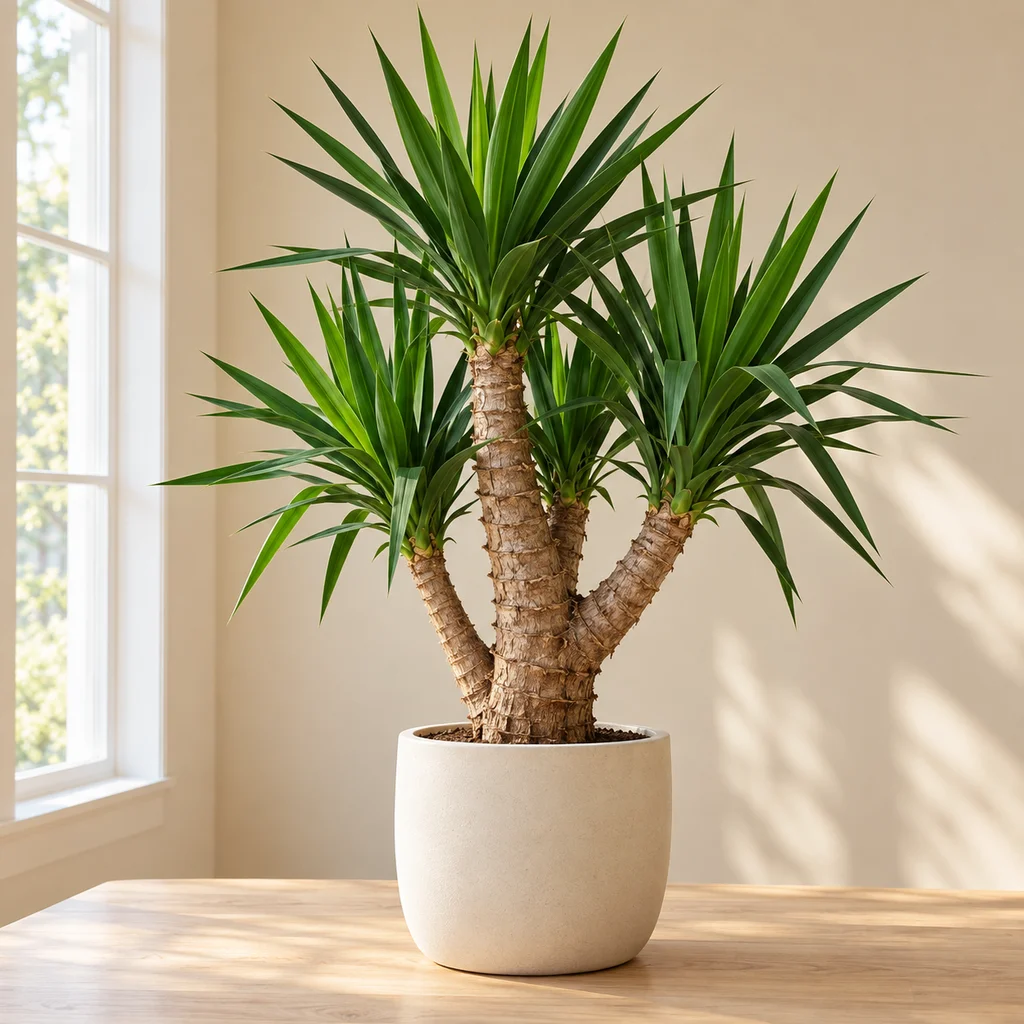
Swollen, thick-barked caudex crowned with cascading rosettes of tough, narrow linear leaves. Formerly classified and often sold as Nolina recurvata.
Botanical sheet
- Family
- Asparagaceae
- Origin
- Mexico
- Size
- 1.5–2.5 m slow grower
- Climate
- 15–26 °C · min. 7 °C
What's wrong with your plant?
Pet safety Pet-friendly
ASPCA lists this species as non-toxic to cats and dogs. Even so, prevent heavy chewing or ingestion of potting mix or fertiliser.
See the ASPCA entryCommon questions
How often should I water a ponytail palm?
Always check that the compost has dried top to bottom first, usually every 2–4 weeks in growth and barely moist or nearly dry over winter.
Does Beaucarnea recurvata need frequent repotting?
No, RHS advises top-dressing or potting on only in spring when the heavy caudex fills a snug container.
Is ponytail palm safe for cats and dogs?
Yes, ASPCA lists Beaucarnea recurvata as non-toxic to cats, dogs and horses, though pets may bat at ribbons.