Purple Coneflower (Echinacea purpurea)
Echinacea purpureaUpdated
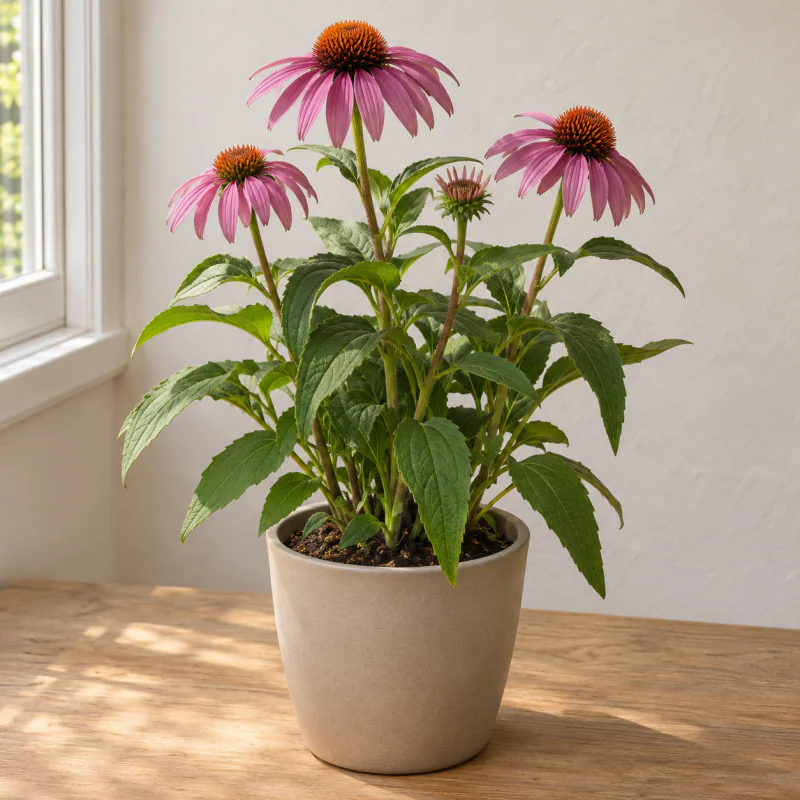
Tough prairie perennial crowning stiff stems with purplish-pink petals around spiky copper cones. Loves full sun, draws pollinators, hates wet winters.
Essential care to help it thrive
Light and placement
Position in full sun for sturdy upright stems packed with blossoms all summer; too much shade weakens tall stalks and slows fresh flower development.
Climate and season
Cold-hardy outdoors between 10 and 30 °C and down to -10 °C in drained pots; stems naturally die back cleanly each autumn before vigorous spring shoots emerge.
Soil and repotting
Choose a deep sturdy pot with sharp gravel drainage and fertile, humus-rich sandy loam potting compost.
Conditions vary with pot, season and location. Always check the mix and your plant's response.
Purple Coneflower (Echinacea purpurea): when to check the soil
Water deeply whenever upper compost dries while rooting and during heat waves; once established and dormant outdoors in winter, avoid cold soggy trays.
Let Grovia remind you when to check your Purple Coneflower (Echinacea purpurea)Save the plant, get watering reminders and adjust the rhythm as the seasons change. Free on iPhone and Android.
See table by pot size
| Ø | Summer | Winter |
|---|---|---|
| 10 cm | 4–5 days | 7–10 days |
| 15 cm | 5–6 days | 9–13 days |
| 25 cm | 6–9 days | 12–17 days |
How to identify it
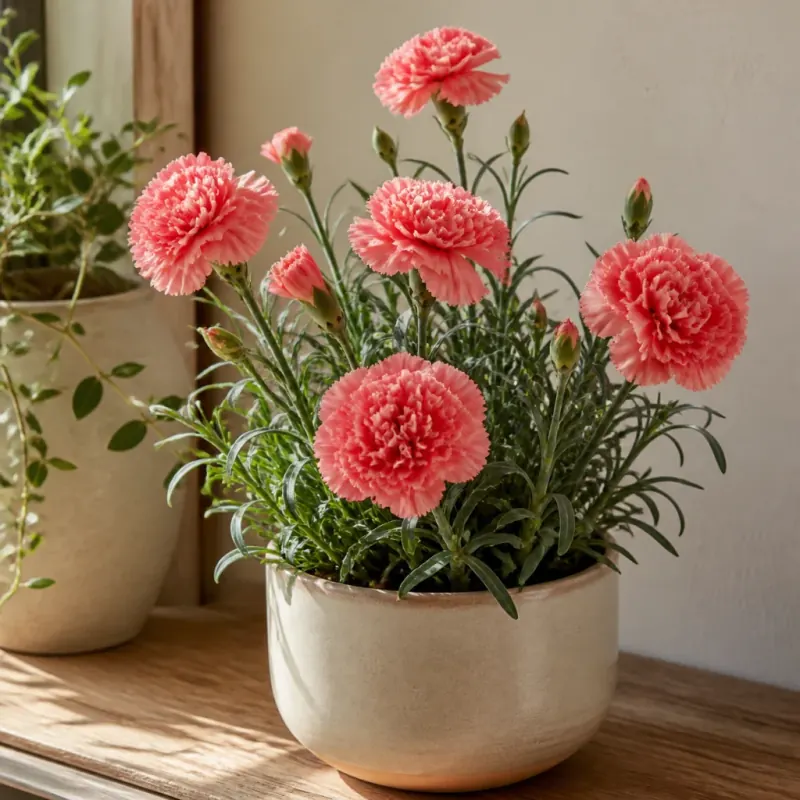
Clumping herbaceous perennial with coarse hairy basal leaves and daisy heads bearing reflexed rose-purple rays around a copper cone; formerly Rudbeckia purpurea.
Botanical sheet
- Family
- Asteraceae
- Origin
- Central and eastern North America
- Size
- 45–75 cm potted (1–1.5 m)
- Climate
- 10–30 °C · min -10 °C
What's wrong with your plant?
Pet safety Toxicity unverified
There is no species-specific toxicity verification for this plant on ASPCA. Check with your veterinarian or search the ASPCA directory before keeping it within reach of pets.
Open the toxicity checkerCommon questions
Should faded Purple Coneflower heads be deadheaded or left for winter?
Snip early spent blooms down to side buds for repeat summer color, then leave final autumn seedheads standing neatly for wintering songbirds until spring cleanup.
Why do potted Coneflowers sometimes fail after a wet mild winter?
They shrug off cold (-10 °C) effortlessly yet rot quickly when cold winter rain pools inside dense clay compost without gravel drainage feet.
Are Coneflowers worth growing on high city balconies for pollinators?
Yes—RHS Plants for Pollinators notes their prominent central cones draw bees and butterflies reliably even on sunny elevated urban terraces.