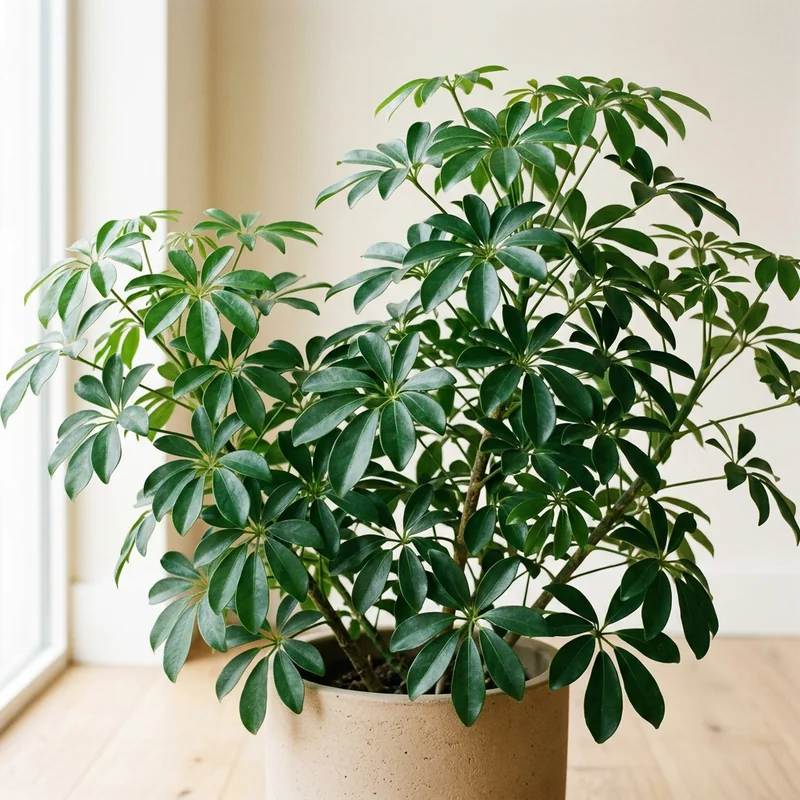
Japanese aralia (Fatsia)
Fatsia japonicaUpdated
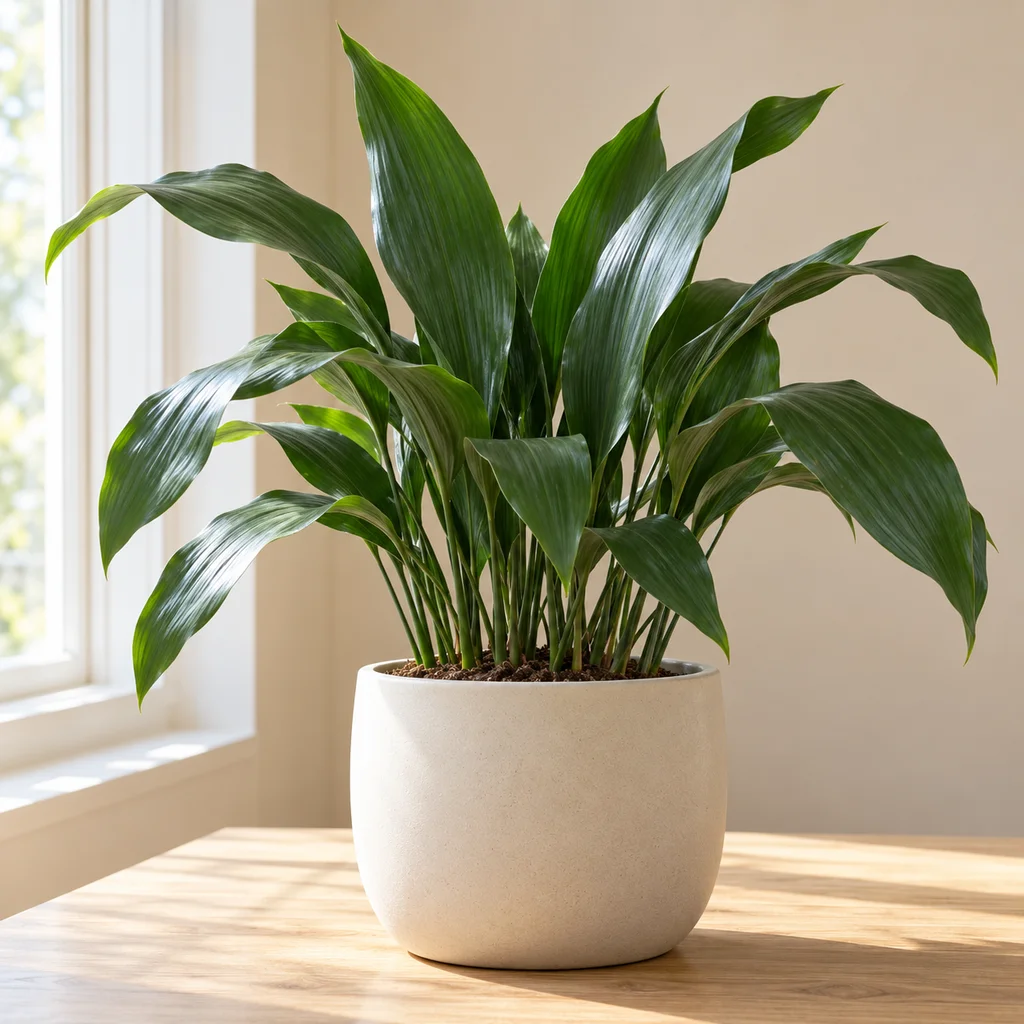
Architectural evergreen shrub prized for bold glossy palmate leaves. Thrives in bright shade indoors or sheltered gardens down to -10 °C in well-drained soil.
Essential care to help it thrive
Light and placement
Prefers bright filtered light or partial shade and even tolerates deep shade; outdoors accepts full sun in cool soil, but indoors avoid scorching glass glare.
Climate and season
Does best in cool-to-mild rooms (5–22 °C) or shaded courtyards; avoid parching heaters, wear gloves if sensitive, and keep ornamental black berries uneaten.
Soil and repotting
Rich, moisture-retentive yet free-draining potting mix: 60% peat-free compost, 20% fine bark and 20% perlite in a pot with generous drainage.
Conditions vary with pot, season and location. Always check the mix and your plant's response.
Japanese aralia (Fatsia): when to check the soil
Feel the top 2–3 cm before watering: keep the well-drained soil evenly moist during active growth, never waterlogged, and cut back in cool winter.
Let Grovia remind you when to check your Japanese aralia (Fatsia)Save the plant, get watering reminders and adjust the rhythm as the seasons change. Free on iPhone and Android.
See table by pot size
| Ø | Summer | Winter |
|---|---|---|
| 10 cm | 3–4 days | 5–7 days |
| 15 cm | 3–5 days | 7–9 days |
| 25 cm | 4–6 days | 9–12 days |
How to identify it
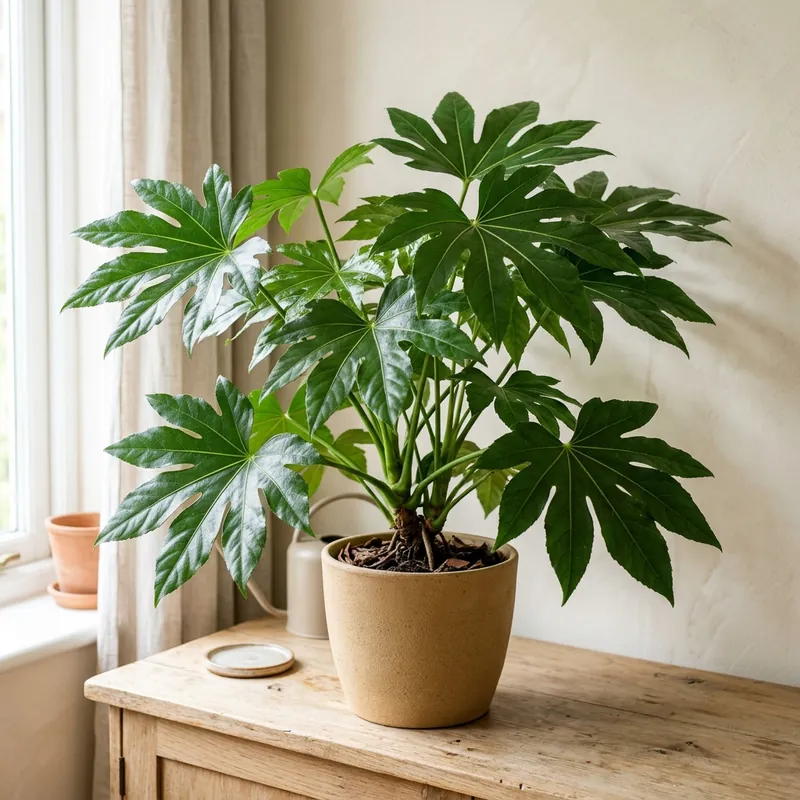
Stout-stemmed evergreen shrub bearing large leathery palmately lobed leaves. Often listed in nurseries under former names Aralia japonica or Aralia sieboldii.
Botanical sheet
- Family
- Araliaceae
- Origin
- Japan · South Korea
- Size
- 2.5–4 m (smaller in pots)
- Climate
- 5–22 °C · min. -10 °C
What's wrong with your plant?
Pet safety Pet-friendly
ASPCA lists this species as non-toxic to cats and dogs. Even so, prevent heavy chewing or ingestion of potting mix or fertiliser.
See the ASPCA entryCommon questions
Can Fatsia japonica grow indoors as well as outdoors?
Yes: RHS rates it hardy down to -10 °C outdoors in sheltered shade, while indoors it prefers cool, bright rooms away from radiators.
Is Japanese aralia safe around pets?
ASPCA lists Fatsia japonica foliage as non-toxic to dogs, cats, and horses, though RHS warns ornamental berries are not for eating.
When should you prune a tall Fatsia?
Cut back leggy or winter-damaged stems in mid-spring to encourage fresh bushy shoots low down on the trunk.