Edible fig tree
Ficus caricaUpdated
Sun-loving deciduous Mediterranean tree prized in containers for bold lobed foliage and sweet figs. Thrives in full direct sun, restricted roots and cool winter dormancy.
Essential care to help it thrive
Light and placement
Give full direct sun on a warm sheltered patio or balcony to ripen fruit and keep shoots stocky; indoor or shaded trees grow sparse shoots without setting figs.
Climate and season
Hardy down to -10 °C in winter rest, though potted roots welcome shelter in severe freezes. Wear gloves when pruning in daylight because milky sap irritates skin in sun.
Soil and repotting
Plant in a heavy, root-restricting container with wide drain holes and fertile peat-free loam-based potting mix lightened with coarse grit.
Conditions vary with pot, season and location. Always check the mix and your plant's response.
Edible fig tree: when to check the soil
Check the top 3–5 cm every 4–7 days in hot summer containers so fruit never drops; once leafless in cool winter dormancy, water very sparingly every 14–21 days.
Let Grovia remind you when to check your Edible fig treeSave the plant, get watering reminders and adjust the rhythm as the seasons change. Free on iPhone and Android.
See table by pot size
| Ø | Summer | Winter |
|---|---|---|
| 10 cm | 5–7 days | 10–13 days |
| 15 cm | 6–8 days | 12–17 days |
| 25 cm | 8–11 days | 16–22 days |
How to identify it
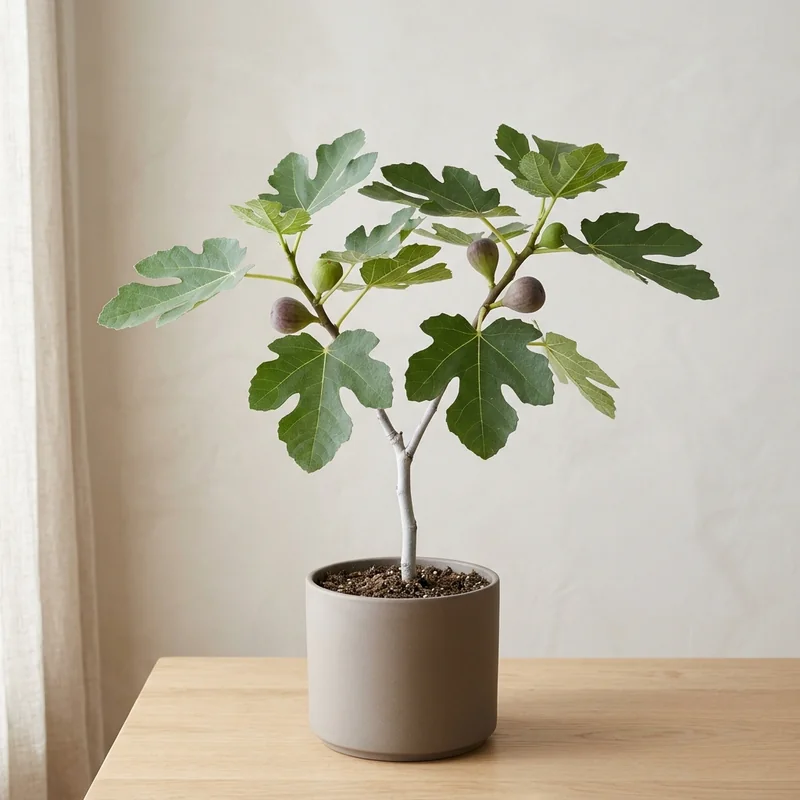
Smooth silver-grey bark, large rough 3-to-5-lobed leaves and pear-shaped figs along branches. Unlike evergreen houseplant ficus, it drops leaves cleanly in winter.
Botanical sheet
- Family
- Moraceae
- Origin
- Western Asia · SE Europe
- Size
- 1.5–2.5 m potted (2.5–4 m)
- Climate
- 10–32 °C · min. -10 °C
What's wrong with your plant?
Pet safety Toxicity unverified
There is no species-specific toxicity verification for this plant on ASPCA. Check with your veterinarian or search the ASPCA directory before keeping it within reach of pets.
Open the toxicity checkerCommon questions
Why do figs fruit better when their roots are slightly restricted?
RHS and Missouri Botanical Garden note that confining roots in a large pot curbs excess leafy wood growth and channels energy straight into ripening figs.
Why should I avoid getting fig sap on bare skin outdoors?
RHS warns the milky latex causes painful sunlight-triggered skin irritation; wear gloves and long sleeves whenever pruning.
How do I overwinter a potted Ficus carica safely?
Once leaves drop in autumn, place the pot in a cool frost-free shed, garage or sheltered wall and water only every 2–3 weeks.