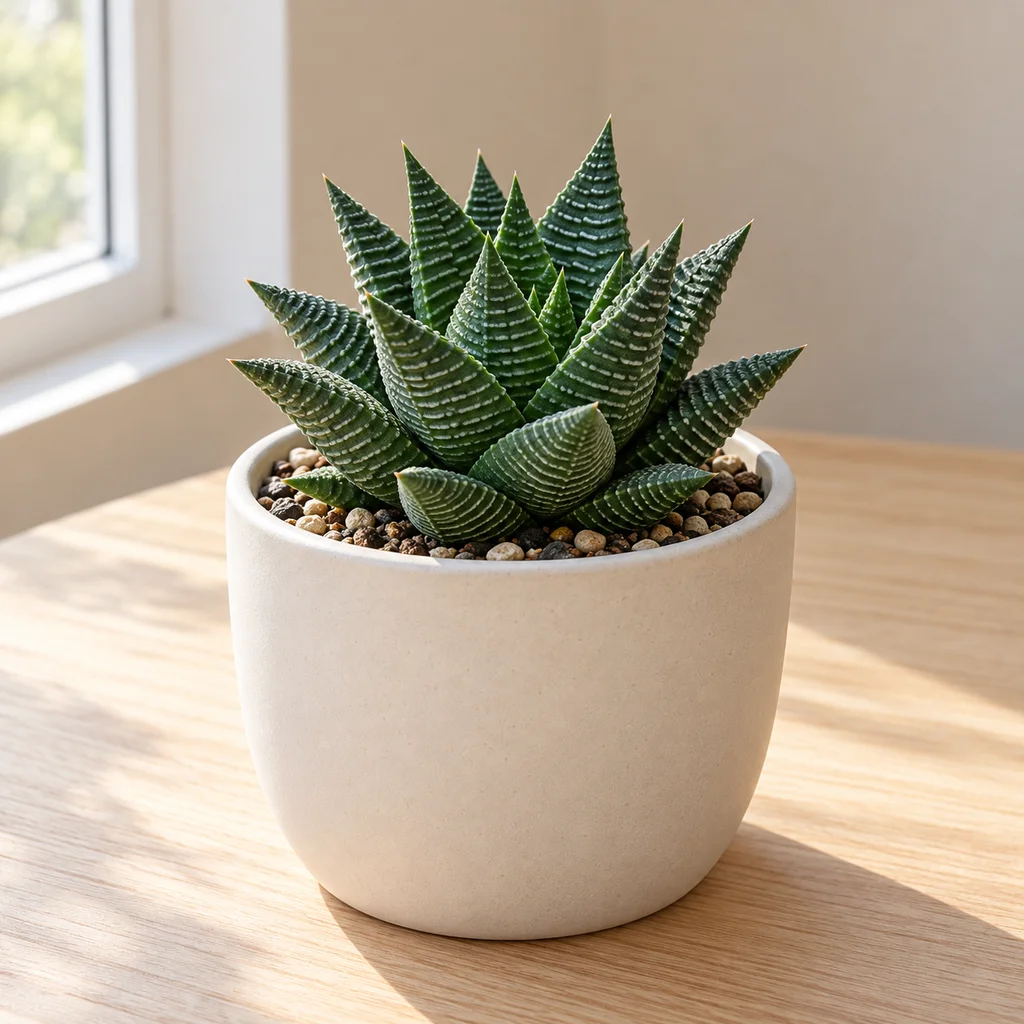
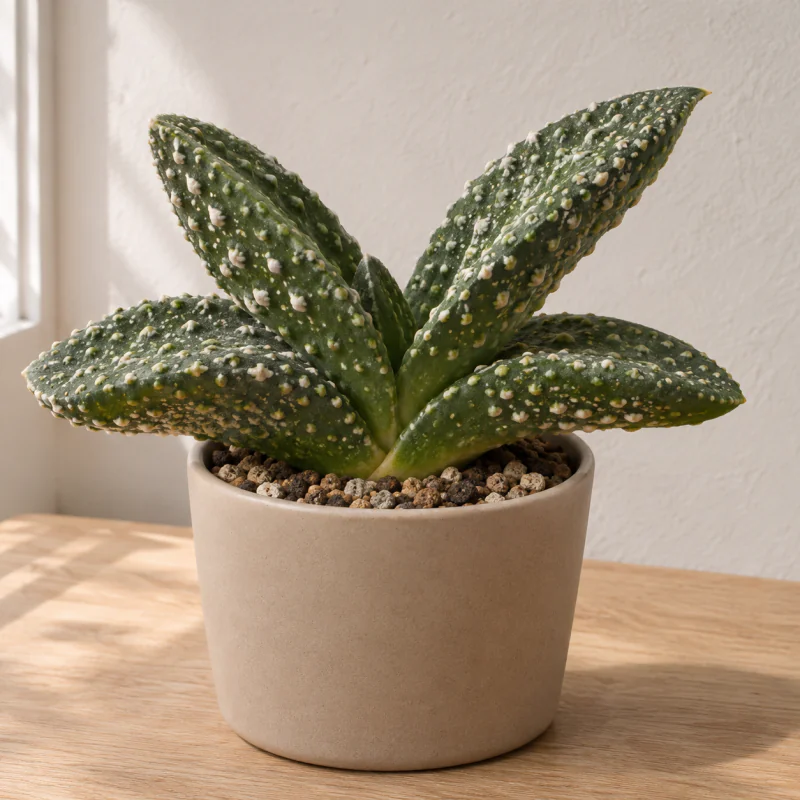
Cooper's haworthia (Crystal plant)
Haworthia cooperiUpdated
Jewel-like miniature South African succulent crowned in plump leaves with translucent crystal windows. Needs bright filtered sun and fast-draining stone grit.
Essential care to help it thrive
Light and placement
Place in bright indirect daylight or soft early morning sun. Intense baking afternoon glass heat stresses clear leaf windows dull pink-brown and shrivels roots.
Climate and season
Excels at 12–26 °C (surviving near 1 °C frost-free if bone-dry) in normal dry homes, slowly mounding into tight cushions of translucent baby rosettes.
Soil and repotting
Small deep terracotta pot filled predominantly (around 75%) with pumice, scoria, akadama, or coarse grit and a pinch of coir.
Conditions vary with pot, season and location. Always check the mix and your plant's response.
Cooper's haworthia (Crystal plant): when to check the soil
Let mineral mix dry completely from top to bottom before watering thoroughly and draining clean. Cut water tightly during midsummer heatwaves and cool winters.
Let Grovia remind you when to check your Cooper's haworthia (Crystal plant)Save the plant, get watering reminders and adjust the rhythm as the seasons change. Free on iPhone and Android.
See table by pot size
| Ø | Summer | Winter |
|---|---|---|
| 10 cm | 7–10 days | 14–19 days |
| 15 cm | 9–12 days | 17–24 days |
| 25 cm | 11–16 days | 23–32 days |
How to identify it
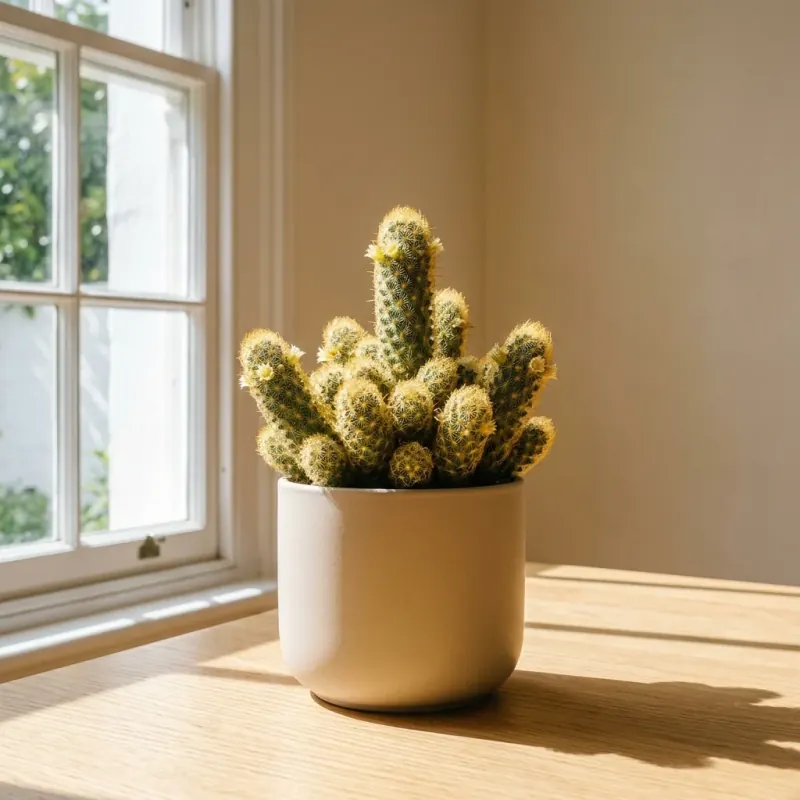
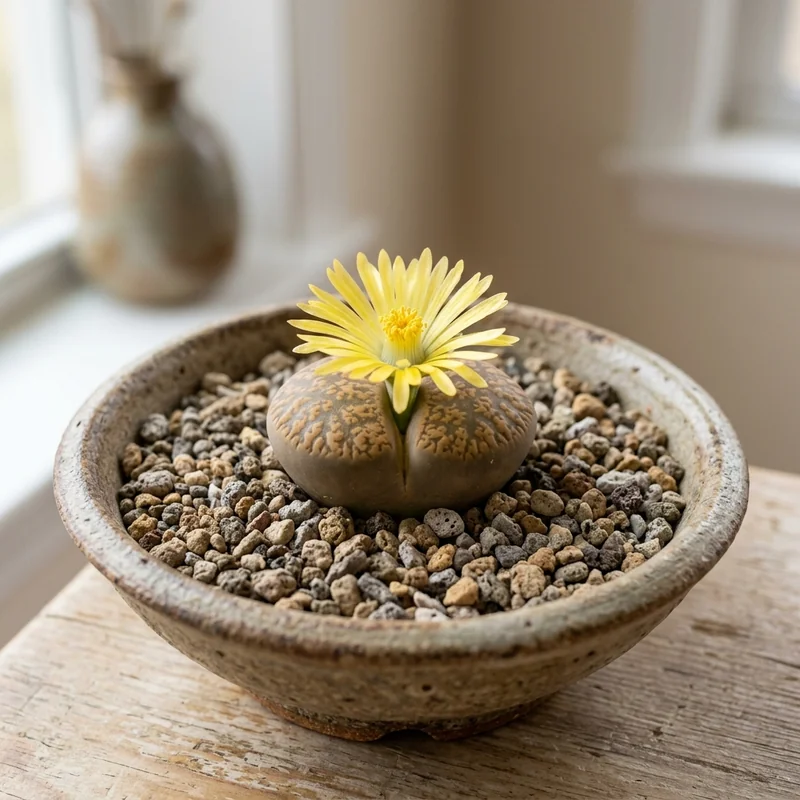
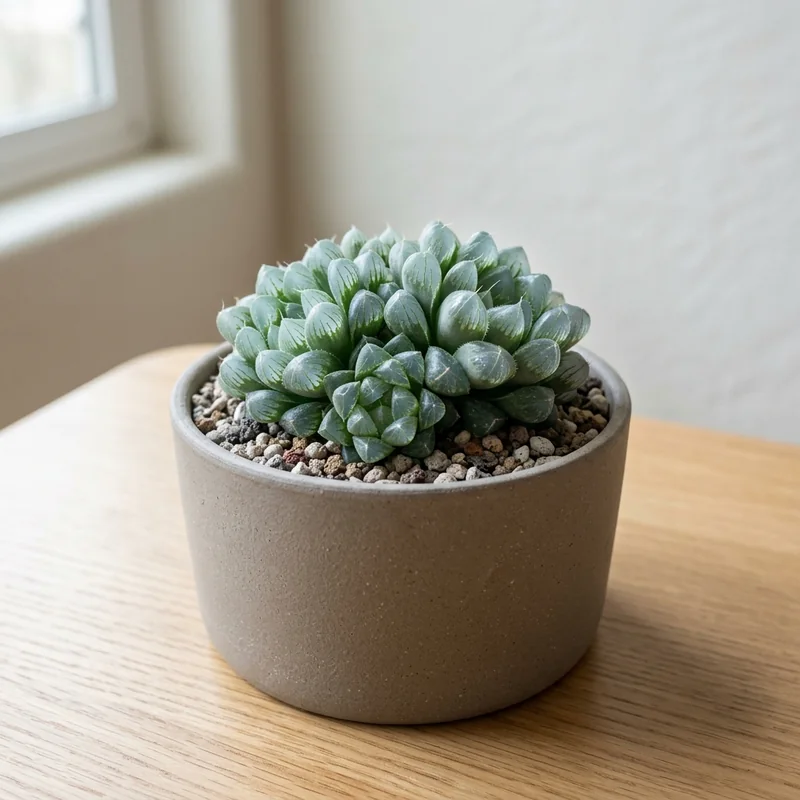
Miniature clustering rosette of bulbous blue-green fleshy leaves tipped with clear glass-like translucent windows and finely ciliated edges.
Botanical sheet
- Family
- Asphodelaceae
- Origin
- South Africa (Eastern Cape)
- Size
- 5–10 cm tiny rosette
- Climate
- 12–26 °C · min 1 °C
What's wrong with your plant?
Pet safety Toxicity unverified
There is no species-specific toxicity verification for this plant on ASPCA. Check with your veterinarian or search the ASPCA directory before keeping it within reach of pets.
Open the toxicity checkerCommon questions
Why does Haworthia cooperi have clear jelly-like leaf tips?
Native plants stay nearly buried in rocky Eastern Cape soil, using glassy leaf windows as natural skylights to channel filtered sunlight inside without water loss.
Why do Haworthia plants drop old roots yet bounce back later?
They shed roots naturally during heat stress or soggy spells; resting clean rosettes over lightly damp pumice in cool shade spurs fresh white roots.
What pot shape works best for Haworthia cooperi roots?
Choose a narrow yet slightly deep pot rather than a shallow bowl so thick carrot-like roots can anchor cleanly inside fast-draining stone grit.