Keeled ox tongue (Gasteria)
Gasteria carinataUpdated
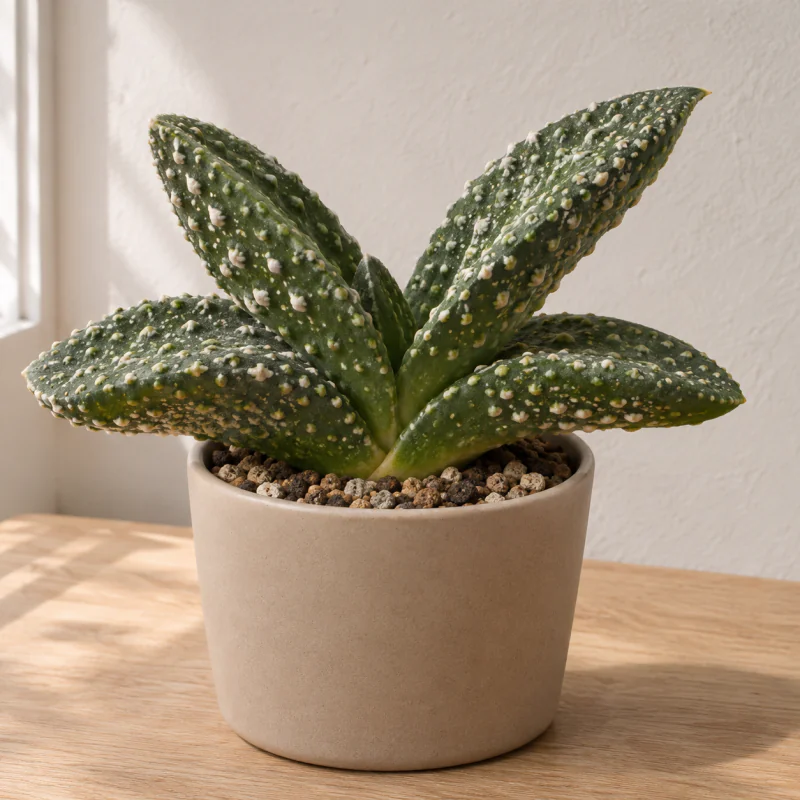
Low South African clump-forming succulent with thick keeled blades beaded in raised white tubercles. Prefers bright filtered shade and fast mineral grit.
Essential care to help it thrive
Light and placement
Grow in bright indirect window light or gentle morning rays rather than baking midday glass sun, which turns tough beaded blades dull bronze-red.
Climate and season
Handles standard home warmth at 12–26 °C (frost-free minimum 5 °C if dry) cleanly without misting, clustering gradually via tight basal offsets.
Soil and repotting
Low breathable terracotta planter with coarse cactus compost diluted fifty-fifty with pumice, grit, or perlite.
Conditions vary with pot, season and location. Always check the mix and your plant's response.
Keeled ox tongue (Gasteria): when to check the soil
Let mineral compost dry all the way down between thorough drenchings and empty saucers immediately. Water very sparingly in cool winter air.
Let Grovia remind you when to check your Keeled ox tongue (Gasteria)Save the plant, get watering reminders and adjust the rhythm as the seasons change. Free on iPhone and Android.
See table by pot size
| Ø | Summer | Winter |
|---|---|---|
| 10 cm | 7–10 days | 14–19 days |
| 15 cm | 9–12 days | 17–24 days |
| 25 cm | 11–16 days | 23–32 days |
How to identify it
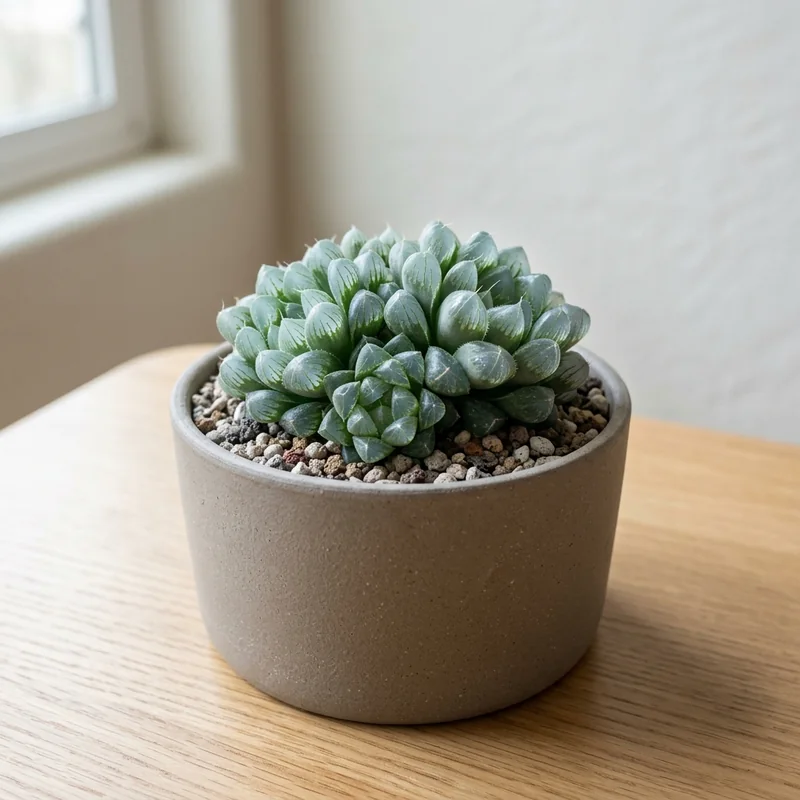
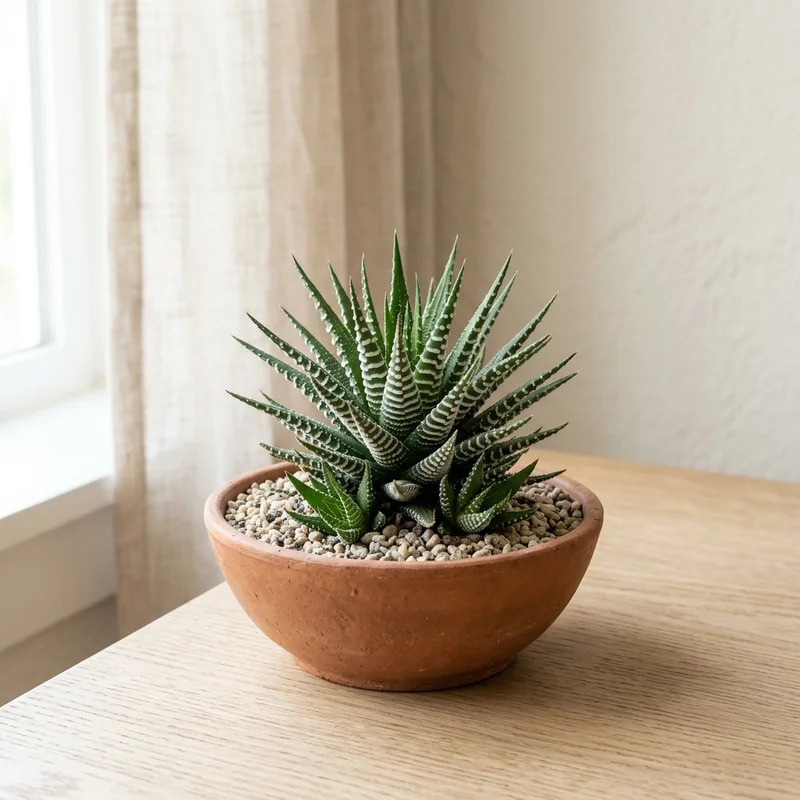
Stiff two-ranked or spiraling dark-green keeled leaves heavily textured with raised white warts; widely known in trade as Gasteria verrucosa.
Botanical sheet
- Family
- Asphodelaceae
- Origin
- South Africa (Western Cape)
- Size
- 10–20 cm compact clump
- Climate
- 12–26 °C · min 5 °C
What's wrong with your plant?
Pet safety Toxicity unverified
There is no species-specific toxicity verification for this plant on ASPCA. Check with your veterinarian or search the ASPCA directory before keeping it within reach of pets.
Open the toxicity checkerCommon questions
Why do young Gasteria carinata grow flat like an open fan?
Juvenile rosettes align leaves strictly in two opposite flat ranks before gradually spiraling with maturity, forming dense clustered mats over years.
What do Gasteria blooms look like on mature pots?
Spring spikes lift arching rows of pendulous belly-shaped tubular orange-pink flowers tipped with green above the spotted foliage.
How do you divide basal Gasteria offsets cleanly?
Twist or cut rooted pups apart during warm spring repotting, let callous for two days in shade, and pot into dry gritty mineral soil.