Brazilian jasmine (Mandevilla)
Mandevilla sanderiUpdated
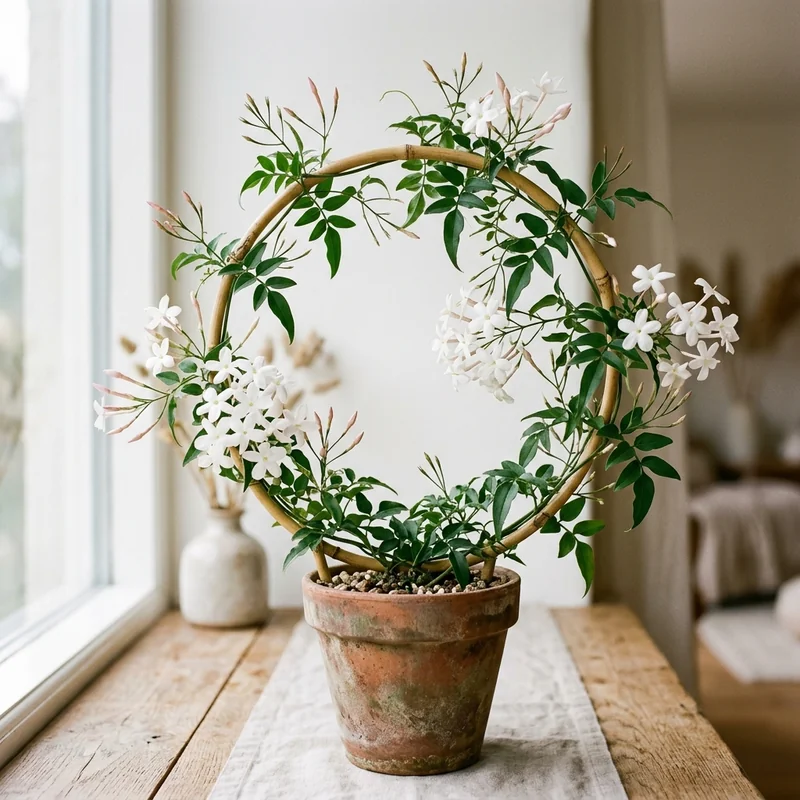
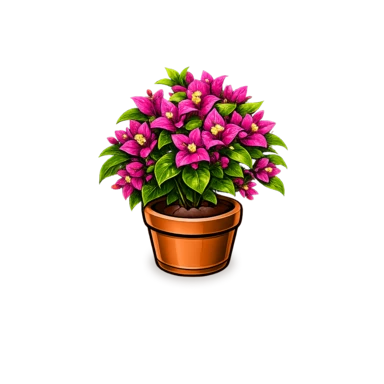
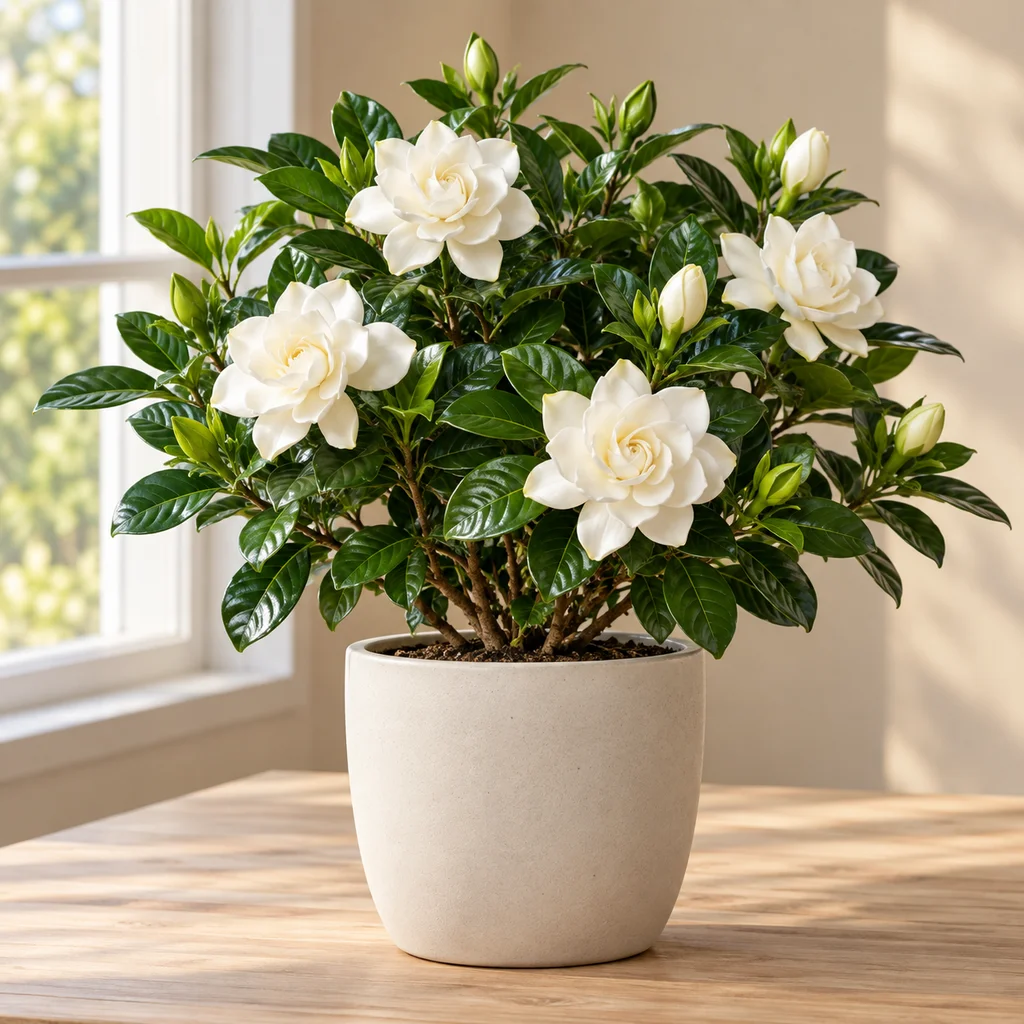
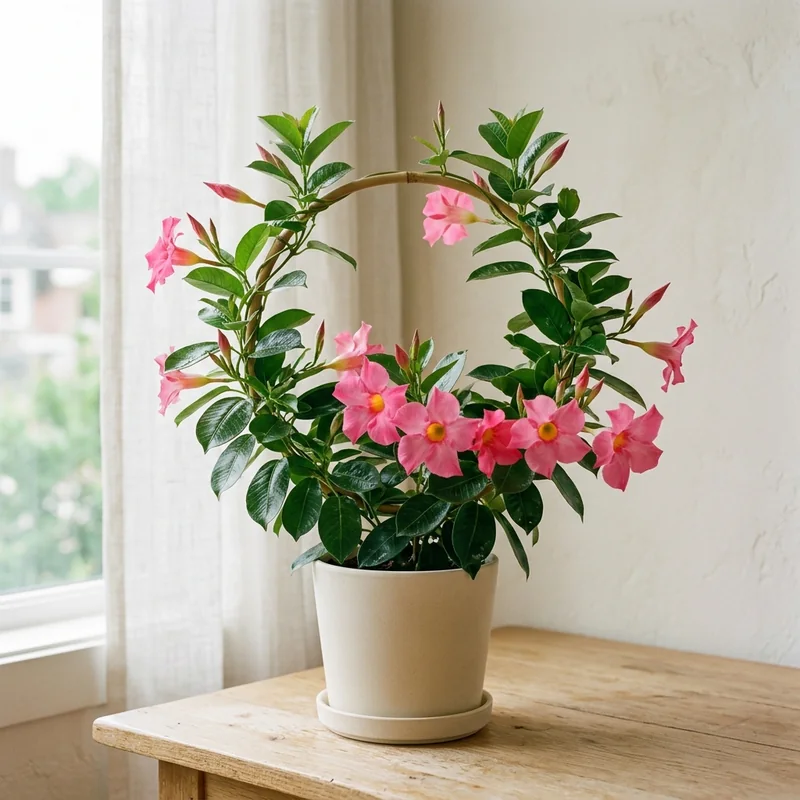
Tropical twining climber prized for glossy evergreen foliage and vivid pink trumpet blooms all summer. Needs bright sun-filtered light, a trellis and free-draining soil.
Essential care to help it thrive
Light and placement
Provide bright daylight with mild morning or late sun; shade gently from scorching summer afternoon heat. Too much shade cuts down flower production sharply.
Climate and season
Enjoys warm humid summers and bright frost-free overwintering indoors. Wear gloves when trimming stems, as milky white sap can irritate skin.
Soil and repotting
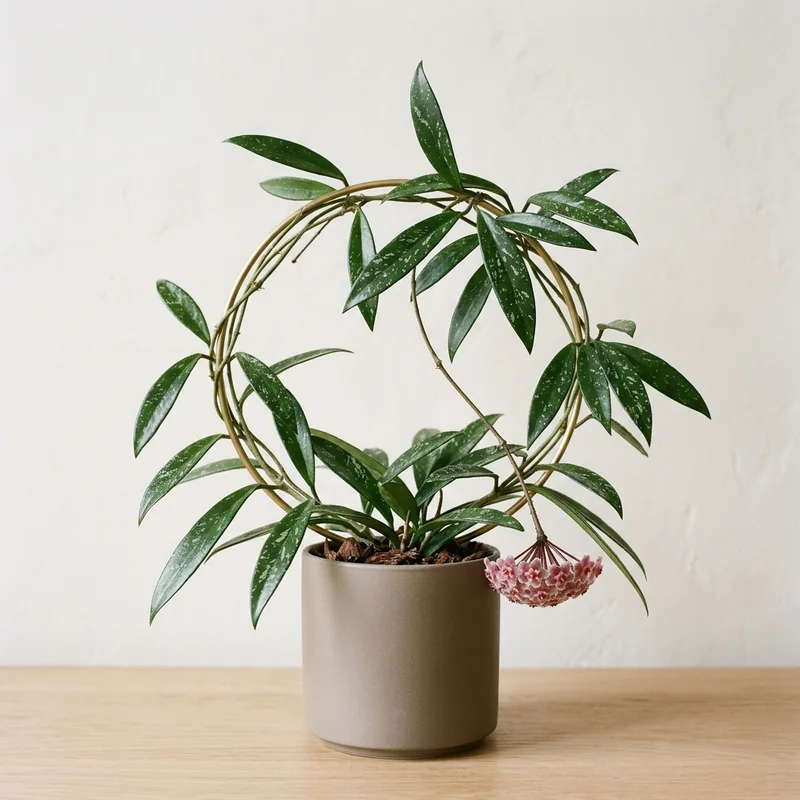
Pot with open drainage and a small hoop trellis using a peat-free, loam-based potting mix lightened with perlite and fine bark for tuberous roots.
Conditions vary with pot, season and location. Always check the mix and your plant's response.
Brazilian jasmine (Mandevilla): when to check the soil
Check the upper 2–4 cm every 4–7 days in active summer bloom and water moderately; cut watering right back to every 10–16 days during cool bright winter rest.
Let Grovia remind you when to check your Brazilian jasmine (Mandevilla)Save the plant, get watering reminders and adjust the rhythm as the seasons change. Free on iPhone and Android.
See table by pot size
| Ø | Summer | Winter |
|---|---|---|
| 10 cm | 4–5 days | 7–10 days |
| 15 cm | 5–6 days | 9–13 days |
| 25 cm | 6–9 days | 12–17 days |
How to identify it
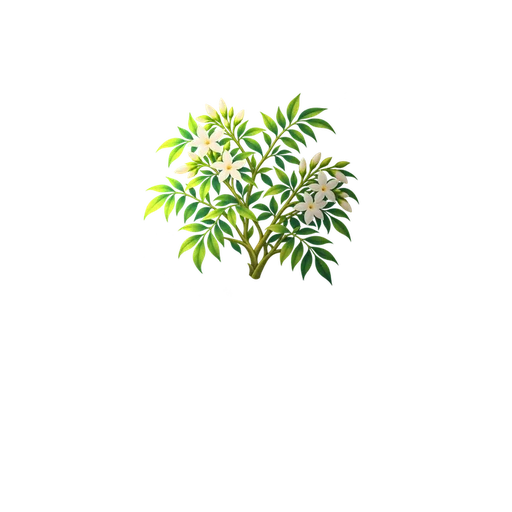
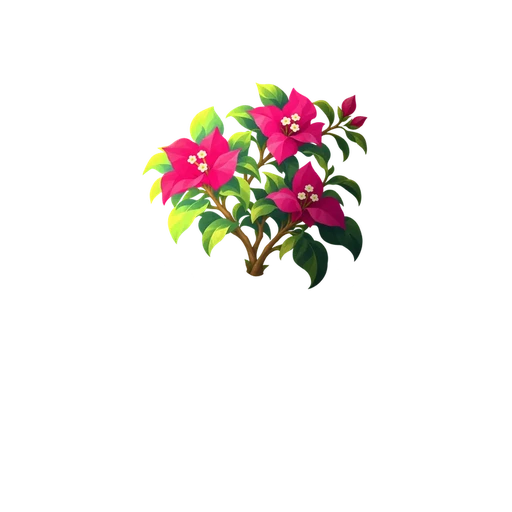
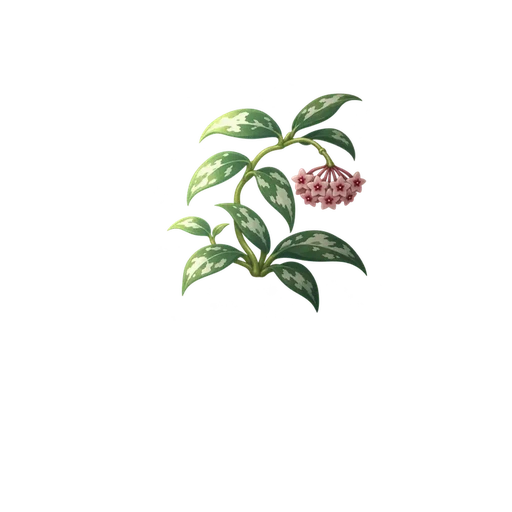
Woody twining stems bearing opposite leathery oval leaves and 5-lobed funnel flowers with yellow throats. Commonly traded under its synonym Dipladenia sanderi.
Botanical sheet
- Family
- Apocynaceae
- Origin
- Brazil (Rio de Janeiro)
- Size
- ≈ 2–4 m · Compact potted trellis climber
- Climate
- ≈ 18–28 °C · ≥ 10 °C · Warm indoors, frost-free winter
Approximate figures: reference sources do not publish exact data for this species.
What's wrong with your plant?
Pet safety Toxicity unverified
There is no species-specific toxicity verification for this plant on ASPCA. Check with your veterinarian or search the ASPCA directory before keeping it within reach of pets.
Open the toxicity checkerCommon questions
Is dipladenia a different plant from mandevilla?
No—Dipladenia sanderi is simply the older horticultural name for Mandevilla sanderi, still widely used for compact bushy varieties bred for pots and trellises.
How should I overwinter potted Mandevilla sanderi?
Bring pots indoors before autumn frost into a bright cool room, trim wayward vines and water sparingly until spring warmth returns.
Should I handle Mandevilla sap carefully when pruning?
Yes. RHS warns the milky sap may irritate skin and cause mild stomach upset if ingested, so wear gloves when pruning.