Blushing bromeliad (Neoregelia)
Neoregelia carolinaeUpdated
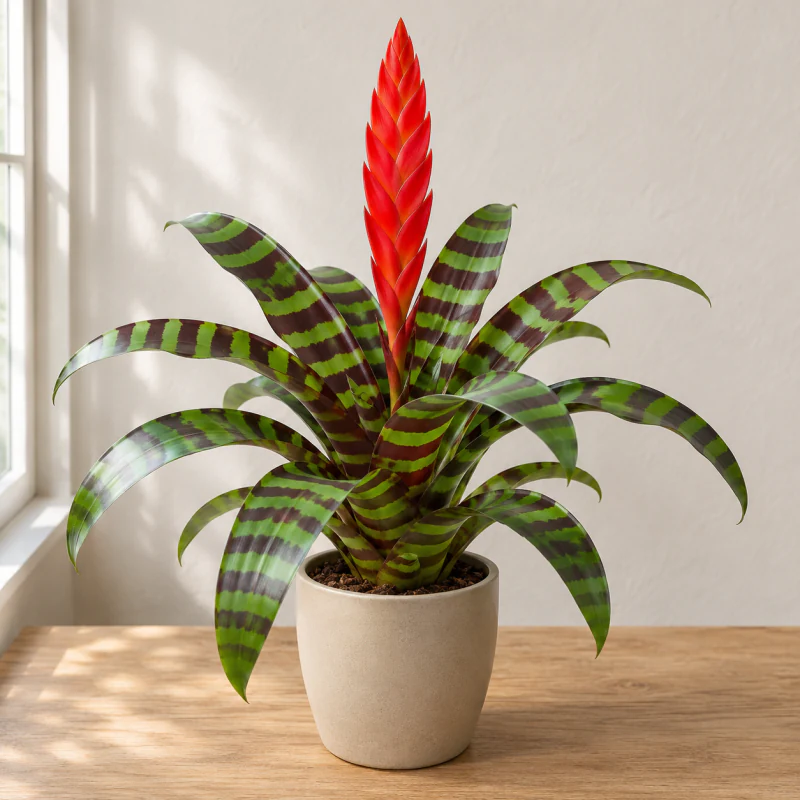
Pet-safe Brazilian tank bromeliad for dogs and cats (ASPCA) flushing crimson red across its open center cup. Wants bright filtered light and fresh cup water.
Essential care to help it thrive
Light and placement
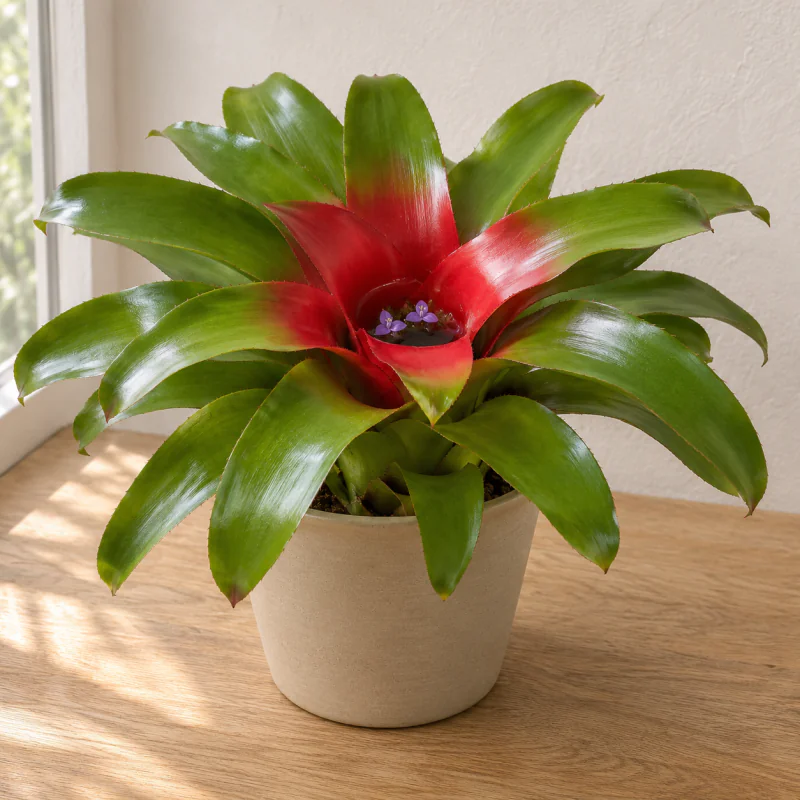
Give very bright indirect light or mild morning sun so central scarlet blushing glows vivid and striped forms hold strong contrast without sun-scorch.
Climate and season
Excels at 18–27 °C (RHS H1b frost-free minimum 10 °C indoors) in medium room humidity with gentle air circulation clear of hard tap water.
Soil and repotting
Small drained pot packed loosely with airy epiphytic blend of fine pine bark, coco coir, and coarse perlite.
Conditions vary with pot, season and location. Always check the mix and your plant's response.
Blushing bromeliad (Neoregelia): when to check the soil
Fill the shallow central leaf tank with clean rainwater—flushing it fresh periodically—while keeping airy orchid bark around roots only lightly damp.
Let Grovia remind you when to check your Blushing bromeliad (Neoregelia)Save the plant, get watering reminders and adjust the rhythm as the seasons change. Free on iPhone and Android.
See table by pot size
| Ø | Summer | Winter |
|---|---|---|
| 10 cm | 4–5 days | 7–10 days |
| 15 cm | 5–6 days | 9–13 days |
| 25 cm | 6–9 days | 12–17 days |
How to identify it
Low spreading strap-leaf rosette blushing vivid scarlet at the cup around small violet flowers; older texts list Nidularium carolinae.
Botanical sheet
- Family
- Bromeliaceae
- Origin
- Southeastern Brazil
- Size
- 25–45 cm wide rosette
- Climate
- 18–27 °C · min 10 °C
What's wrong with your plant?
Pet safety Pet-friendly
ASPCA lists this species as non-toxic to cats and dogs. Even so, prevent heavy chewing or ingestion of potting mix or fertiliser.
See the ASPCA entryCommon questions
Why does Blushing Bromeliad stay low instead of sending up a tall spike?
Instead of raising a tall stalk, Neoregelia carolinae turns its inner rosette leaves fiery crimson around small purple blooms tucked inside the water cup.
Is Neoregelia carolinae safe around dogs and cats indoors?
Yes. ASPCA lists blushing bromeliad as non-toxic to dogs and cats (handle sharp marginal teeth gently if present).
How do you multiply new bromeliads after the red center fades?
Wait until basal side offsets grow to about a third of mother size before potting them separately into airy pine bark.