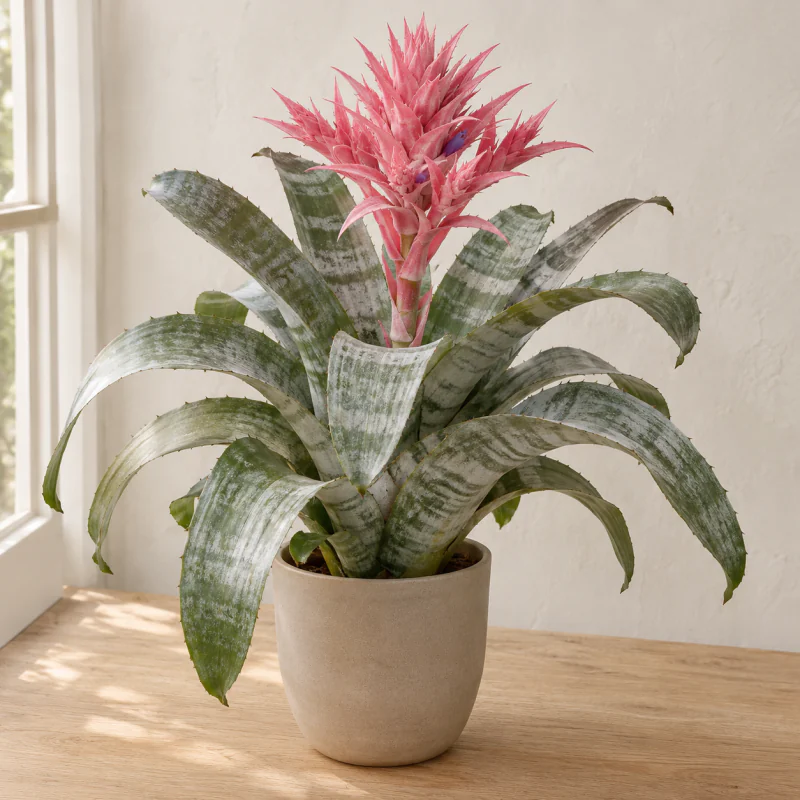
Flaming sword (Lutheria splendens)
Lutheria splendensUpdated
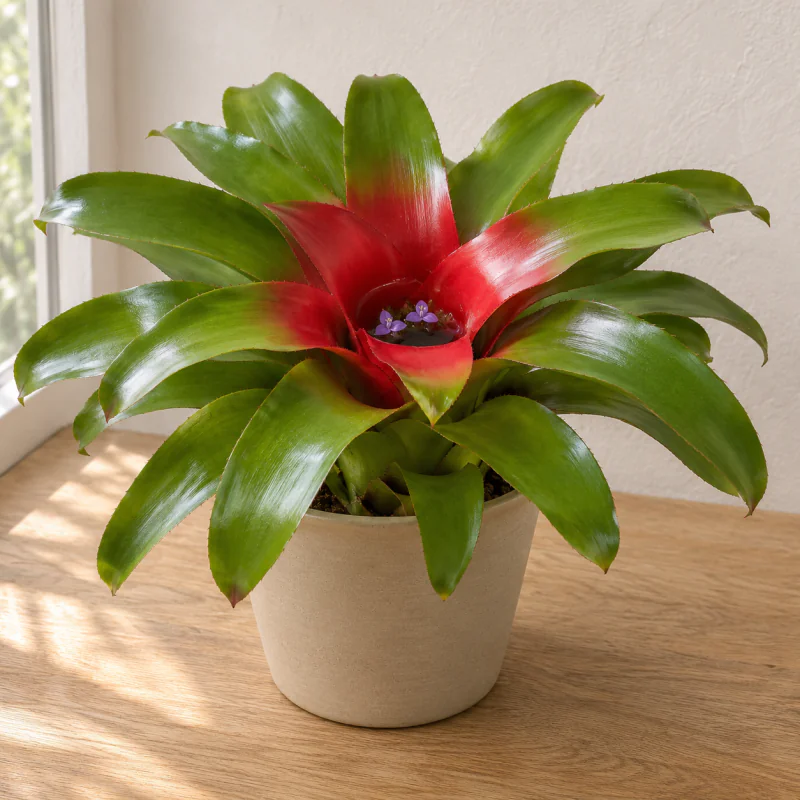
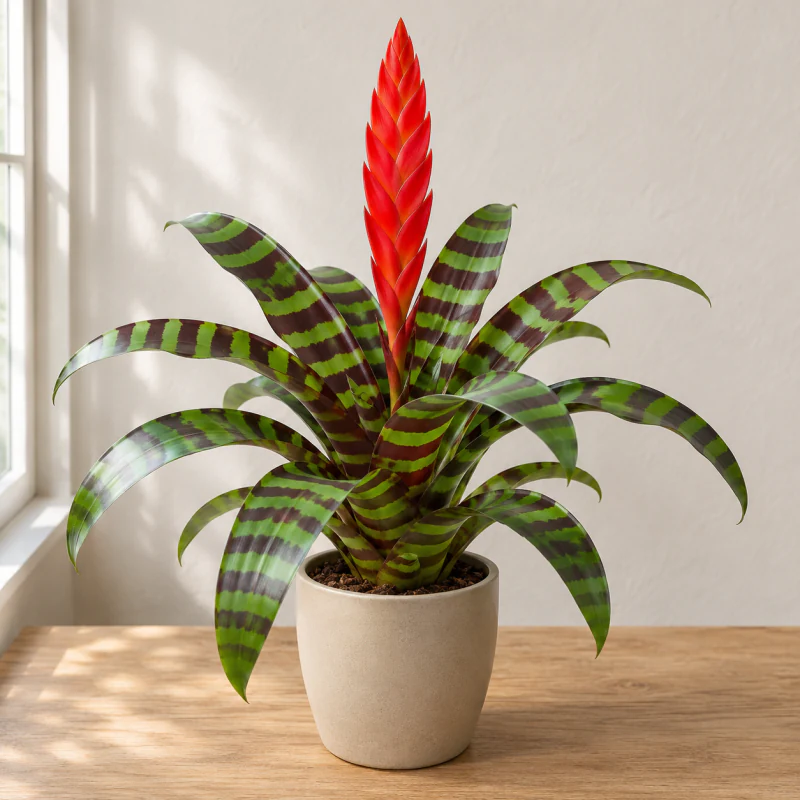
Sculptural South American tank bromeliad with boldly banded strap rosettes and a flat crimson-red sword spike. Needs bright shade and soft water inside cup.
Essential care to help it thrive
Light and placement
Give bright indirect window light shielded from harsh sunbeams so banded stripes stay crisp and scarlet bracts glow vivid without leaf scorch.
Climate and season
Requires steady warmth above 15 °C (ideally 18–26 °C) with moderate-to-high humidity clear of cold drafts and mineral-heavy tap water.
Soil and repotting
Small drained container with airy epiphytic blend of fine pine bark, coco coir, and perlite mainly for anchorage.
Conditions vary with pot, season and location. Always check the mix and your plant's response.
Flaming sword (Lutheria splendens): when to check the soil
Keep clean rainwater or distilled water sitting lightly in the central leaf cup—flushing it fresh periodically—while holding bark mix barely damp.
Let Grovia remind you when to check your Flaming sword (Lutheria splendens)Save the plant, get watering reminders and adjust the rhythm as the seasons change. Free on iPhone and Android.
See table by pot size
| Ø | Summer | Winter |
|---|---|---|
| 10 cm | 4–5 days | 7–10 days |
| 15 cm | 5–6 days | 9–13 days |
| 25 cm | 6–9 days | 12–17 days |
How to identify it
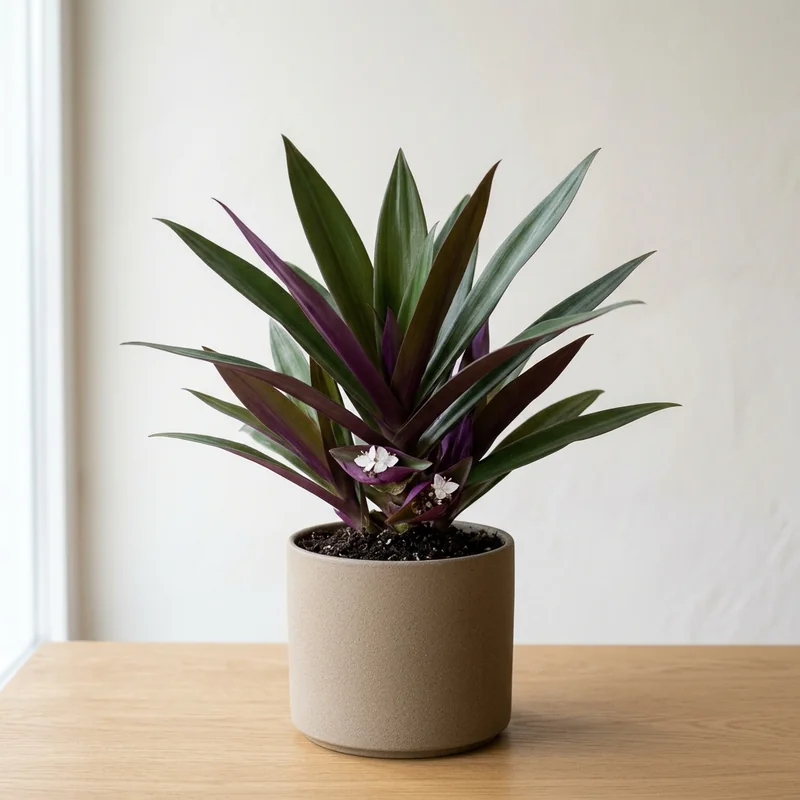
Funnel rosette of dark cross-banded green leaves sending up a bright red blade-like flower spike; now Lutheria splendens, still sold as Vriesea splendens.
Botanical sheet
- Family
- Bromeliaceae
- Origin
- Northern South America and Trinidad
- Size
- 50–90 cm flowering spike
- Climate
- 18–26 °C · min 15 °C
What's wrong with your plant?
Pet safety Toxicity unverified
There is no species-specific toxicity verification for this plant on ASPCA. Check with your veterinarian or search the ASPCA directory before keeping it within reach of pets.
Open the toxicity checkerCommon questions
Why does the central flaming sword spike fade and the rosette decline?
Bromeliads are monocarpic: the main cup blooms once over several months then fades naturally while pushing healthy basal offsets along its base.
When should you separate basal Vriesea splendens offsets?
Wait until new side pups reach roughly one-third the height of the mother rosette before easing them apart into small pots of airy bark.
How do you refresh the central tank cleanly without rotting leaves?
Tip the container sideways gently to dump stale water, then refill the inner cup with fresh room-temperature rainwater or filtered water.