Moses-in-the-cradle (Rhoeo)
Tradescantia spathaceaUpdated
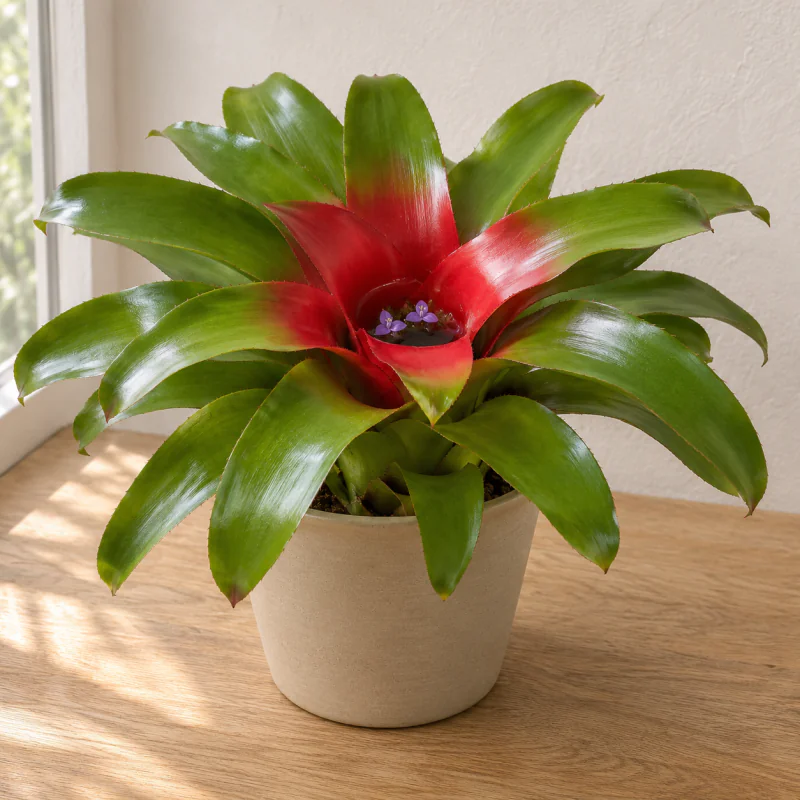
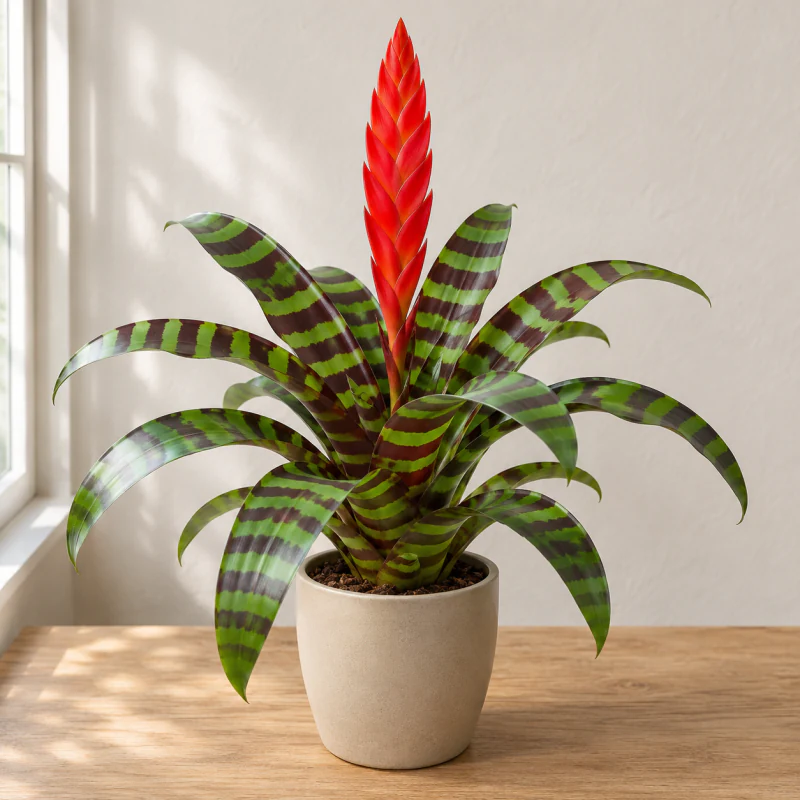
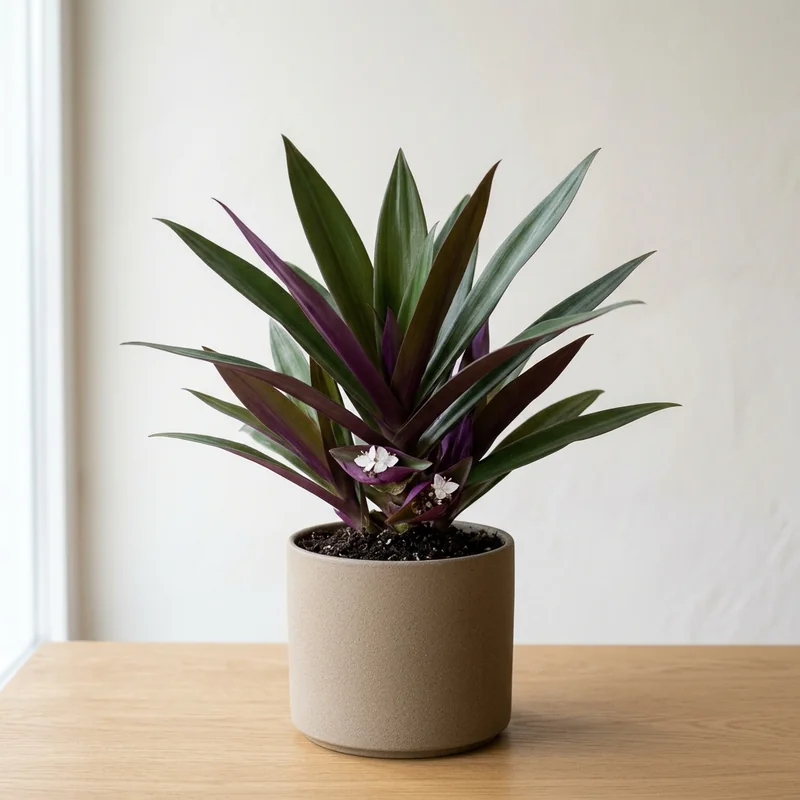
Compact Mexican sword-leaf rosette dark green above and vivid purple beneath with boat-shaped flower bracts. Craves bright light, warmth, and gritty drainage.
Essential care to help it thrive
Light and placement
Place in bright indirect light or mild morning sun so rosettes stay tight and violet backs stay rich. Low light stretches weak pale stems quickly.
Climate and season
Holds cleanly at 16–27 °C (above 10 °C frost-free minimum) in ordinary room humidity, gradually clustering with neat basal offsets.
Soil and repotting
Drained ceramic or terracotta pot filled with airy potting compost cut with a third coarse perlite or pumice.
Conditions vary with pot, season and location. Always check the mix and your plant's response.
Moses-in-the-cradle (Rhoeo): when to check the soil
Water around the soil rim once the upper 2–3 cm feel dry, never pouring straight into tight leaf axils where stagnant damp rots the crown.
Let Grovia remind you when to check your Moses-in-the-cradle (Rhoeo)Save the plant, get watering reminders and adjust the rhythm as the seasons change. Free on iPhone and Android.
See table by pot size
| Ø | Summer | Winter |
|---|---|---|
| 10 cm | 4–5 days | 7–10 days |
| 15 cm | 5–6 days | 9–13 days |
| 25 cm | 6–9 days | 12–17 days |
How to identify it
Clump of stiff sword-shaped leaves dark green above, deep violet below, and white flowers tucked inside purple boat bracts; formerly Rhoeo spathacea.
Botanical sheet
- Family
- Commelinaceae
- Origin
- Southern Mexico to Central America
- Size
- 20–35 cm upright rosette
- Climate
- 16–27 °C · min 10 °C
What's wrong with your plant?
Pet safety Toxicity unverified
There is no species-specific toxicity verification for this plant on ASPCA. Check with your veterinarian or search the ASPCA directory before keeping it within reach of pets.
Open the toxicity checkerCommon questions
Why are they called Moses-in-the-cradle?
At maturity, tight purple boat-shaped bracts emerge from the lower leaf axils cradling clusters of tiny three-petaled white flowers tucked safely inside.
Can Tradescantia spathacea sap irritate hands or pets?
Yes. RHS warns the sap is a skin allergen and ASPCA lists no safe species entry, so wear gloves during division and keep out of pets' reach.
Should you propagate the basal offsets around the rosette?
Once offsets form several leaves and roots in spring, detach them cleanly with a sharp blade to start fresh compact rosettes.