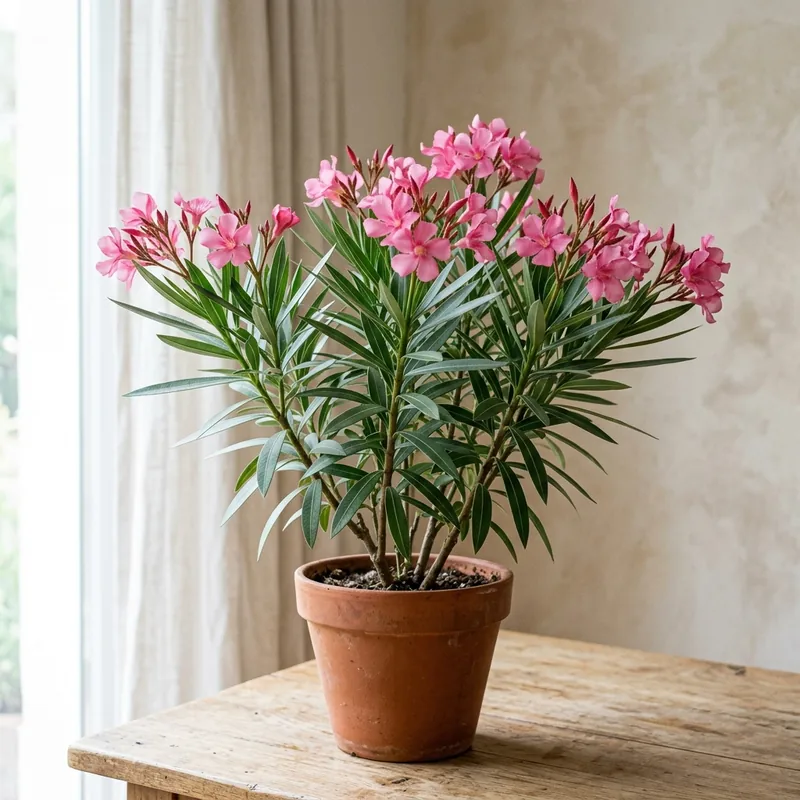
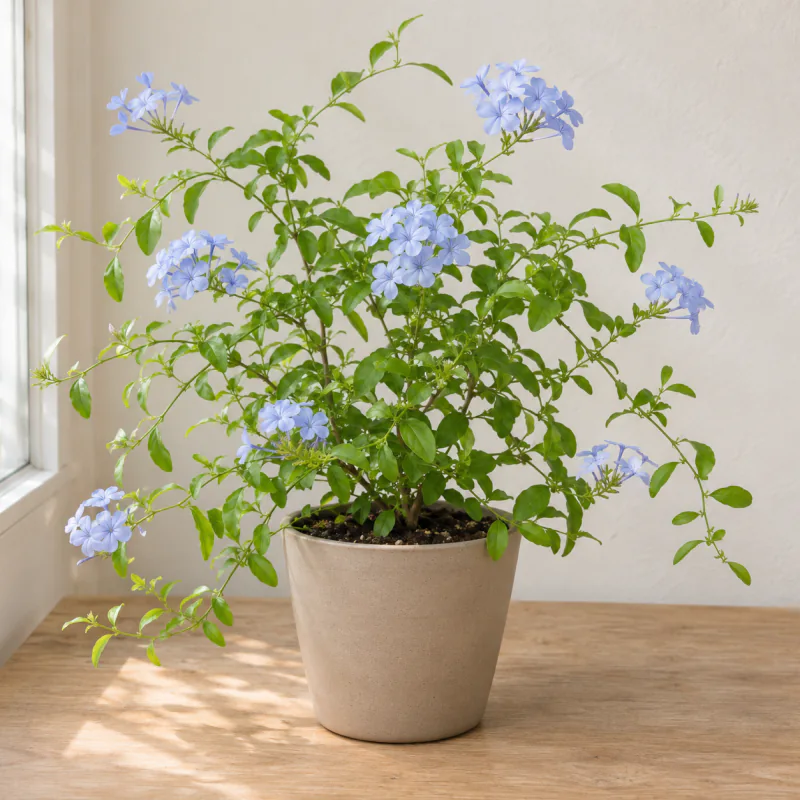
Cape Leadwort (Plumbago auriculata)
Plumbago auriculataUpdated
Scrambling South African patio shrub prized for clouds of sky-blue tubular flowers from summer to autumn. Loves bright sun, a sturdy trellis, and dryish winters.
Essential care to help it thrive
Light and placement
Give full sun for uninterrupted sky-blue trusses, allowing light afternoon screening in scorching summers; deep shade produces bare stems and sparse bloom.
Climate and season
Excels outdoors at 15–30 °C and tolerates brief chills down to 1 °C against warm walls; overwinter frost-tender pots in a bright sheltered porch.
Soil and repotting
Use a sturdy deep container filled with fertile, peat-free loam-based compost opened up with coarse grit or bark.
Conditions vary with pot, season and location. Always check the mix and your plant's response.
Cape Leadwort (Plumbago auriculata): when to check the soil
Water freely whenever upper soil dries while actively blooming in warm weather, then keep roots barely moist through cool winter dormancy.
Let Grovia remind you when to check your Cape Leadwort (Plumbago auriculata)Save the plant, get watering reminders and adjust the rhythm as the seasons change. Free on iPhone and Android.
See table by pot size
| Ø | Summer | Winter |
|---|---|---|
| 10 cm | 4–5 days | 7–10 days |
| 15 cm | 5–6 days | 9–13 days |
| 25 cm | 6–9 days | 12–17 days |
How to identify it
Scrambling evergreen shrub with arching stems, spoon-shaped lime leaves, and sky-blue racemes with sticky calyces; formerly named Plumbago capensis.
Botanical sheet
- Family
- Plumbaginaceae
- Origin
- South Africa and southern Mozambique
- Size
- 1–2 m potted (2.5–4 m)
- Climate
- 15–30 °C · min 1 °C
What's wrong with your plant?
Pet safety Toxicity unverified
There is no species-specific toxicity verification for this plant on ASPCA. Check with your veterinarian or search the ASPCA directory before keeping it within reach of pets.
Open the toxicity checkerCommon questions
Why do the flower calyces feel noticeably sticky to the touch?
Tiny glandular hairs coat the flower tubes to protect nectar from crawling insects and help cling ripe seed pods onto passing fur; wipe shears after deadheading.
Does Cape Leadwort twine around a trellis on its own?
No, it is a scrambling shrub rather than a true twiner, so soft plant ties help anchor arched canes securely onto balcony railings or wooden frames.
When should Plumbago auriculata be pruned back for heavy blooms?
Flowers form on new current-season growth, so hard pruning in late winter or early spring refreshes compact branching and triggers dense flower trusses.