Blue passionflower
Passiflora caeruleaUpdated
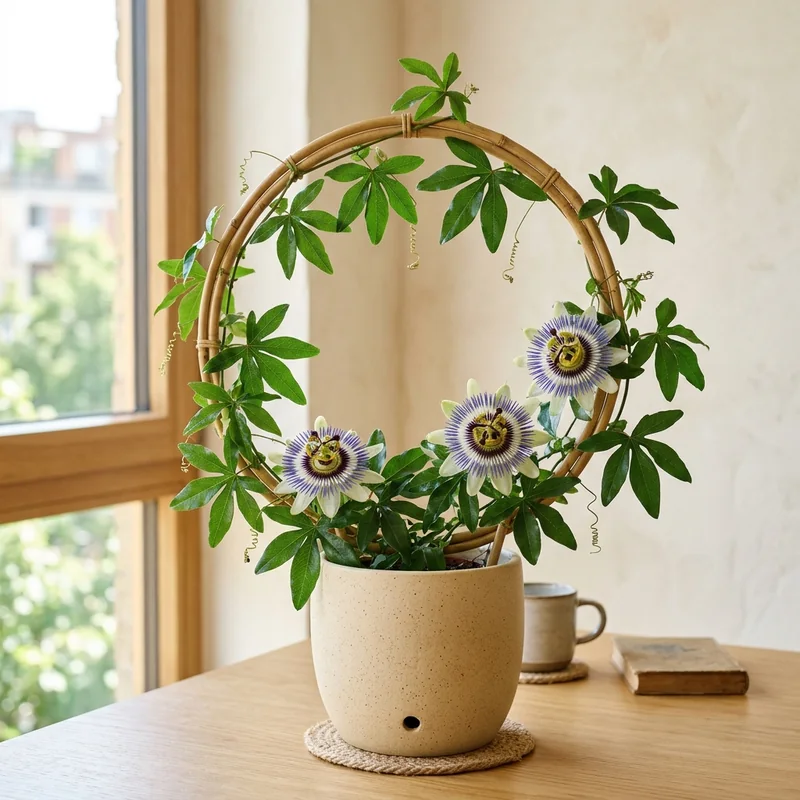
Vigorous tendril-climbing shrub famed for intricate flowers with blue-banded coronas and orange fruits. Thrives in sheltered sun and tolerates down to -10 °C.
Essential care to help it thrive
Light and placement
Give full sun or warm partial shade against a sheltered wall or bright conservatory. Heavy shade drives leafy stems at the expense of flowers.
Climate and season
Train tendrils along strong trellis or wires. In harsh frost regions, grow in a container and overwinter indoors in a bright cool conservatory or greenhouse.
Soil and repotting
Moist, well-drained loam-based compost or garden soil without heavy nitrogen feeds. Top-dress or pot on in spring only when needed to keep growth balanced.
Conditions vary with pot, season and location. Always check the mix and your plant's response.
Blue passionflower: when to check the soil
Check the soil before watering: provide moderate water during active spring-summer growth in well-drained compost, then keep significantly drier in winter.
Let Grovia remind you when to check your Blue passionflowerSave the plant, get watering reminders and adjust the rhythm as the seasons change. Free on iPhone and Android.
See table by pot size
| Ø | Summer | Winter |
|---|---|---|
| 10 cm | 4–5 days | 7–10 days |
| 15 cm | 5–6 days | 9–13 days |
| 25 cm | 6–9 days | 12–17 days |
How to identify it
Fast-growing evergreen tendril climber with palmately lobed leaves, distinctive flowers bearing colourful blue-and-white corona filaments and conspicuous orange fruits.
Botanical sheet
- Family
- Passifloraceae
- Origin
- South America
- Size
- 8–12 m vigorous vine
- Climate
- 10–26 °C · min. -10 °C
What's wrong with your plant?
Pet safety Toxicity unverified
There is no species-specific toxicity verification for this plant on ASPCA. Check with your veterinarian or search the ASPCA directory before keeping it within reach of pets.
Open the toxicity checkerCommon questions
When and how should I prune Passiflora caerulea?
Prune in early spring just before growth resumes, shortening long side shoots and clearing dead or congested stems to keep vigour in bounds.
Can blue passionflower survive outdoors year-round?
Established plants in sheltered, sharply drained sites withstand down to -10 °C (RHS H4), though potted plants need frost protection.
Does it spread aggressively if left unchecked?
Yes, RHS notes it can become a nuisance via rapid vines and suckers unless guided onto sturdy support and trimmed annually.