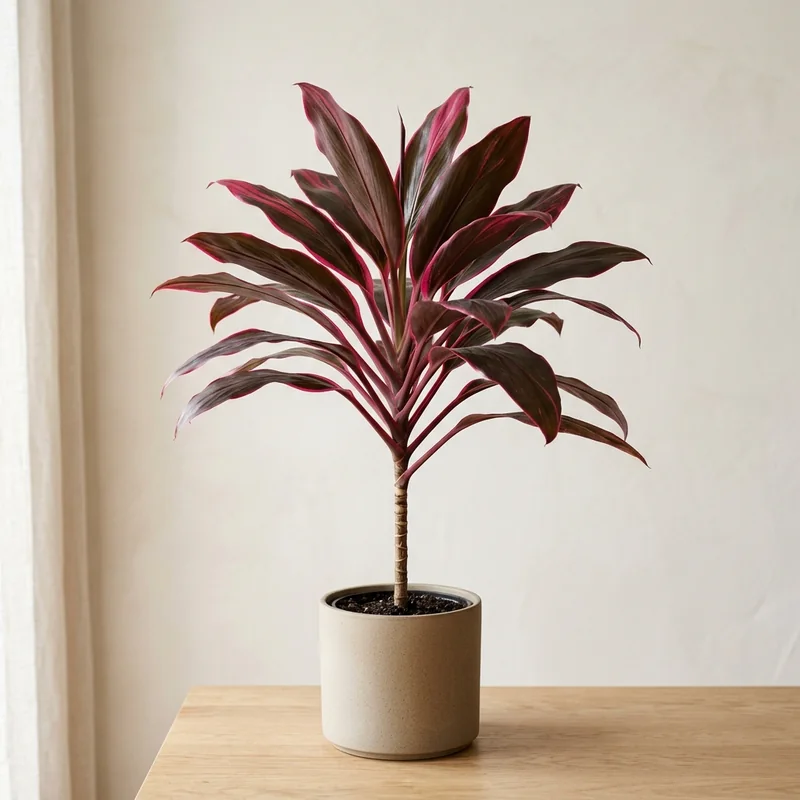
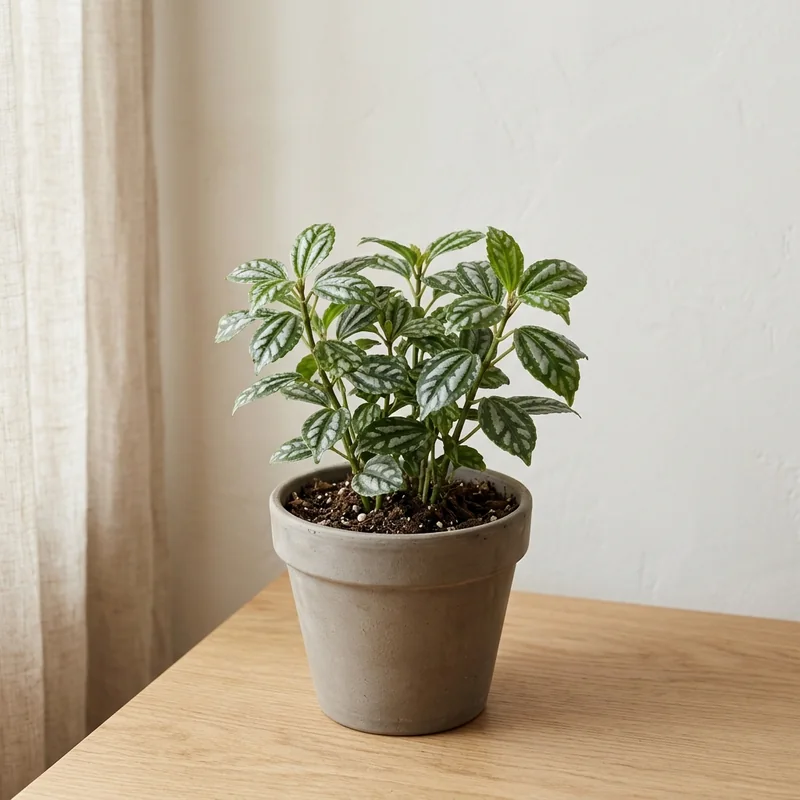
Watermelon peperomia
Peperomia argyraeaUpdated
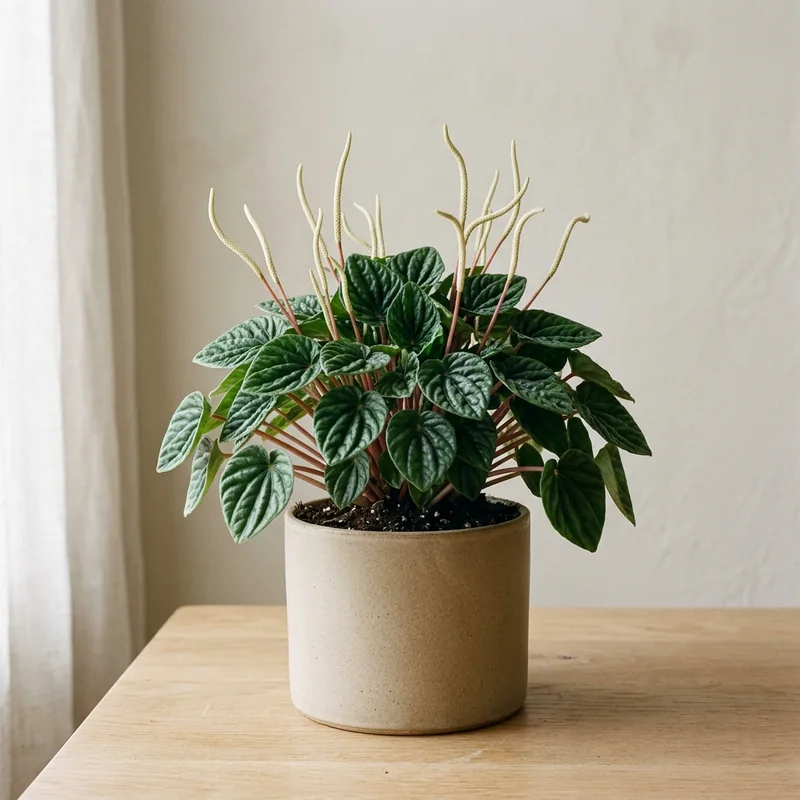
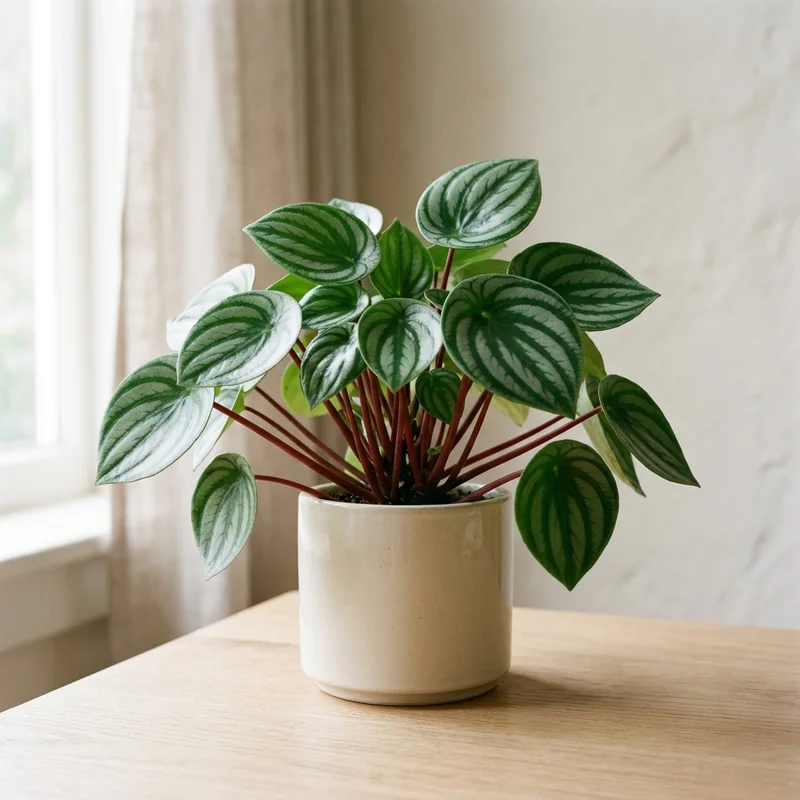
Compact pet-safe perennial prized for green-and-silver striped leaves on crimson stems. Thrives in bright indirect light, small pots and deep dry-downs.
Essential care to help it thrive
Light and placement
Provide bright indirect light in active growth and full winter daylight. Direct summer sun bleaches and scorches foliage, while dim rooms cause stretched floppy stalks.
Climate and season
Keep indoors at 16–25 °C, well above 10 °C, with moderate household humidity and gentle air movement. Thrives equally well in bright terrariums.
Soil and repotting
Use a snug, shallow draining pot filled with a free-draining peat-free potting mix plus perlite and fine bark or sharp grit so fine roots stay oxygenated.
Conditions vary with pot, season and location. Always check the mix and your plant's response.
Watermelon peperomia: when to check the soil
Fleshy leaves store water, so check every 7–10 days in summer (12–16 days in winter) and water only once the top two-thirds of mix feels dry. Never wet the crown.
Let Grovia remind you when to check your Watermelon peperomiaSave the plant, get watering reminders and adjust the rhythm as the seasons change. Free on iPhone and Android.
See table by pot size
| Ø | Summer | Winter |
|---|---|---|
| 10 cm | 4–5 days | 7–10 days |
| 15 cm | 5–6 days | 9–13 days |
| 25 cm | 6–9 days | 12–17 days |
How to identify it
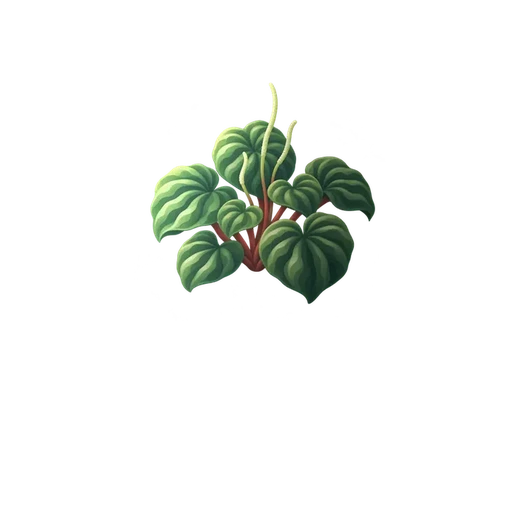
Nearly stemless rosette of fleshy ovate leaves banded like watermelon rind on red stalks. Accepted as Peperomia argyraea, also labelled P. argyreia or P. sandersii.
Botanical sheet
- Family
- Piperaceae
- Origin
- Brazil · Tropical South America
- Size
- 15–25 cm compact
- Climate
- 16–25 °C · min. 10 °C
What's wrong with your plant?
Pet safety Pet-friendly
ASPCA lists this species as non-toxic to cats and dogs. Even so, prevent heavy chewing or ingestion of potting mix or fertiliser.
See the ASPCA entryCommon questions
How often should I water watermelon peperomia?
Its thick leaves hold moisture, so check every 7–10 days in summer and water only after the upper two-thirds of soil feels dry—roughly every 12–16 days in winter.
Why are new watermelon peperomia leaves growing crinkled?
Cupped or warped growth typically signals calcium deficiency or erratic dry-wet swings; steady watering and light balanced fertilizer prevent it.
Is Peperomia argyraea safe for cats and dogs?
Yes. ASPCA lists watermelon peperomia (Peperomia argyreia) as non-toxic to both cats and dogs.