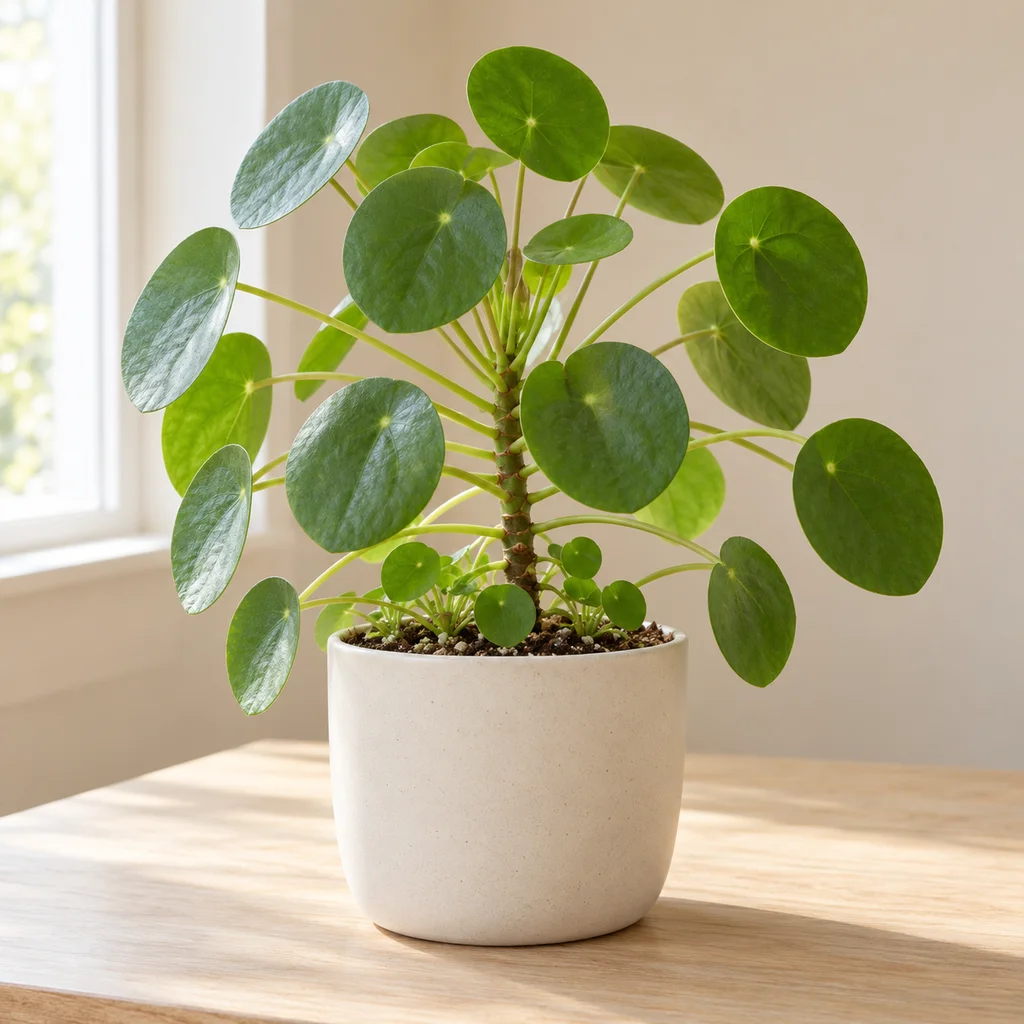
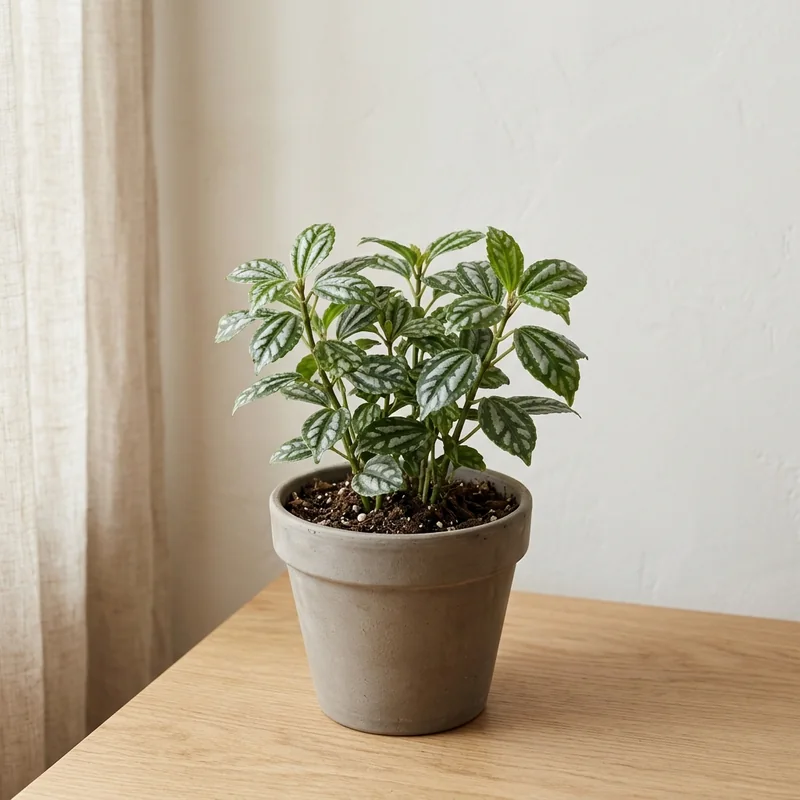
Emerald ripple peperomia
Peperomia caperataUpdated
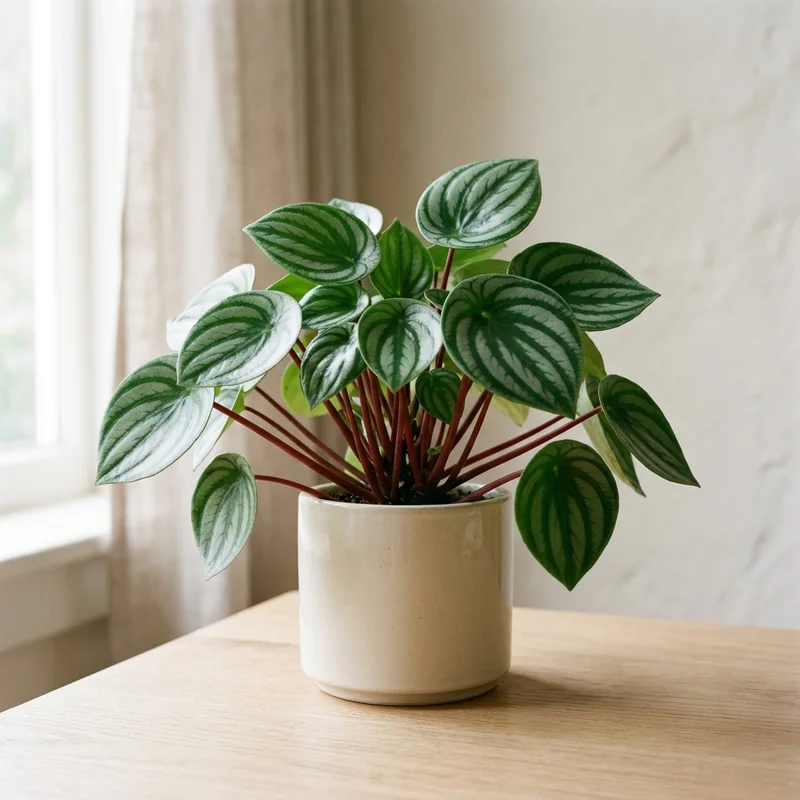
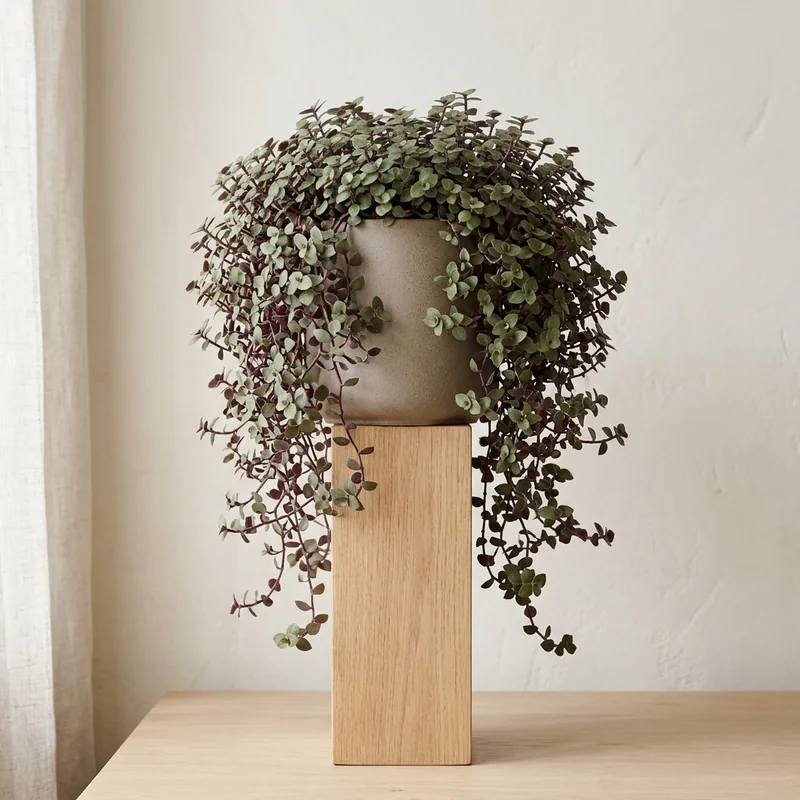
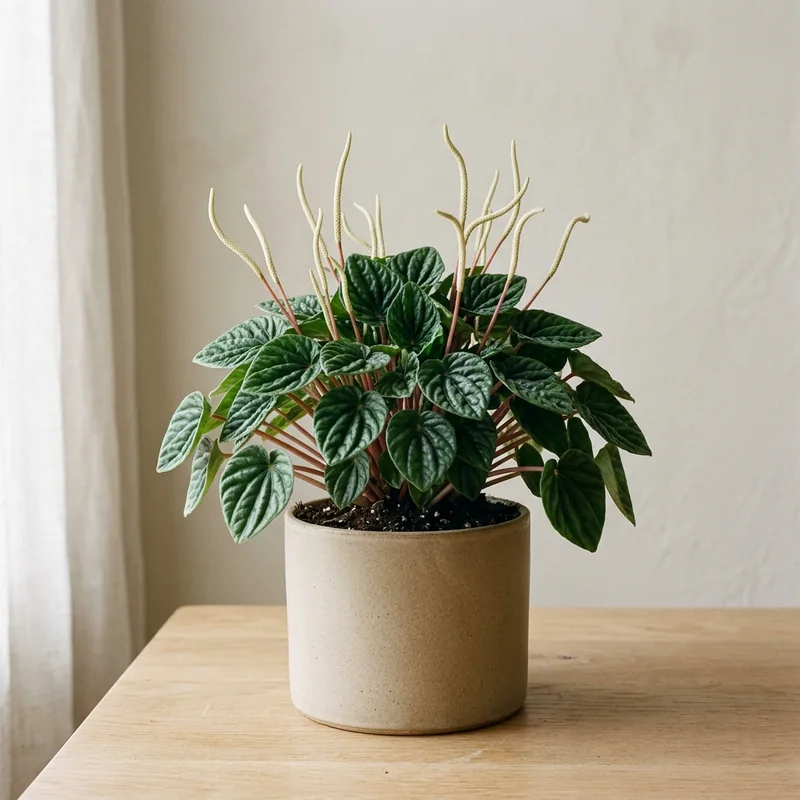
Pet-safe compact rosette of corrugated heart-shaped leaves on red stalks with white spikes. Loves bright filtered light, humidity and light tepid watering.
Essential care to help it thrive
Light and placement
Give bright indirect light during active growth and maximize gentle daylight in dark winter months (as RHS advises), always shading from blistering afternoon sun.
Climate and season
Keep in cozy 18–24 °C warmth strictly above 10 °C with gentle humidity (suitable for roomy terrariums), taking care never to trap standing droplets in the dense crown.
Soil and repotting
Fine airy blend mixing light houseplant compost, small bark chips and generous perlite or pumice.
Conditions vary with pot, season and location. Always check the mix and your plant's response.
Emerald ripple peperomia: when to check the soil
Fine shallow roots rot fast in wet soil: check the upper half every 7–10 days in summer before watering moderately with tepid soft water, and water sparingly in winter.
Let Grovia remind you when to check your Emerald ripple peperomiaSave the plant, get watering reminders and adjust the rhythm as the seasons change. Free on iPhone and Android.
See table by pot size
| Ø | Summer | Winter |
|---|---|---|
| 10 cm | 4–5 days | 7–10 days |
| 15 cm | 5–6 days | 9–13 days |
| 25 cm | 6–9 days | 12–17 days |
How to identify it
Dense low mounding perennial bearing thick puckered heart-shaped emerald leaves on rosy succulent stalks, topped from spring to autumn by slender cream-white flower spikes.
Botanical sheet
- Family
- Piperaceae
- Origin
- Southeastern Brazil
- Size
- 15–20 cm compact mound
- Climate
- 18–24 °C · min 10 °C
What's wrong with your plant?
Pet safety Pet-friendly
ASPCA lists this species as non-toxic to cats and dogs. Even so, prevent heavy chewing or ingestion of potting mix or fertiliser.
See the ASPCA entryCommon questions
Should I water Emerald Ripple Peperomia from the bottom?
Bottom watering or careful rim pouring works best because tight corrugated leaves trap water around the crown, easily triggering stem rot.
Is Peperomia caperata safe around cats and dogs?
Yes: ASPCA explicitly lists Emerald Ripple Peperomia (Peperomia caperata) as non-toxic to dogs, cats and horses.
Should I cut off the thin white rat-tail flower spikes?
RHS suggests pulling off spent spikes cleanly once they fade, though leaving fresh ones does no harm unless you want tighter foliage growth.