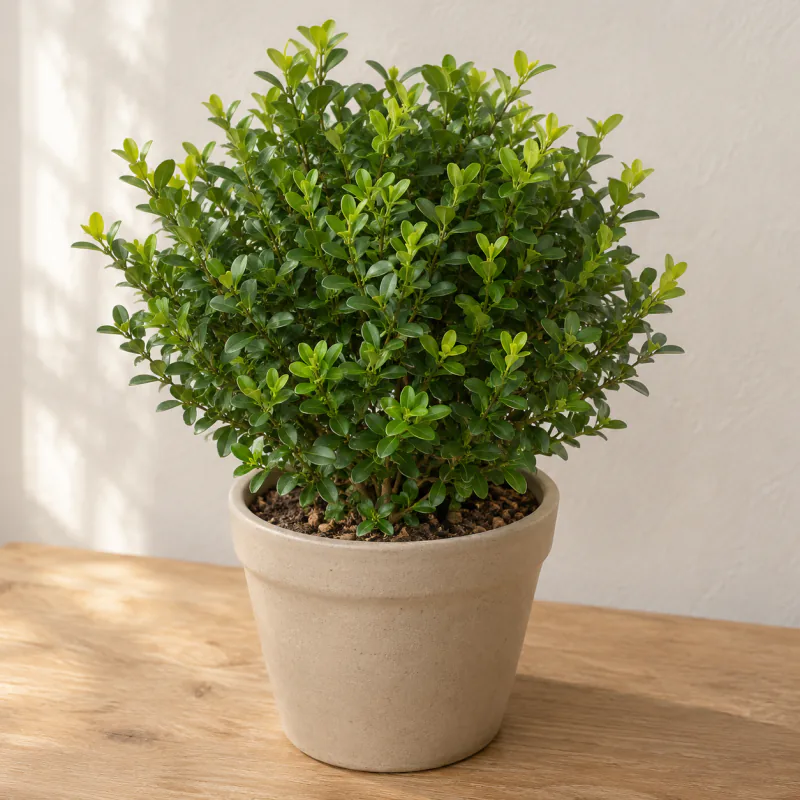
Japanese Pittosporum
Pittosporum tobiraUpdated
Dense glossy evergreen shrub prized for orange-blossom scented flowers and high tolerance of coastal wind and sun. Non-toxic to pets and tough on windy terraces.
Essential care to help it thrive
Light and placement
Give full sun or bright partial shade on sheltered sunny patios; bright exposure encourages compact internodes and fragrant late-spring flower clusters.
Climate and season
Handles 10–30 °C outdoors plus salt breeze cleanly; tolerates light freezes down to -5 °C once woody, though dry icy winds can scorch exposed leaf tips.
Soil and repotting
Pot in deep containers filled with fertile well-drained loam compost mixed cleanly with grit or pumice.
Conditions vary with pot, season and location. Always check the mix and your plant's response.
Japanese Pittosporum: when to check the soil
Soak thoroughly when upper soil feels dry during warm weather and pull back sharply in winter so roots never remain cold and stagnant.
Let Grovia remind you when to check your Japanese PittosporumSave the plant, get watering reminders and adjust the rhythm as the seasons change. Free on iPhone and Android.
See table by pot size
| Ø | Summer | Winter |
|---|---|---|
| 10 cm | 4–5 days | 7–10 days |
| 15 cm | 5–6 days | 9–13 days |
| 25 cm | 6–9 days | 12–17 days |
How to identify it
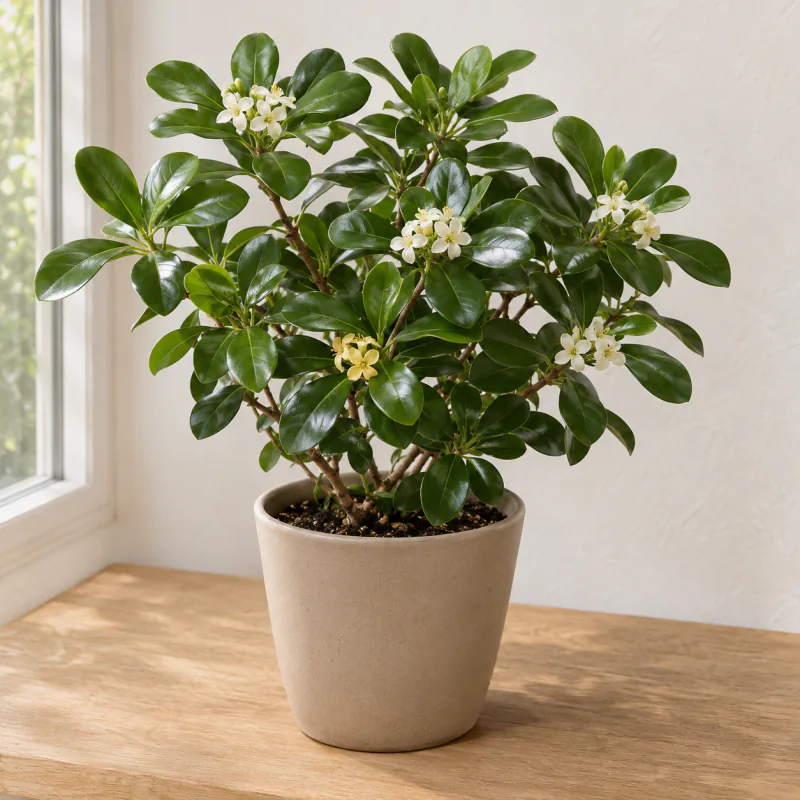
Broad slow-growing evergreen shrub with whorled leathery leaves and orange-scented white-to-yellow flower umbels; originally named Euonymus tobira.
Botanical sheet
- Family
- Pittosporaceae
- Origin
- Japan, South Korea, Taiwan, and southeastern China
- Size
- 0.8–1.5 m potted (2.5–4 m)
- Climate
- 10–30 °C · min -5 °C
What's wrong with your plant?
Pet safety Pet-friendly
ASPCA lists this species as non-toxic to cats and dogs. Even so, prevent heavy chewing or ingestion of potting mix or fertiliser.
See the ASPCA entryCommon questions
Why do Pittosporum tobira blossoms shift from crisp white to warm yellow?
Individual florets naturally open pure white with sweet mock-orange scent and age to creamy gold over several days, giving clusters a two-tone look.
Can Pittosporum tobira be shaped into clipped spheres in patio pots?
Yes—slow dense growth takes clean light pruning right after spring flowering, and dwarf cultivars like 'Nanum' stay mounded naturally.
Does this evergreen shrub handle windy coastal balconies reliably?
Yes, tough waxy foliage shields plants against salt spray and wind gusts far better than thin-leaved patio ornamentals.