Purple shamrock
Oxalis triangularisUpdated
Ornamental purple-leaved bulb whose leaflets open to daylight and fold at dusk, cycling naturally between active growth and brief rest.
Essential care to help it thrive
Light and placement
Give good filtered light to retain colour; acclimatise before strong sun.
Climate and season
Its foliage can disappear temporarily in dormancy while the bulb remains alive.
Soil and repotting
Loose bulb mix in a shallow pot with clear drainage holes.
Conditions vary with pot, season and location. Always check the mix and your plant's response.
Purple shamrock: when to check the soil
Check the surface before watering and let it drain; reduce water during dormancy until new shoots appear.
Let Grovia remind you when to check your Purple shamrockSave the plant, get watering reminders and adjust the rhythm as the seasons change. Free on iPhone and Android.
See table by pot size
| Ø | Summer | Winter |
|---|---|---|
| 10 cm | 4–5 days | 7–10 days |
| 15 cm | 5–6 days | 9–13 days |
| 25 cm | 6–9 days | 12–17 days |
How to identify it
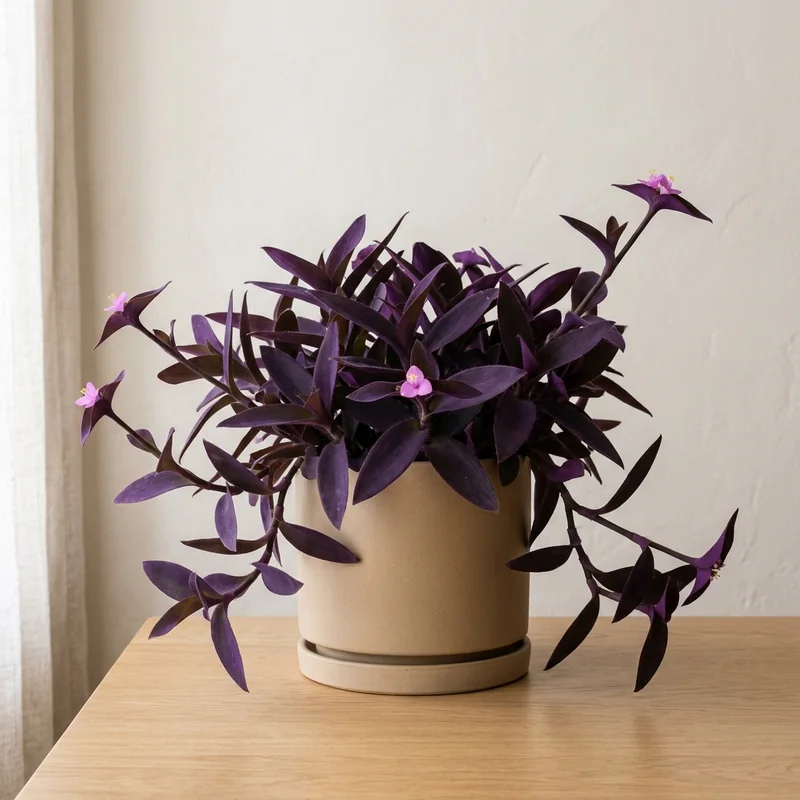
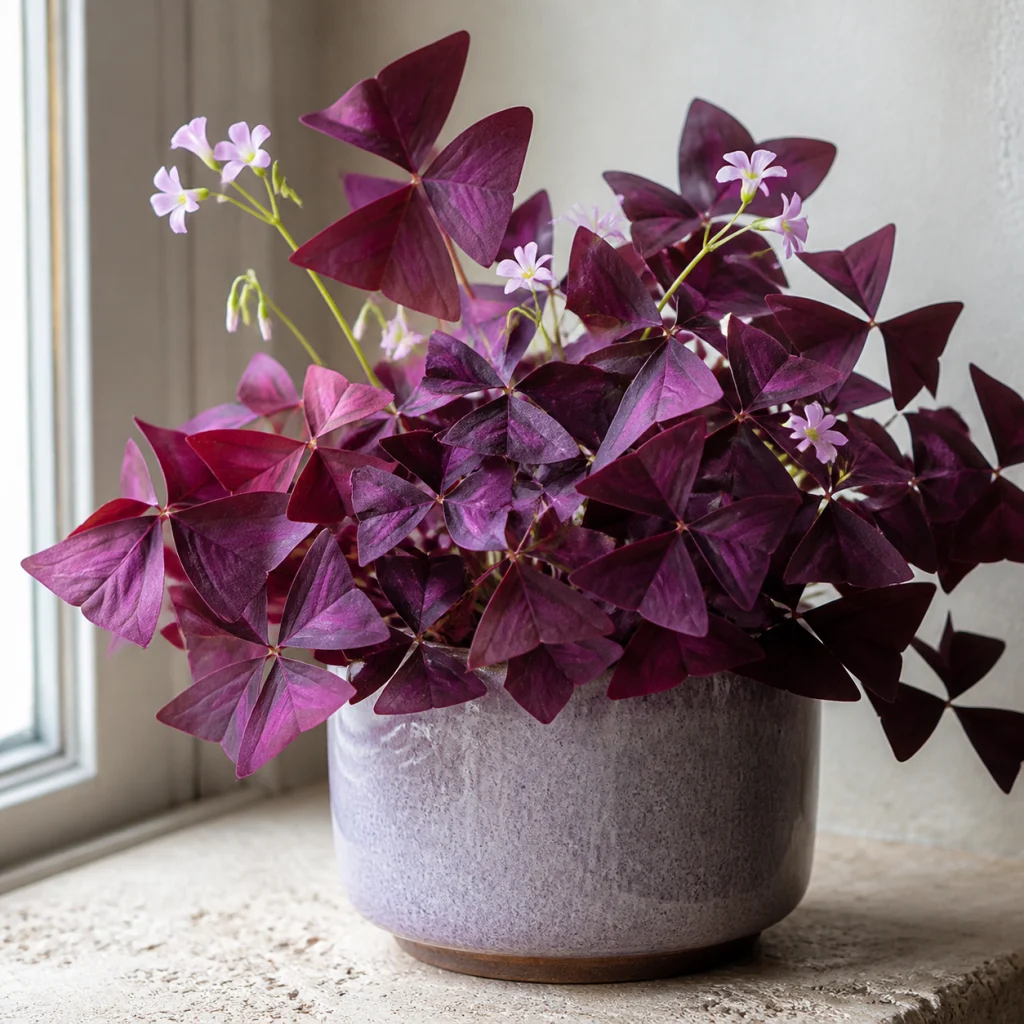
Purple triangular leaves occur in groups of three leaflets; they may fold as light changes.
Botanical sheet
- Family
- Oxalidaceae
- Origin
- Brazil · Argentina
- Size
- 15–30 cm mound
- Climate
- 15–24 °C · min. -5 °C
What's wrong with your plant?
Pet safety Toxic to pets
ASPCA lists this species as toxic to cats and dogs. Keep pets from chewing it; contact a veterinarian if ingestion is suspected.
Toxic principles and clinical signs quoted from the ASPCA database.
See the ASPCA entryCommon questions
Why do its leaves close?
Daily folding responds to light; check whether they reopen.
How should I adjust watering in winter or rest?
Check every 9–13 days while still leafy; if foliage dies back for dormancy, withhold regular water until sprouts return.
When is the best time to divide and repot rhizomes?
Repot in late winter or early spring before fresh shoots rise, spacing the small pine-cone rhizomes 3–4 cm deep.