Common Box (Buxus sempervirens)
Buxus sempervirensUpdated
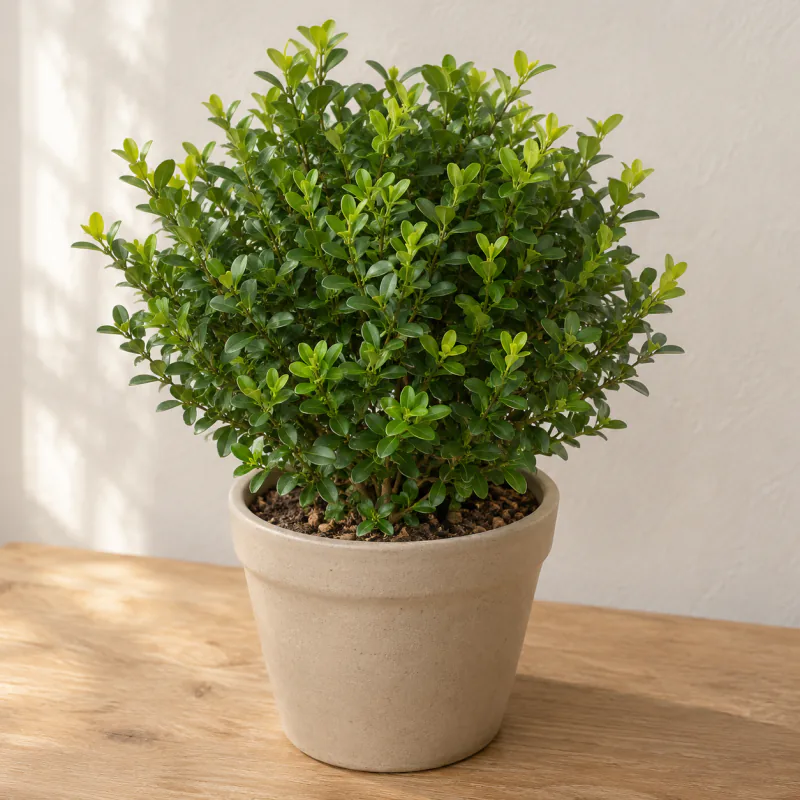
Classic slow-growing evergreen shrub prized for crisp clipped topiary spheres on patios. Thrives in bright shade with root watering and pest vigilance.
Essential care to help it thrive
Light and placement
Prefers dappled sun or bright partial shade on urban balconies; harsh reflected midday sun over dry compost quickly scorches leaves pale bronze or orange.
Climate and season
Very cold-hardy from 5 to 26 °C and down to -15 °C in sheltered pots; avoid drying winter winds and scorching heat trapped beside dark glass walls.
Soil and repotting
Plant in heavy frostproof pots with rich, slightly alkaline loam-based compost and fast-draining base grit.
Conditions vary with pot, season and location. Always check the mix and your plant's response.
Common Box (Buxus sempervirens): when to check the soil
Water gently onto the soil surface whenever upper compost dries while keeping foliage bone-dry, ensuring excess drains freely out of container feet.
Let Grovia remind you when to check your Common Box (Buxus sempervirens)Save the plant, get watering reminders and adjust the rhythm as the seasons change. Free on iPhone and Android.
See table by pot size
| Ø | Summer | Winter |
|---|---|---|
| 10 cm | 4–5 days | 7–10 days |
| 15 cm | 5–6 days | 9–13 days |
| 25 cm | 6–9 days | 12–17 days |
How to identify it
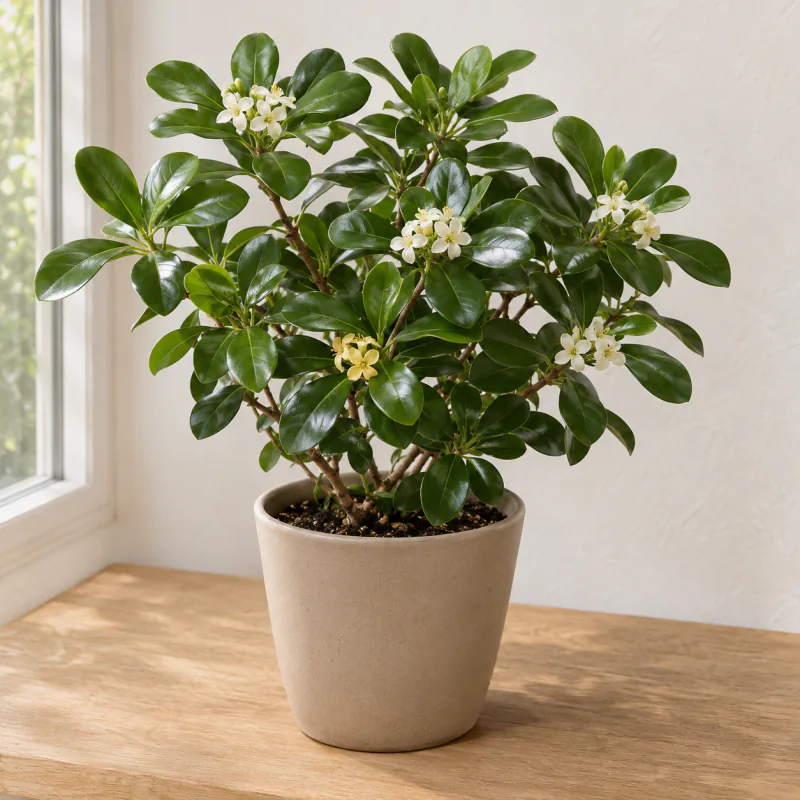
Dense fine-textured evergreen shrub or small tree bearing small glossy opposite dark-green ovate leaves and tiny spring axillary flower clusters.
Botanical sheet
- Family
- Buxaceae
- Origin
- Western and Southern Europe, Northwest Africa, and Southwest Asia
- Size
- 40–100 cm potted (4–8 m)
- Climate
- 5–26 °C · min -15 °C
What's wrong with your plant?
Pet safety Toxic to pets
ASPCA lists this species as toxic to cats and dogs. Keep pets from chewing it; contact a veterinarian if ingestion is suspected.
Toxic principles and clinical signs quoted from the ASPCA database.
See the ASPCA entryCommon questions
Why should you part Boxwood branches to check inside the canopy?
Box tree caterpillars hide deep inside dense trimmed spheres first, stripping hidden inner leaves before suddenly defoliating the whole outer shell overnight.
When is the best moment to clip potted Boxwood topiary cleanly?
Shear once in late spring to early summer on a cool overcast day so fresh cuts heal gently without sunburning pale tender tips.
How can patio growers reduce risk of devastating Box blight?
Water strictly beneath the canopy in morning hours, clean fallen debris off soil surfaces, and disinfect shears with alcohol between every individual pot.