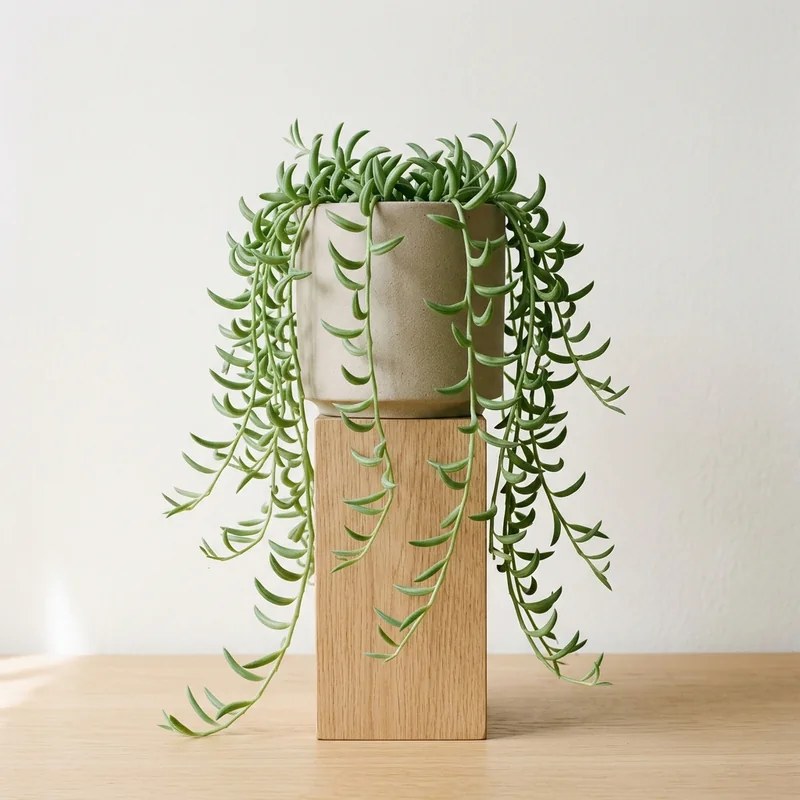
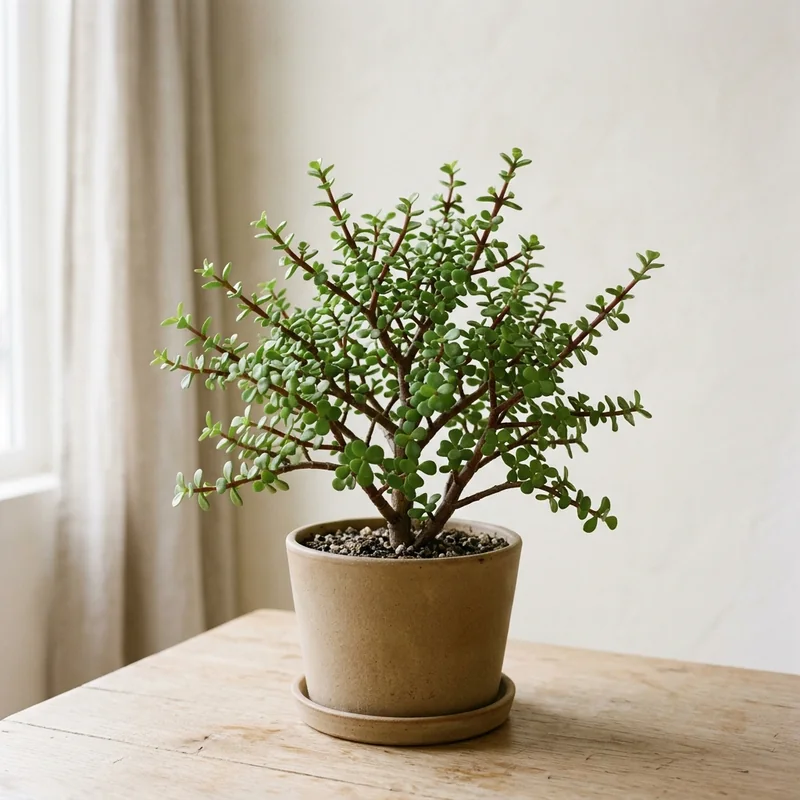
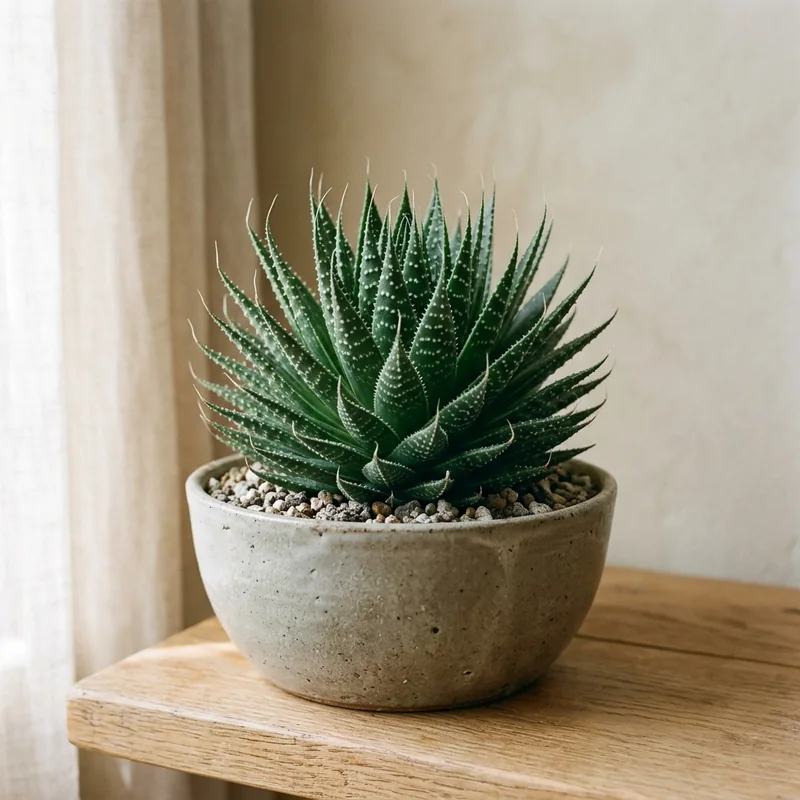
Jelly bean plant (S. rubrotinctum)
Sedum × rubrotinctumUpdated
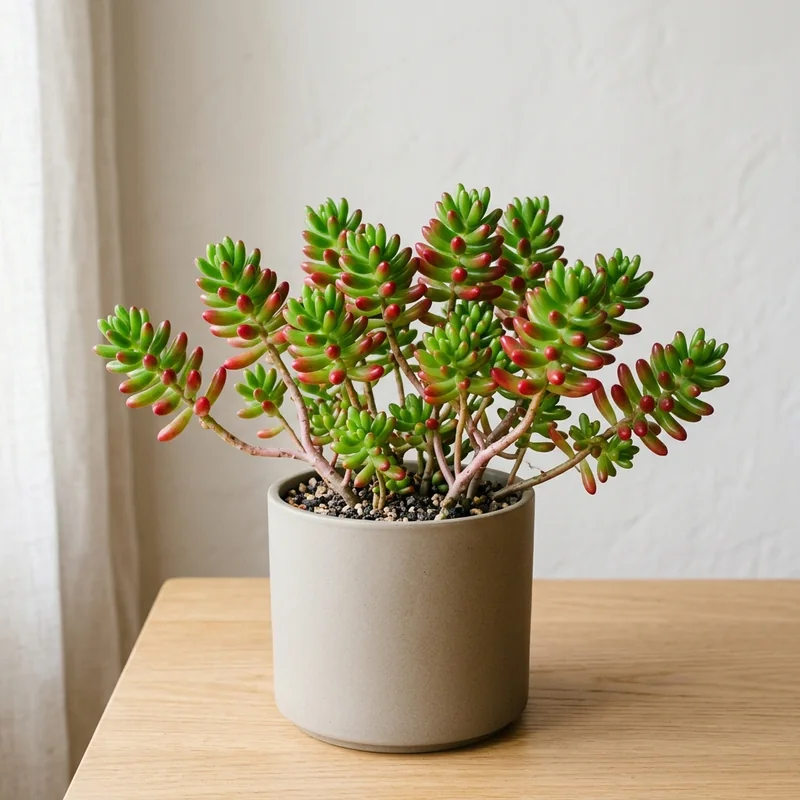
Glossy mounding succulent packed with plump jelly-bean leaves that blush bright ruby red in sunlight. Thrives in full direct sun, gritty compost and complete dry-downs.
Essential care to help it thrive
Light and placement
Give full direct sun or your sunniest window all year so stems stay tight and leaf tips turn crimson. Low light stretches stems pale green with wide bare gaps.
Climate and season
Enjoys dry, airy warmth (10–28 °C) and brief frost to -5 °C only when completely dry. Loose fallen beans root readily right where they land on gritty soil.
Soil and repotting
Plant in a shallow terracotta bowl with drainage holes using gritty peat-free cactus potting mix blended half-and-half with pumice or sharp grit.
Conditions vary with pot, season and location. Always check the mix and your plant's response.
Jelly bean plant (S. rubrotinctum): when to check the soil
Check that gritty cactus mix is bone dry before soaking every 10–14 days in active spring-summer growth; keep nearly dry every 3–5 weeks through winter rest.
Let Grovia remind you when to check your Jelly bean plant (S. rubrotinctum)Save the plant, get watering reminders and adjust the rhythm as the seasons change. Free on iPhone and Android.
See table by pot size
| Ø | Summer | Winter |
|---|---|---|
| 10 cm | 7–10 days | 14–19 days |
| 15 cm | 9–12 days | 17–24 days |
| 25 cm | 11–16 days | 23–32 days |
How to identify it
Sprawling stems tightly packed with glossy green bean-like leaves tipped red in sun, unlike powdery matte Sedum pachyphyllum. Also sold as Sedum rubrotinctum.
Botanical sheet
- Family
- Crassulaceae
- Origin
- Mexico (garden origin)
- Size
- 15–20 cm mounding
- Climate
- 10–28 °C · min. -5 °C
What's wrong with your plant?
Pet safety Toxicity unverified
There is no species-specific toxicity verification for this plant on ASPCA. Check with your veterinarian or search the ASPCA directory before keeping it within reach of pets.
Open the toxicity checkerCommon questions
How do I bring out bright red tips on jelly bean sedum?
Bright red pigment builds in response to generous daily direct sun, mild dry-downs between waterings and crisp autumn-winter temperature drops.
Why do leaves fall off my Sedum × rubrotinctum so easily?
They detach naturally on contact to propagate, though soft translucent dropping leaves always warn that roots are sitting too wet.
Can I grow new plants from fallen jelly bean leaves?
Yes—lay intact fallen leaves straight on dry gritty soil in bright indirect light and tiny rosettes sprout from the base within weeks.