Elephant bush
Portulacaria afraUpdated
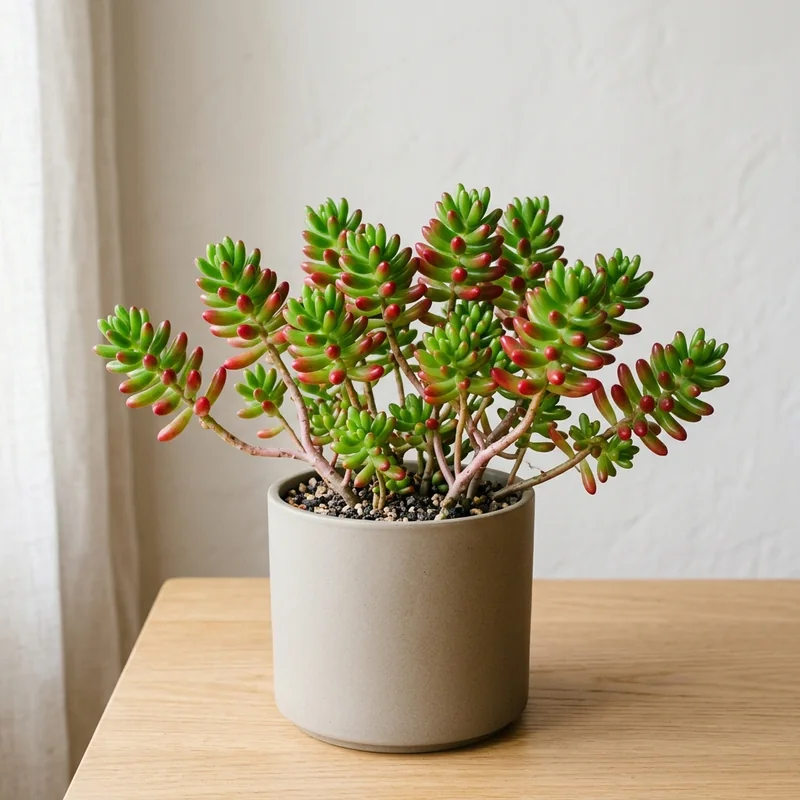
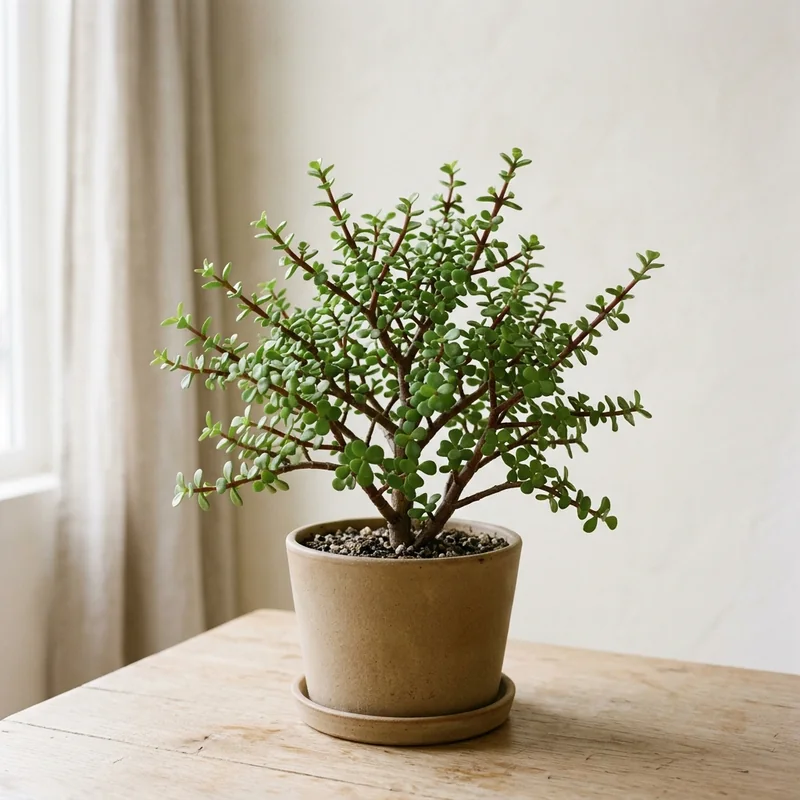
Easy branching South African succulent covered in tiny glossy green leaves on reddish stems. Thrives in bright indirect light, cactus compost and thorough drying.
Essential care to help it thrive
Light and placement
Provide bright daylight with mild direct sun so stems stay compact and leafy. Deep shade triggers stretched shoots and sudden leaf drop; shade gently from scorching heat.
Climate and season
Enjoys warm, dry airflow (15–30 °C) safely above 10 °C. Handles frequent pruning effortlessly, making it a perennial favorite for indoor succulent bonsai.
Soil and repotting
Pot in a shallow draining container using gritty peat-free cactus potting mix blended with pumice or sharp grit so excess water exits fast.
Conditions vary with pot, season and location. Always check the mix and your plant's response.
Elephant bush: when to check the soil
Check that cactus soil is fully dry before watering well every 10–14 days from mid-spring to mid-autumn; keep almost dry (every 3–5 weeks) in winter.
Let Grovia remind you when to check your Elephant bushSave the plant, get watering reminders and adjust the rhythm as the seasons change. Free on iPhone and Android.
See table by pot size
| Ø | Summer | Winter |
|---|---|---|
| 10 cm | 7–10 days | 14–19 days |
| 15 cm | 9–12 days | 17–24 days |
| 25 cm | 11–16 days | 23–32 days |
How to identify it
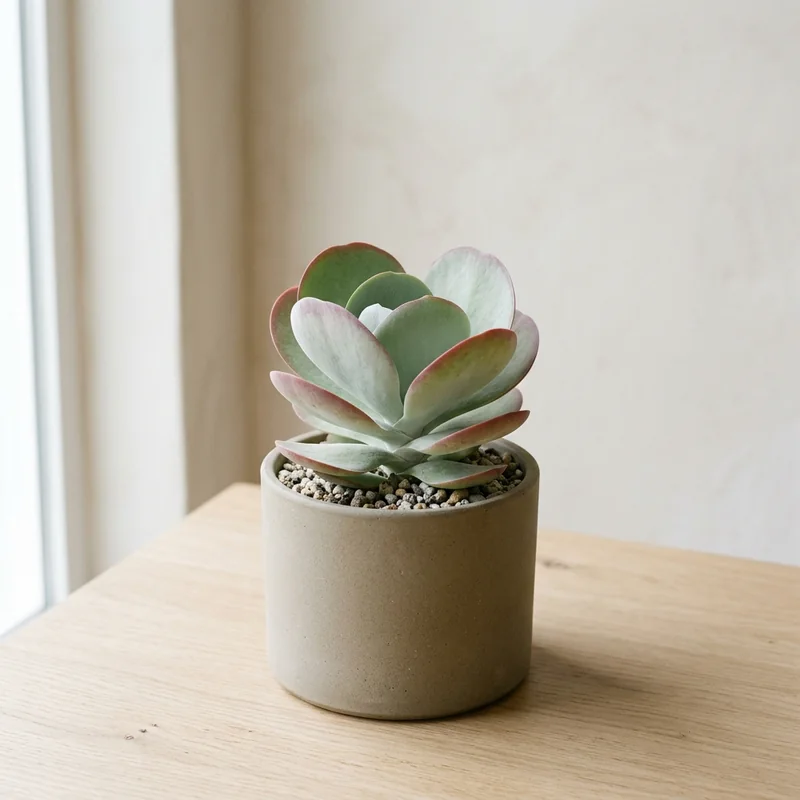
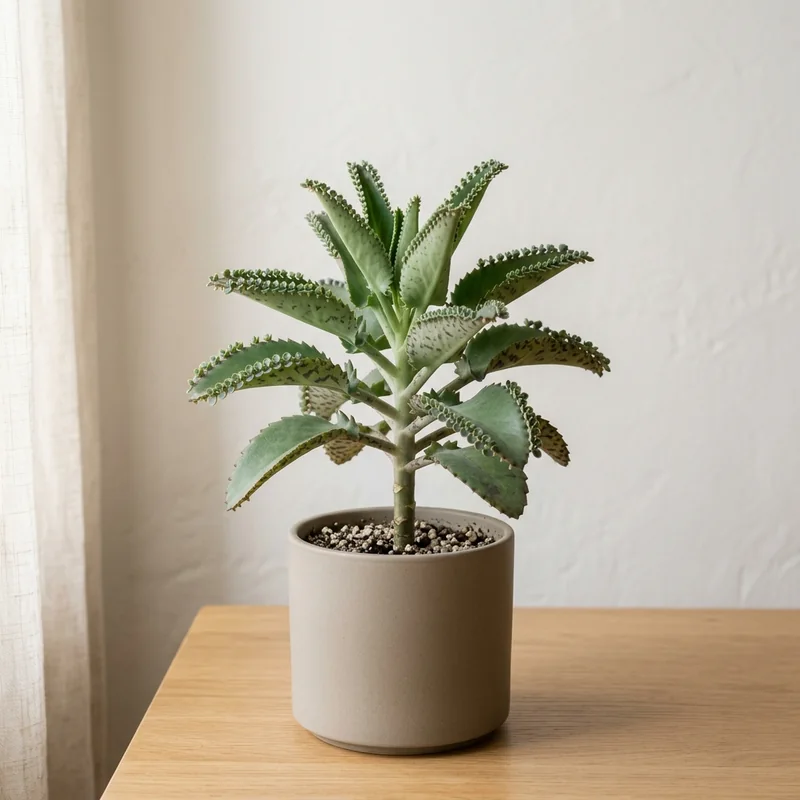
Slender reddish-brown woody branches bearing tiny opposite obovate succulent leaves. Often sold as dwarf jade, though distinct from Crassula ovata.
Botanical sheet
- Family
- Didiereaceae
- Origin
- South Africa · Eswatini
- Size
- 30–90 cm potted (2.5 m)
- Climate
- 15–30 °C · min. 10 °C
What's wrong with your plant?
Pet safety Toxicity unverified
There is no species-specific toxicity verification for this plant on ASPCA. Check with your veterinarian or search the ASPCA directory before keeping it within reach of pets.
Open the toxicity checkerCommon questions
How is elephant bush different from true jade plant?
Portulacaria afra grows much smaller, thinner bright-green leaves on slender reddish-brown stems, whereas Crassula ovata has large chunky leaves and grey woody trunks.
Why is my elephant bush dropping so many leaves?
Sudden leaf drop almost always follows dark indoor corners paired with overwatering, or an abrupt chilly draft.
Can I prune Portulacaria afra into a compact bonsai?
Yes, pinch or prune shoots freely during spring and summer; it back-buds reliably along woody branches.