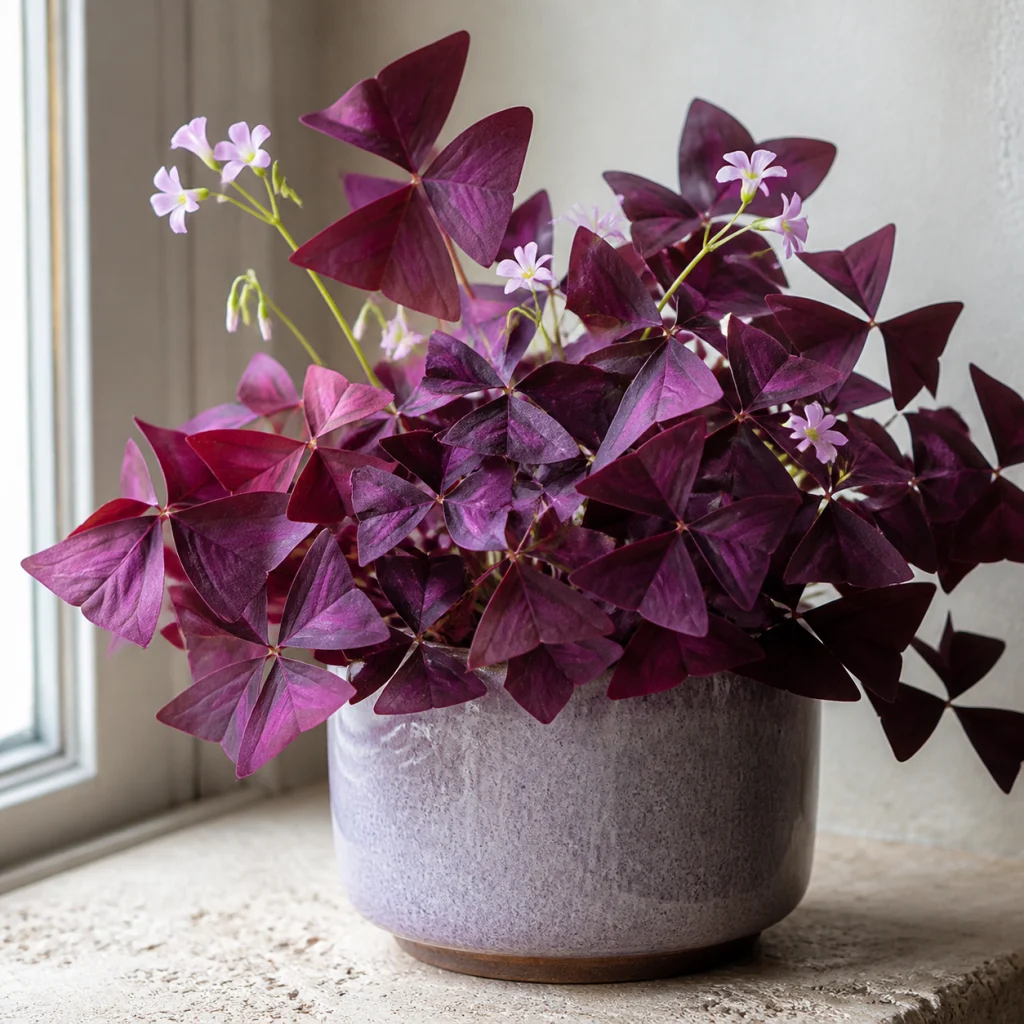
African violet
Streptocarpus ionanthusUpdated
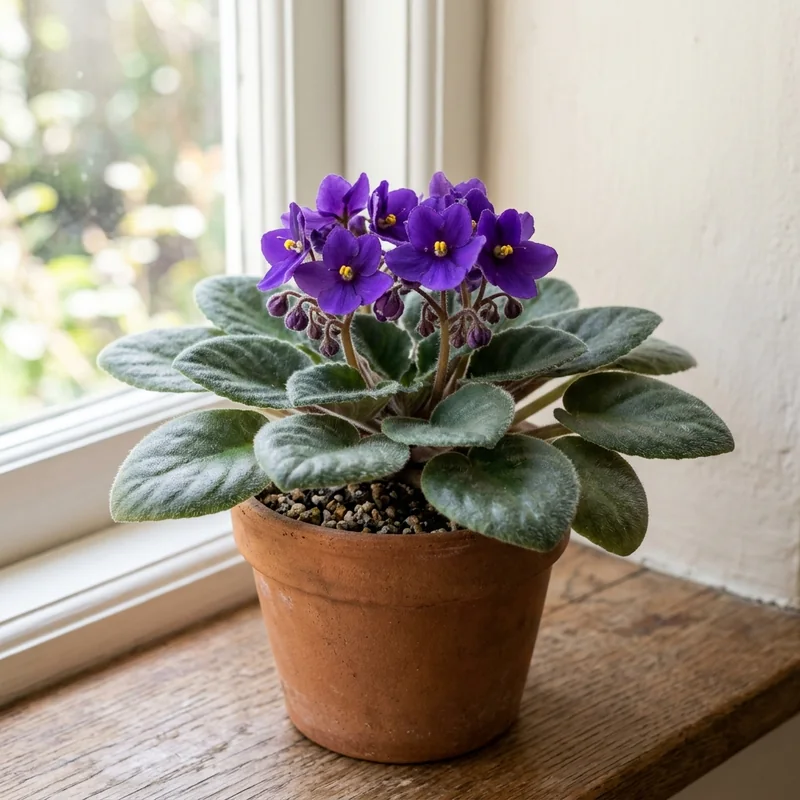
Compact rosette of velvety, hairy leaves producing colourful blooms indoors. Thrives in bright filtered window light with gentle rim watering.
Essential care to help it thrive
Light and placement
Set on an east or west windowsill in bright filtered daylight; shield soft hairy leaves from scorching midday sun that bleaches foliage.
Climate and season
Maintain warm indoor conditions above 15 °C year-round, clear of cold draughts; feed fortnightly with high-potassium fertiliser and snip dead leaves.
Soil and repotting
Blend an airy, free-draining mix in a shallow pot with drainage holes.
Conditions vary with pot, season and location. Always check the mix and your plant's response.
African violet: when to check the soil
Check the surface and let the top layer dry out between waterings in growth, watering sparingly in winter; keep water off fuzzy leaves and crown.
Let Grovia remind you when to check your African violetSave the plant, get watering reminders and adjust the rhythm as the seasons change. Free on iPhone and Android.
See table by pot size
| Ø | Summer | Winter |
|---|---|---|
| 10 cm | 4–5 days | 7–10 days |
| 15 cm | 5–6 days | 9–13 days |
| 25 cm | 6–9 days | 12–17 days |
How to identify it
Small evergreen rosette with fleshy hairy leaves and clusters of tubular flowers. Formerly classified and still sold widely as Saintpaulia ionantha.
Botanical sheet
- Family
- Gesneriaceae
- Origin
- Tanzania
- Size
- 10–50 cm compact
- Climate
- 18–25 °C · min. 15 °C
What's wrong with your plant?
Pet safety Pet-friendly
ASPCA lists this species as non-toxic to cats and dogs. Even so, prevent heavy chewing or ingestion of potting mix or fertiliser.
See the ASPCA entryCommon questions
How do I water an African violet safely?
Wait until the surface feels dry, then apply tepid water from the bottom or under leaves without wetting the crown; water sparingly in winter.
Can I propagate new plants from a single leaf?
Yes, insert healthy summer leaf cuttings with short stalks into warm, lightly moist perlite until plantlets emerge.
Is Streptocarpus ionanthus safe around cats and dogs?
Yes, ASPCA lists African violet (under Saintpaulia spp.) as non-toxic to cats, dogs and horses.