Bloody stromanthe (Stromanthe thalia)
Stromanthe thaliaUpdated
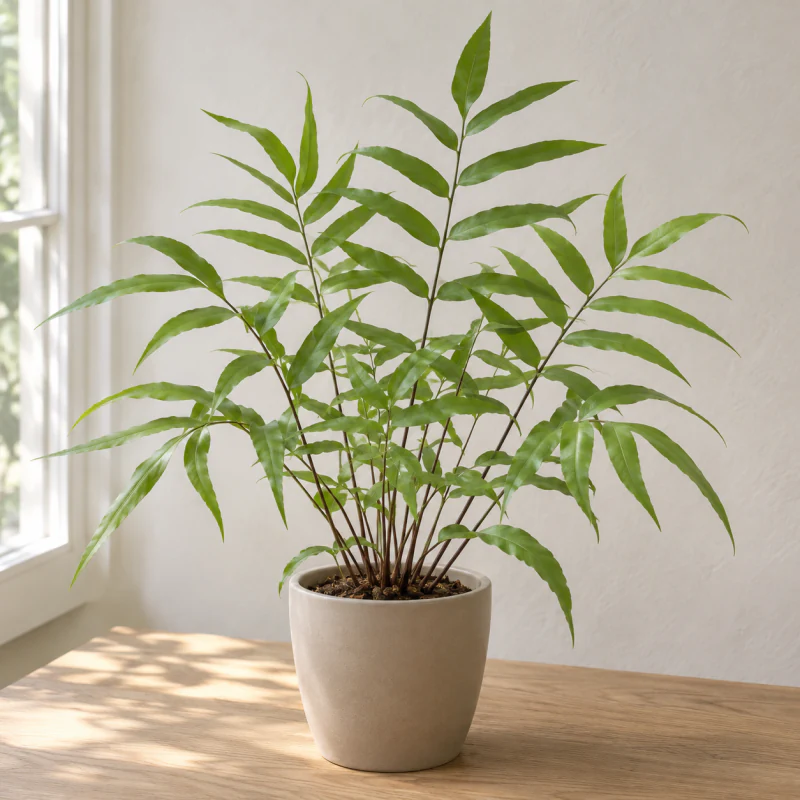
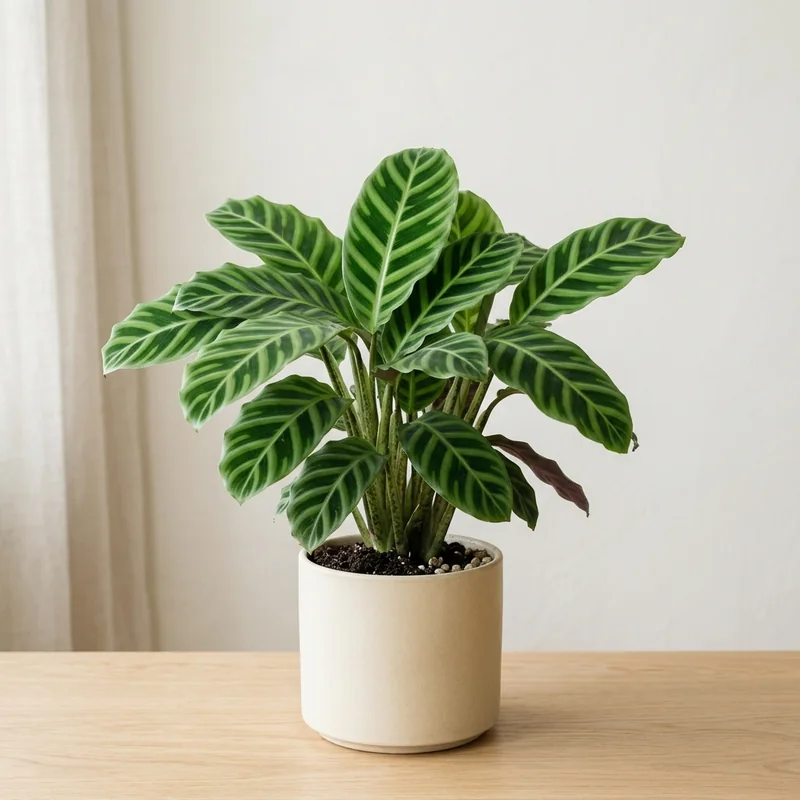
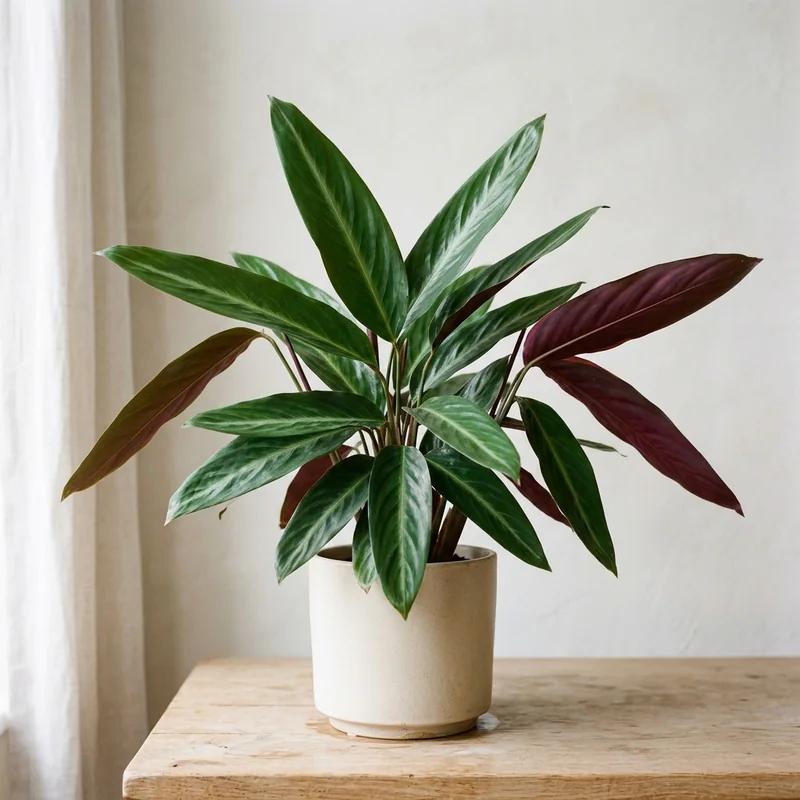
Architectural Brazilian prayer plant with glossy olive-green lance leaves above and deep wine-red backs. Wants bright filtered light, warm humidity, and soft water.
Essential care to help it thrive
Light and placement
Give bright to medium indirect light so stems stay sturdy and red backs stay vivid; variegated forms need more light, shielded from harsh midday sun.
Climate and season
Prefers 18–26 °C (frost-free minimum 10 °C) and 55–70% humidity away from cold drafts. Blades fold upright after dusk to reveal rich red undersides.
Soil and repotting
Deep drained pot filled with peat-free blend of coco coir, medium pine bark, and perlite for steady airy moisture.
Conditions vary with pot, season and location. Always check the mix and your plant's response.
Bloody stromanthe (Stromanthe thalia): when to check the soil
Feel the upper 2–3 cm and apply rainwater or filtered water once it begins to lose dampness. Never let thick rhizomes sit in stagnant water.
Let Grovia remind you when to check your Bloody stromanthe (Stromanthe thalia)Save the plant, get watering reminders and adjust the rhythm as the seasons change. Free on iPhone and Android.
See table by pot size
| Ø | Summer | Winter |
|---|---|---|
| 10 cm | 4–5 days | 7–10 days |
| 15 cm | 5–6 days | 9–13 days |
| 25 cm | 6–9 days | 12–17 days |
How to identify it
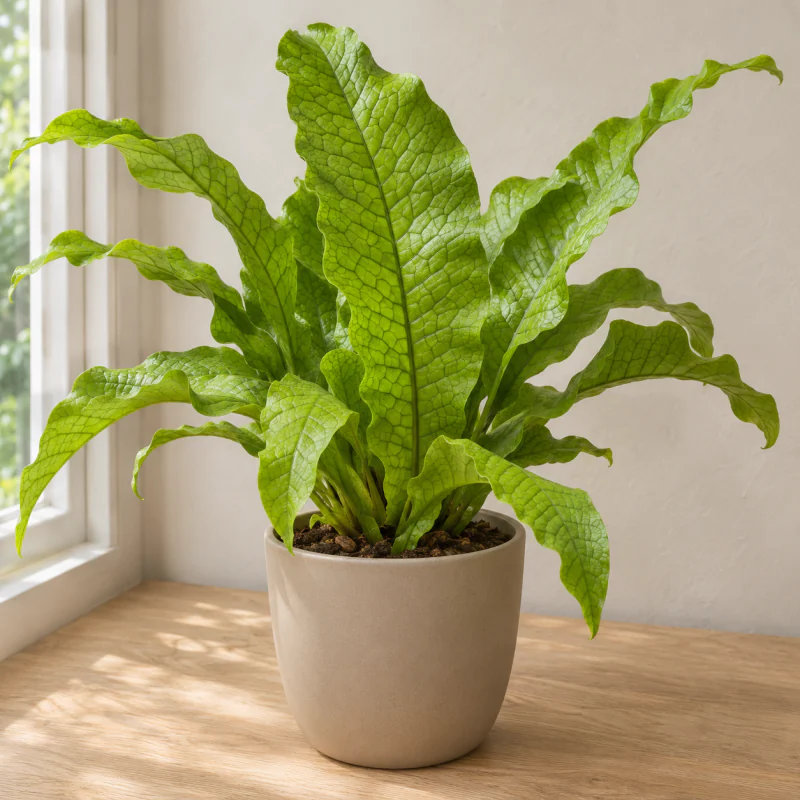
Upright clump of glossy lance-shaped blades green on top and wine-red underneath. Kew accepts Stromanthe thalia, still widely sold as Stromanthe sanguinea.
Botanical sheet
- Family
- Marantaceae
- Origin
- Eastern and southeastern Brazil
- Size
- 0.9–1.5 m (smaller indoors)
- Climate
- 18–26 °C · min 10 °C
What's wrong with your plant?
Pet safety Toxicity unverified
There is no species-specific toxicity verification for this plant on ASPCA. Check with your veterinarian or search the ASPCA directory before keeping it within reach of pets.
Open the toxicity checkerCommon questions
How does Stromanthe thalia differ from Stromanthe 'Triostar'?
Botanical Stromanthe thalia bears solid glossy olive leaves with wine-red backs, while 'Triostar' is a variegated cultivar with cream and pink splashes needing slightly brighter light.
How tall does Stromanthe grow as a houseplant?
Outdoors in frost-free climates it reaches 0.9–1.5 m per NC State Extension and RHS, while indoor pots typically stay around 60–90 cm.
Can crispy leaf tips be trimmed without hurting the blade?
Yes, snip only dead brown tissue with clean shears following the natural taper so you do not cut into fresh green margin.