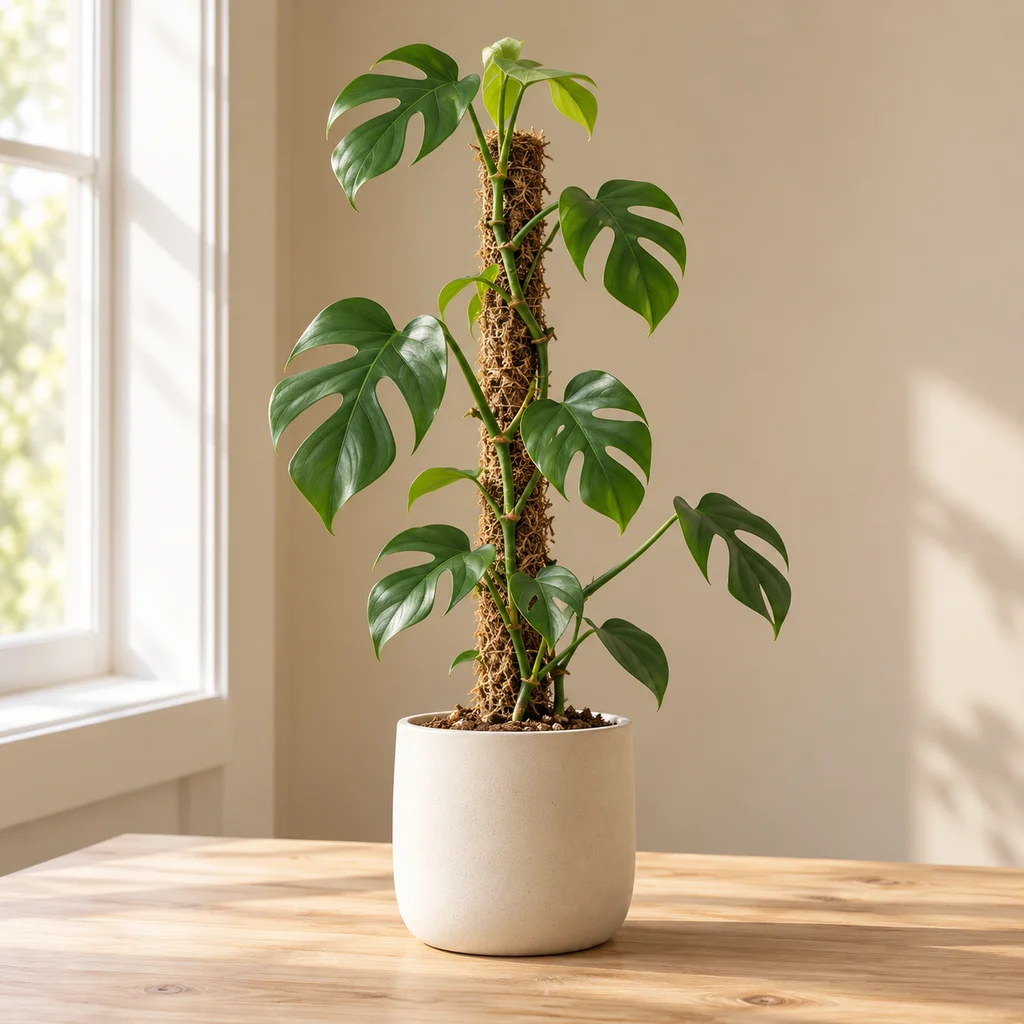
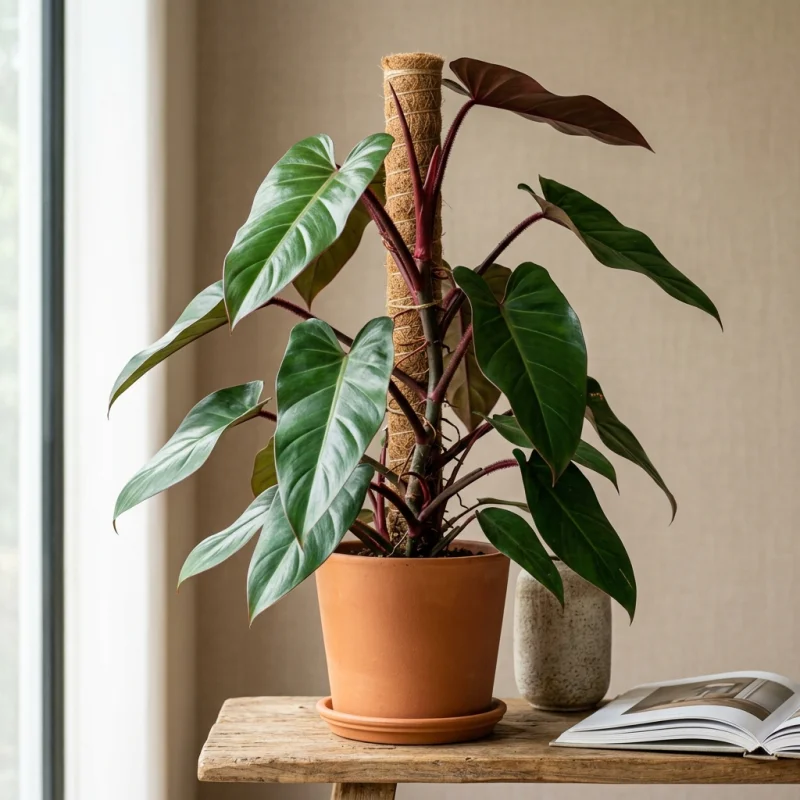
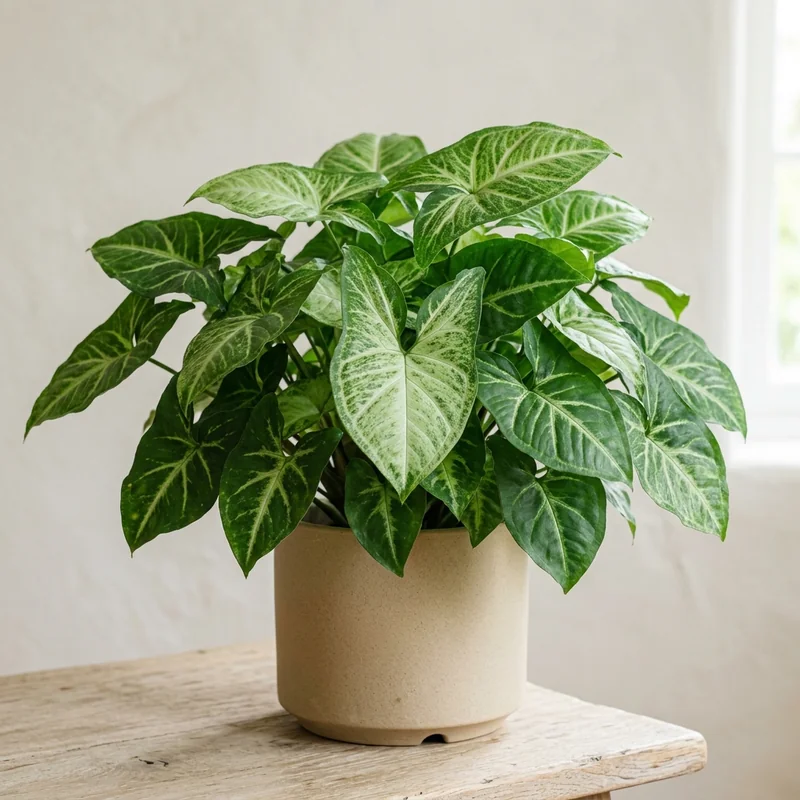
Lacy tree philodendron
Thaumatophyllum bipinnatifidumUpdated
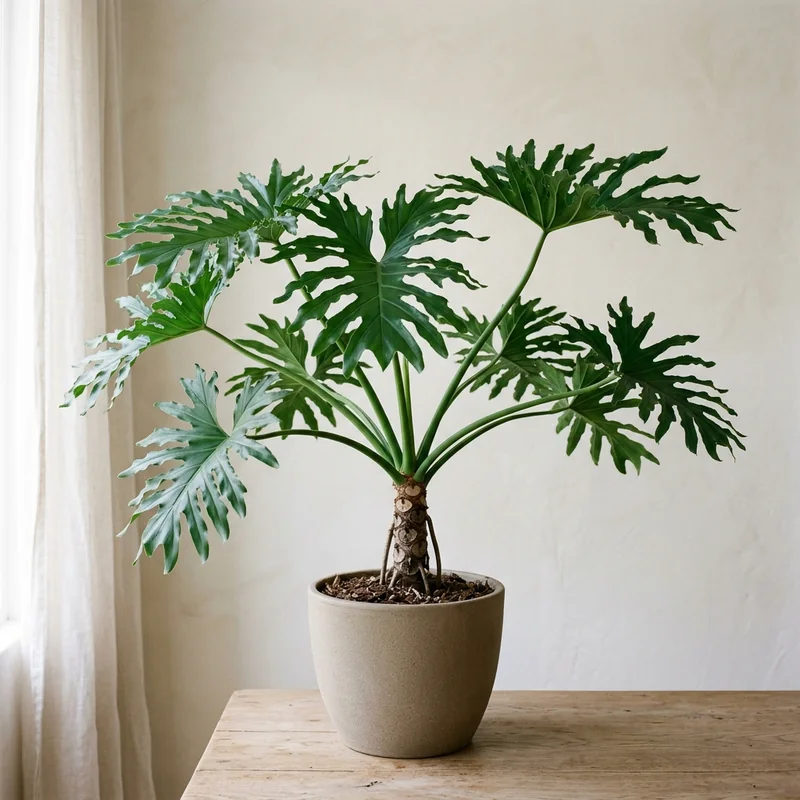
Bold self-heading aroid sporting deeply lobed glossy leaves atop a scarred trunk. Thrives in bright filtered light, coarse bark soil and spacious rooms.
Essential care to help it thrive
Light and placement
Bright indirect light near a large window keeps stems sturdy and foliage compact. Gentle morning sun is welcome, whereas dim corners cause wide sprawling weak petioles.
Climate and season
Remarkably cool-tolerant outdoors down near 1 °C when sheltered, yet happiest indoors at 15–28 °C with moderate humidity and generous floor space.
Soil and repotting
Chunky fast-draining aroid blend with fibrous coco coir, medium pine bark and coarse perlite.
Conditions vary with pot, season and location. Always check the mix and your plant's response.
Lacy tree philodendron: when to check the soil
Water deeply every 6–10 days in active warm growth once the upper half dries out, draining saucers promptly and cutting back considerably in cool winter months.
Let Grovia remind you when to check your Lacy tree philodendronSave the plant, get watering reminders and adjust the rhythm as the seasons change. Free on iPhone and Android.
See table by pot size
| Ø | Summer | Winter |
|---|---|---|
| 10 cm | 4–6 days | 8–12 days |
| 15 cm | 5–7 days | 11–15 days |
| 25 cm | 7–10 days | 14–20 days |
How to identify it
Huge glossy leaves deeply divided into wavy narrow lobes atop stout petioles on a sturdy trunk; widely known formerly as Philodendron bipinnatifidum or P. selloum.
Botanical sheet
- Family
- Araceae
- Origin
- Southern Brazil · Paraguay · Northern Argentina
- Size
- 2.5–4 m spread & height
- Climate
- 15–28 °C · min 1 °C
What's wrong with your plant?
Pet safety Toxic to pets
ASPCA lists this species as toxic to cats and dogs. Keep pets from chewing it; contact a veterinarian if ingestion is suspected.
Toxic principles and clinical signs quoted from the ASPCA database.
See the ASPCA entryCommon questions
Does Tree Philodendron need a moss pole to climb?
No: unlike vining philodendrons, Thaumatophyllum grows as a self-supporting arborescent shrub with sturdy trunks and thick aerial prop roots.
Is it toxic to dogs, cats or horses indoors?
Yes: ASPCA lists it under Philodendron selloum as toxic due to insoluble calcium oxalate crystals causing severe oral irritation, drooling and vomiting.
What are those oval eye markings along the lower trunk?
Those characteristic oval eyes are harmless leaf scars left naturally wherever older petioles detach cleanly from the woody basal stem.