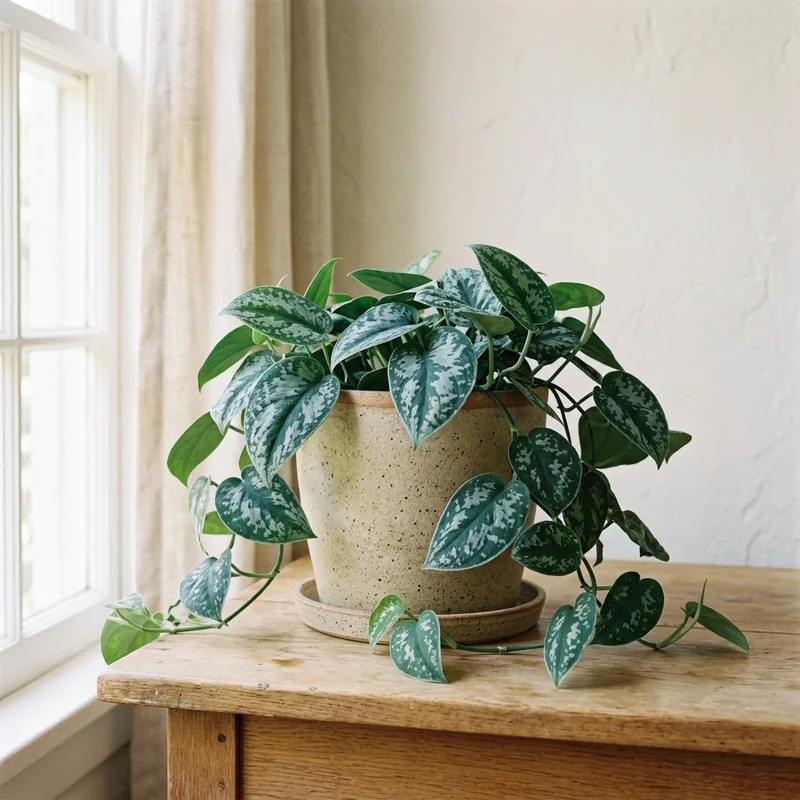
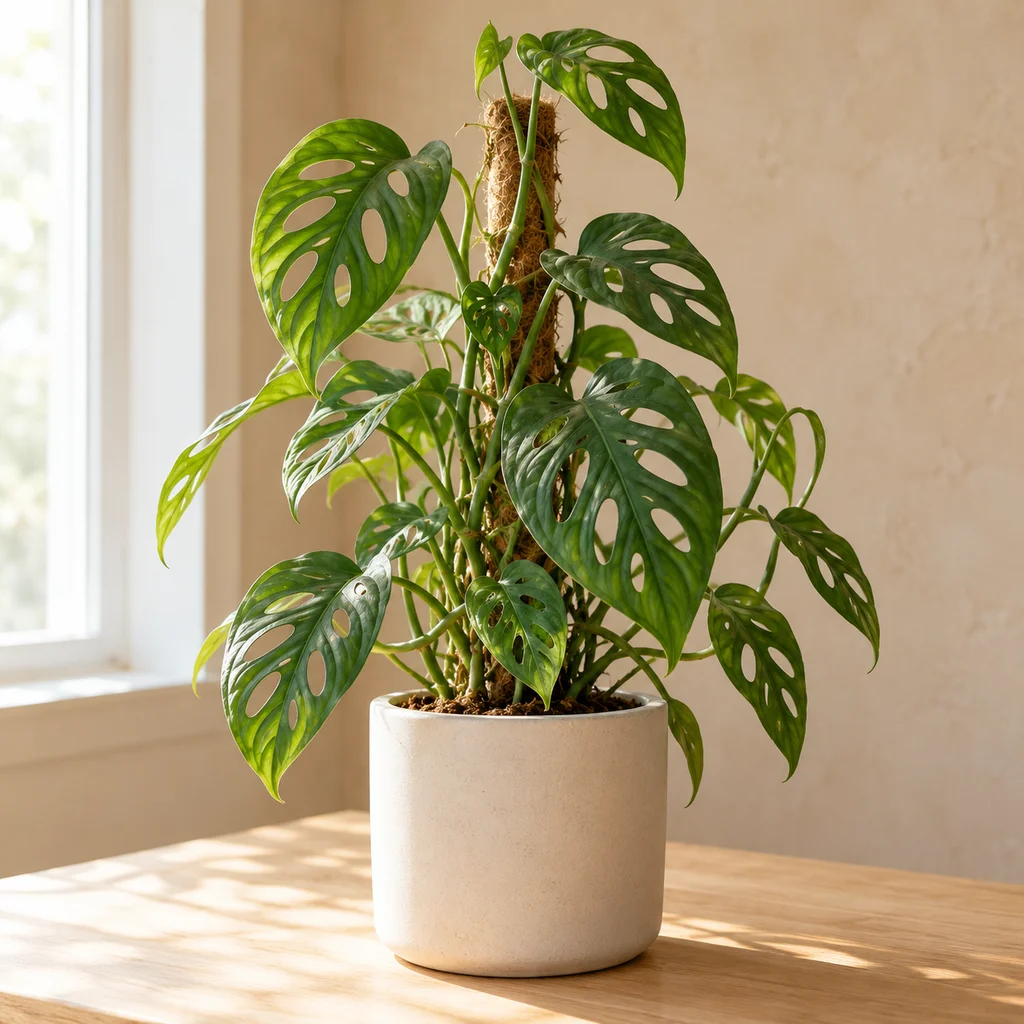
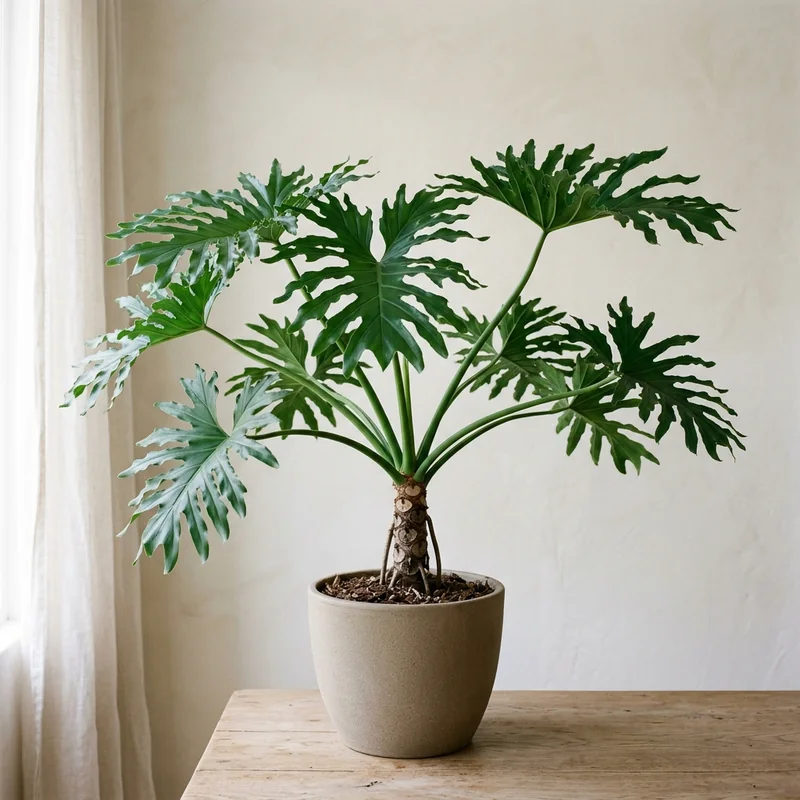
Mini monstera (Ginny philodendron)
Rhaphidophora tetraspermaUpdated
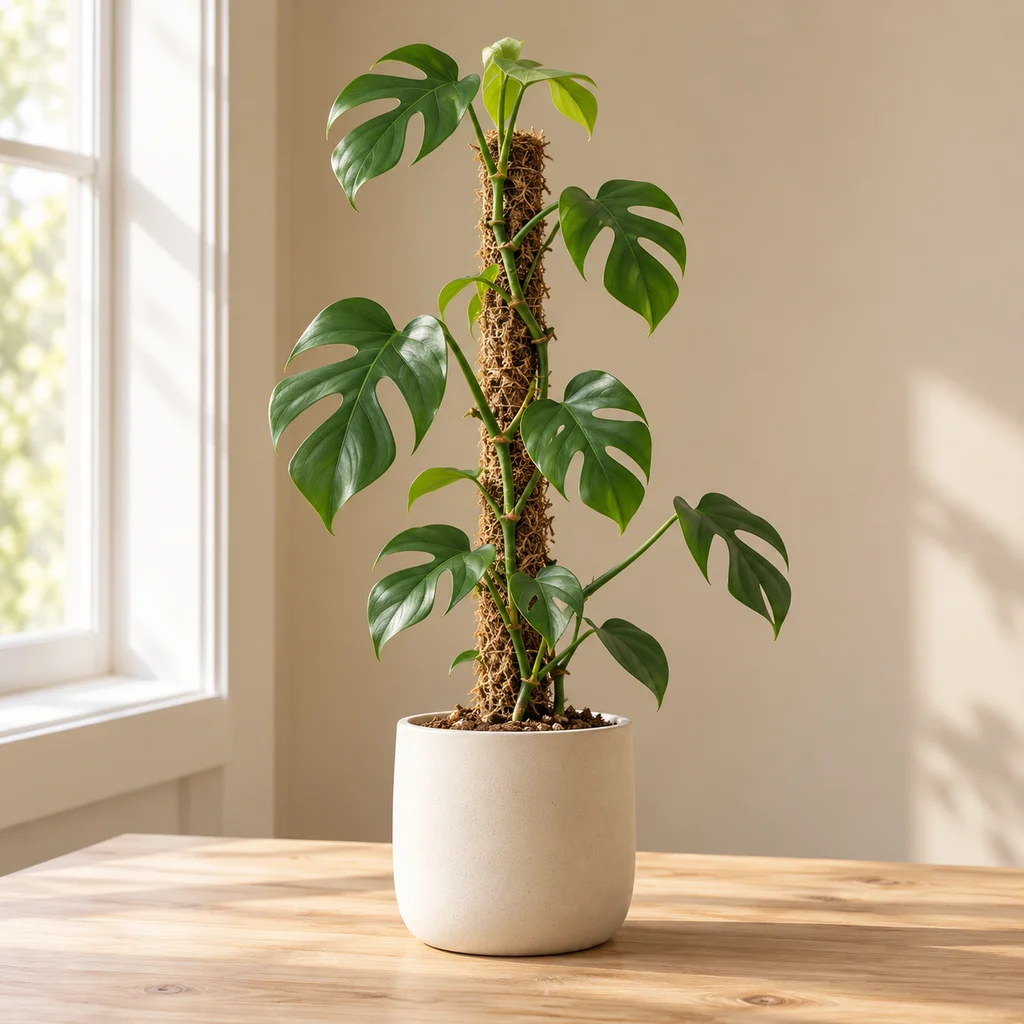
Fast-growing climbing aroid producing split fenestrations. Golden rule: climb on a moist moss pole in bright indirect light with a chunky, breathable mix.
Essential care to help it thrive
Light and placement
Bright indirect light. Generous filtered light is essential for rapid climbing and distinct leaf fenestrations.
Climate and season
Warm, humid room conditions (18-26 °C / 65-78 °F). Thrives when provided with a moss climbing pole.
Soil and repotting
Chunky aroid mix. Provide a damp moss pole so aerial roots anchor securely and produce larger leaves.
Conditions vary with pot, season and location. Always check the mix and your plant's response.
Mini monstera (Ginny philodendron): when to check the soil
Water thoroughly once the top third of the mix is dry; use a chunky, free-draining aroid blend to protect roots.
Let Grovia remind you when to check your Mini monstera (Ginny philodendron)Save the plant, get watering reminders and adjust the rhythm as the seasons change. Free on iPhone and Android.
See table by pot size
| Ø | Summer | Winter |
|---|---|---|
| 10 cm | 4–6 days | 8–12 days |
| 15 cm | 5–7 days | 11–15 days |
| 25 cm | 7–10 days | 14–20 days |
How to identify it
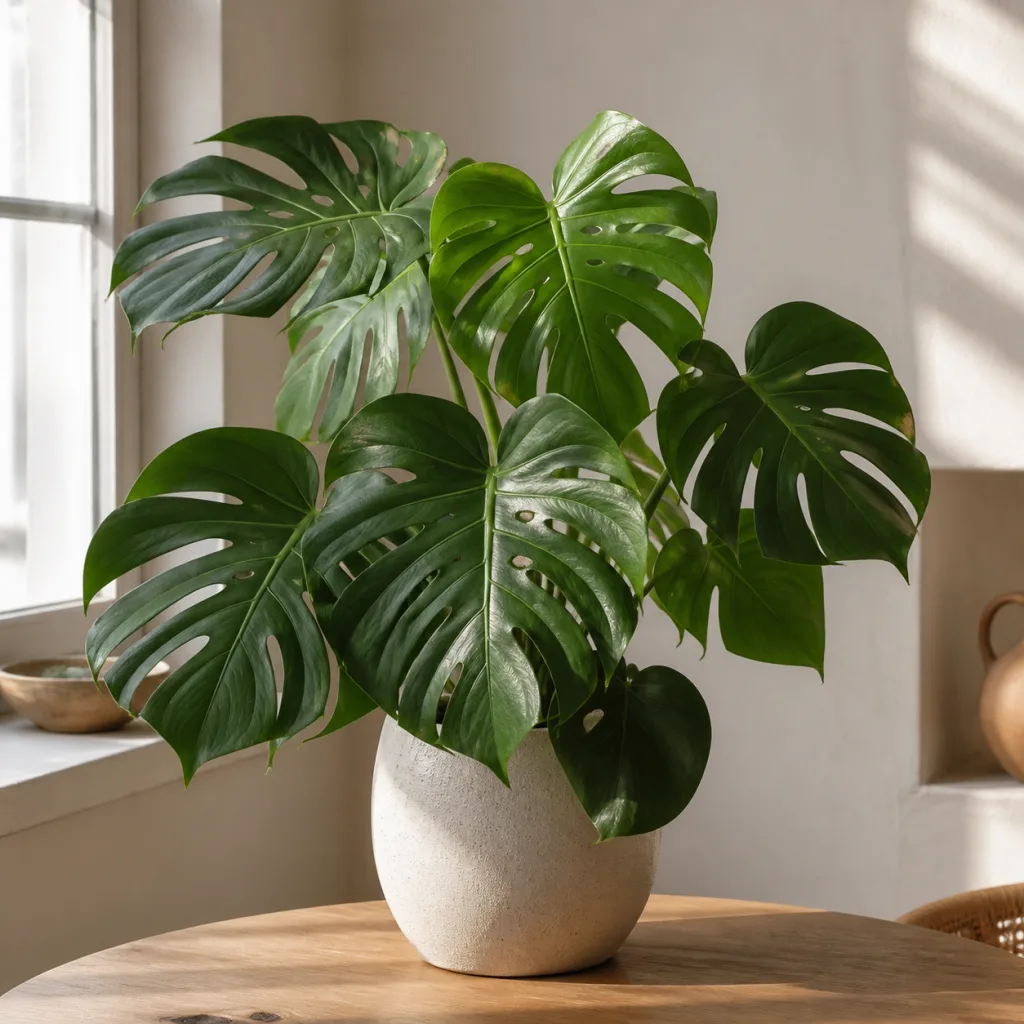
Fast-growing climbing aroid featuring bright green leaves adorned with deep, split fenestrations that resemble a miniature Swiss cheese plant.
Botanical sheet
- Family
- Araceae
- Origin
- Thailand · Malaysia
- Size
- 1–1.5 m climber
- Climate
- 18–26 °C · 60–80% RH
What's wrong with your plant?
Pet safety Toxicity unverified
There is no species-specific toxicity verification for this plant on ASPCA. Check with your veterinarian or search the ASPCA directory before keeping it within reach of pets.
Open the toxicity checkerCommon questions
Is it truly a dwarf variety of Monstera deliciosa?
No. Botanically it belongs to Rhaphidophora, not Monstera, but it earned the nickname Mini Monstera due to its lookalike foliage.
How do you propagate stem cuttings?
Take a stem cutting with 1–2 leaves and a node with an aerial root bump. Root in clean water or moist sphagnum moss at 20–24 °C; robust roots develop in 2–3 weeks.
How do you attach the vines to a moss pole?
Secure stems using soft plant velcro tape, placing aerial root nodes directly against the moist moss. Keep the pole lightly misted so roots anchor naturally.