Xanadu philodendron (Thaumatophyllum)
Thaumatophyllum xanaduUpdated
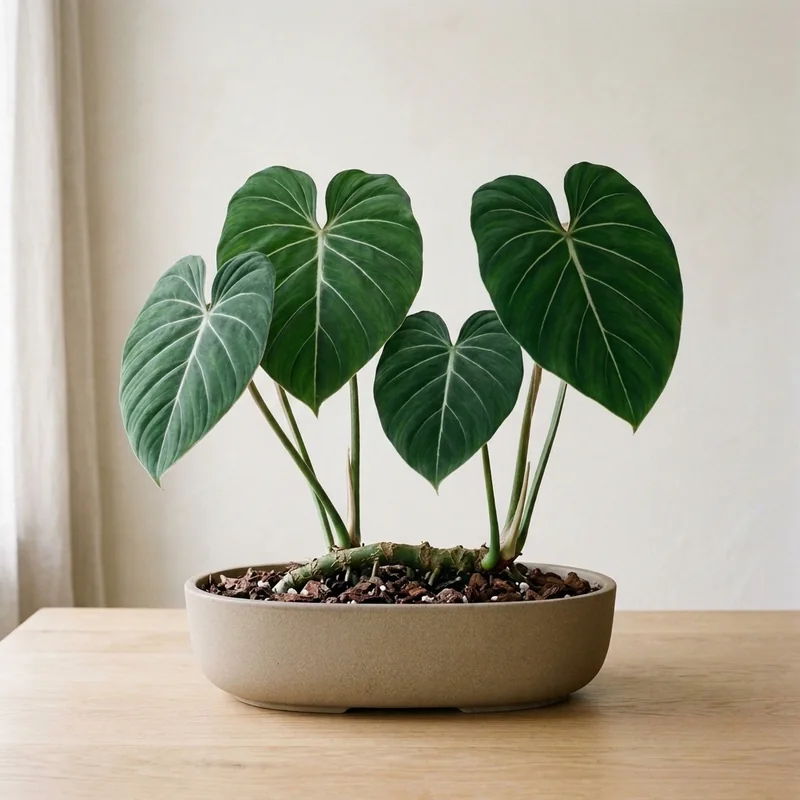
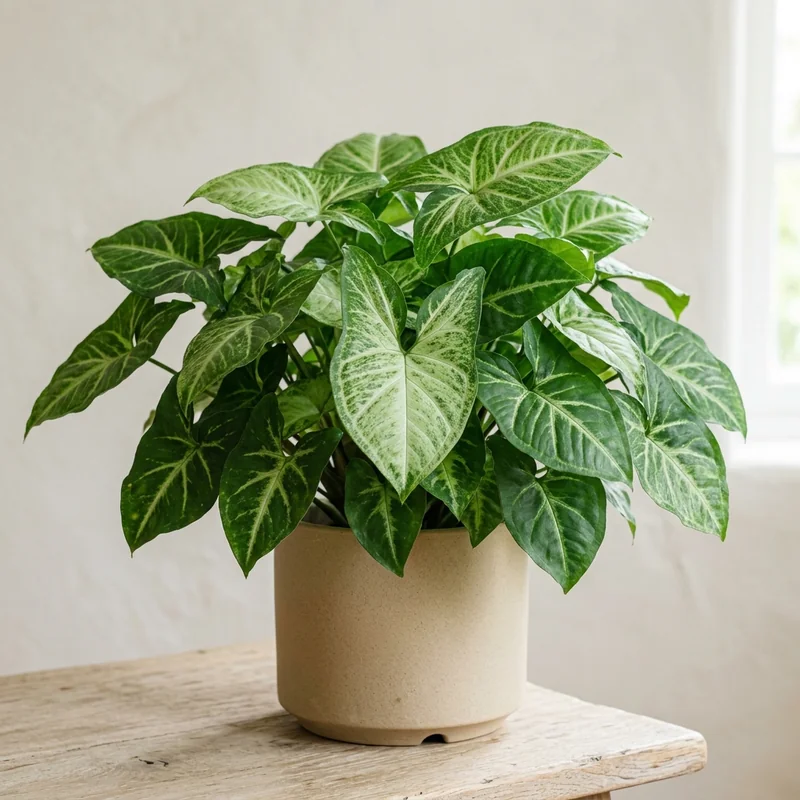
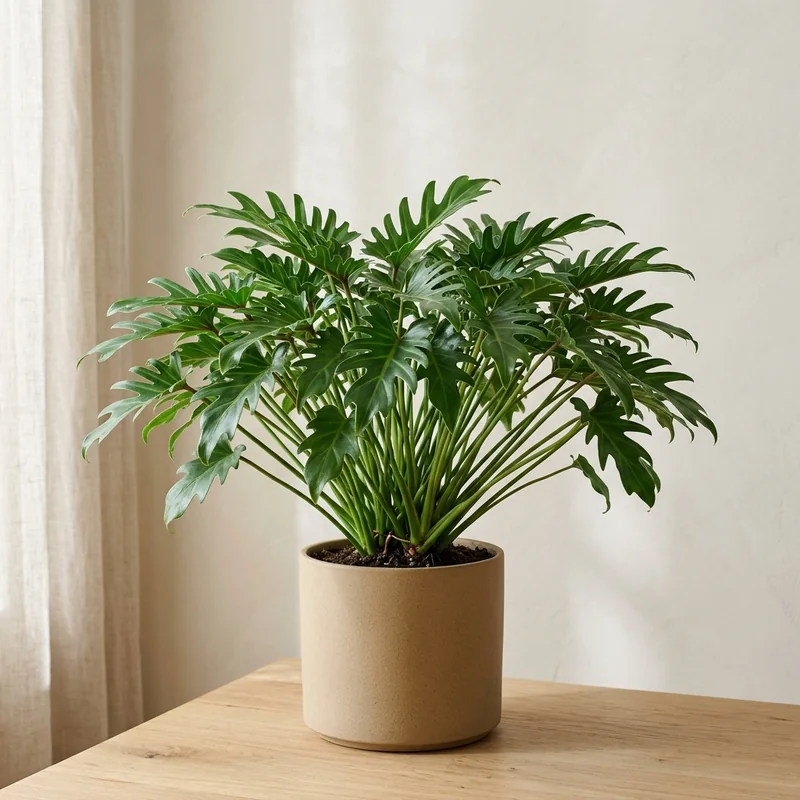
Self-heading South American aroid forming a dense dome of glossy deeply lobed leaves without climbing. Needs bright indirect light and chunky drainage.
Essential care to help it thrive
Light and placement
Position in bright indirect light near a curtained sunny window. Low light stretches petioles outward horizontally and reduces crisp finger-like lobing.
Climate and season
Thrives at 18–28 °C (indoor minimum 15 °C per RHS) in average room humidity with ample floor clearance for its wide dome and short aerial roots.
Soil and repotting
Heavy wide drained planter with chunky aroid mix of pine bark, coco coir, and coarse perlite.
Conditions vary with pot, season and location. Always check the mix and your plant's response.
Xanadu philodendron (Thaumatophyllum): when to check the soil
Wait until the upper 3–4 cm of compost feel dry before watering thoroughly and draining saucers cleanly. Water sparingly through dark cool winters.
Let Grovia remind you when to check your Xanadu philodendron (Thaumatophyllum)Save the plant, get watering reminders and adjust the rhythm as the seasons change. Free on iPhone and Android.
See table by pot size
| Ø | Summer | Winter |
|---|---|---|
| 10 cm | 4–6 days | 8–12 days |
| 15 cm | 5–7 days | 11–15 days |
| 25 cm | 7–10 days | 14–20 days |
How to identify it
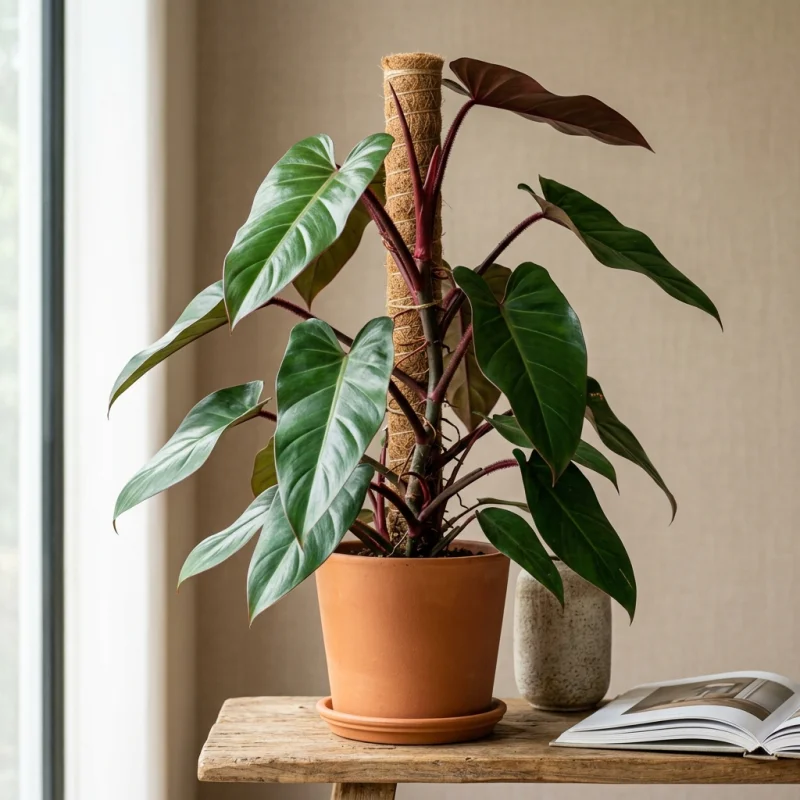
Compact non-climbing rosette of slender stalks and shiny green deeply cut wavy blades; widely known under former name Philodendron xanadu.
Botanical sheet
- Family
- Araceae
- Origin
- Southern Brazil and Paraguay
- Size
- 1–1.5 m spreading mound
- Climate
- 18–28 °C · min 15 °C
What's wrong with your plant?
Pet safety Toxicity unverified
There is no species-specific toxicity verification for this plant on ASPCA. Check with your veterinarian or search the ASPCA directory before keeping it within reach of pets.
Open the toxicity checkerCommon questions
Does Thaumatophyllum xanadu need a moss pole to grow well?
No. Unlike climbing vining philodendrons, it is self-heading and grows into a broad bushy mound; simply choose a heavy pot so mature foliage never tips.
How is Xanadu different from Thaumatophyllum bipinnatifidum?
Xanadu stays noticeably tighter at 1–1.5 m with narrower, crisply crowded lobes that suit home living rooms far better than massive tree philodendrons.
Is Thaumatophyllum xanadu safe to trim bare-handed?
No—RHS notes the sap is an irritant and harmful to people and pets if chewed or touched, so wear gloves when pruning and place out of reach.