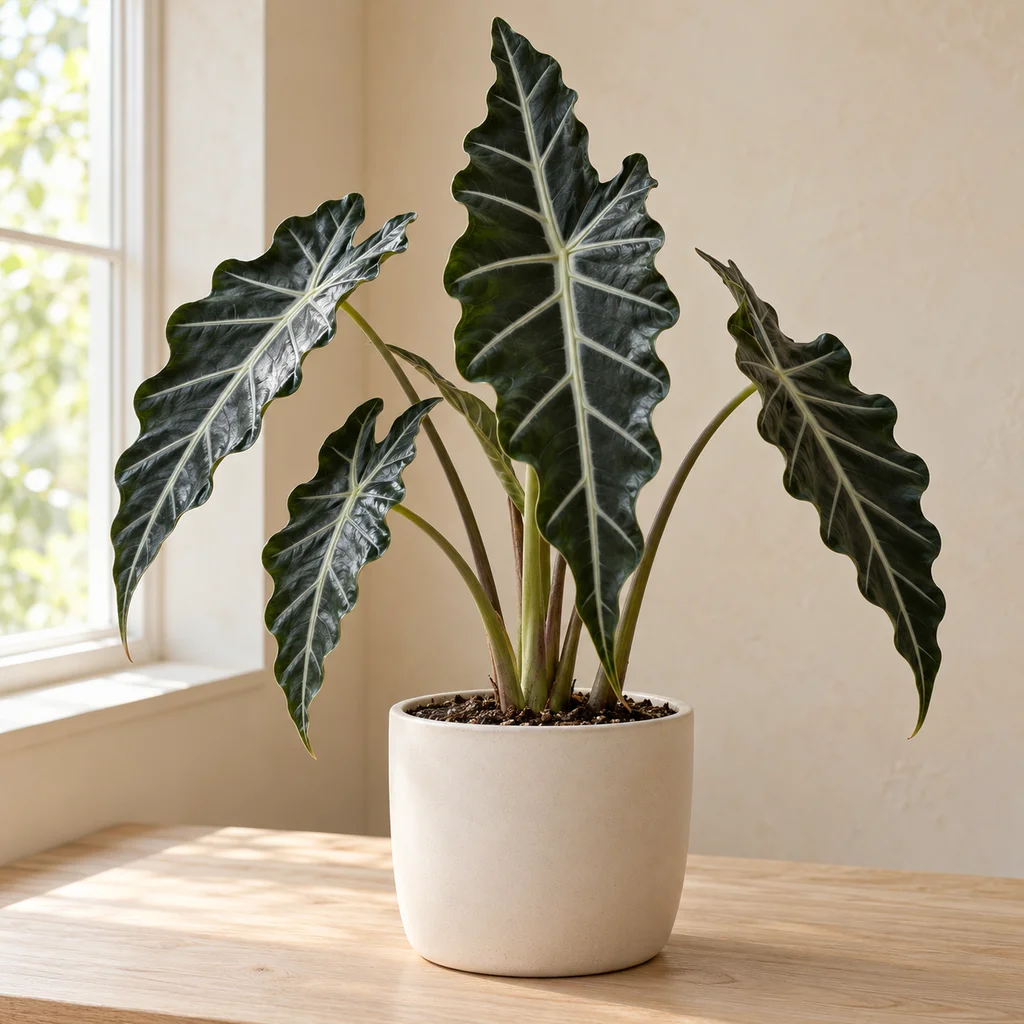
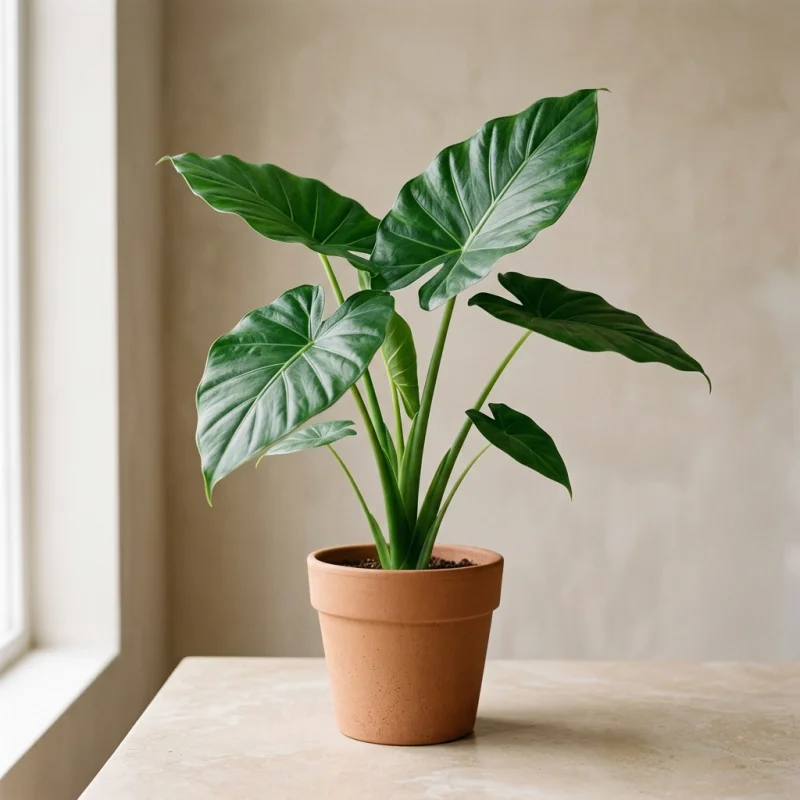
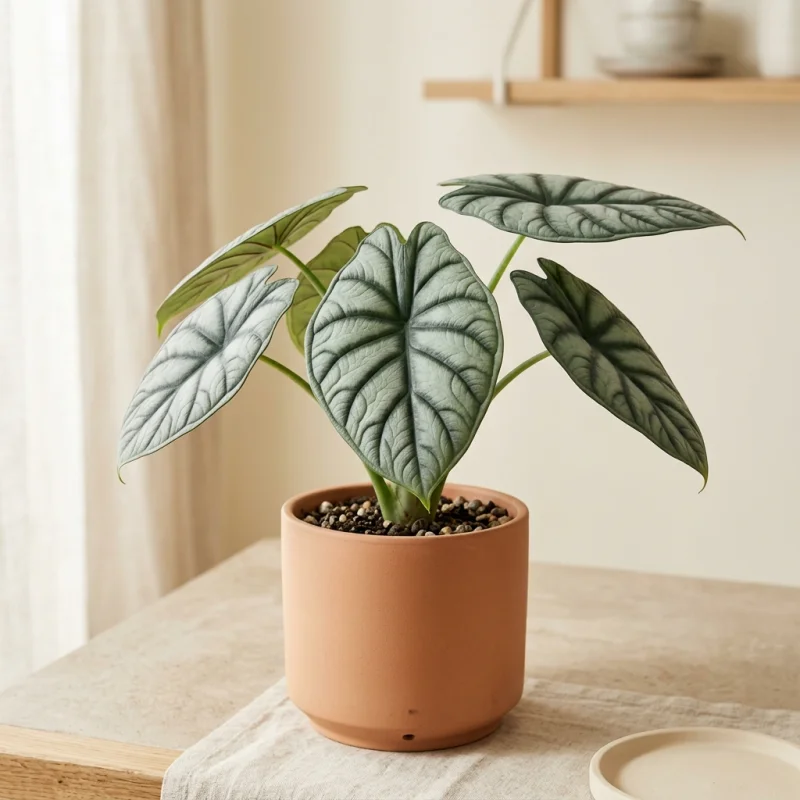
Hardy elephant ear (A. wentii)
Alocasia wentiiUpdated
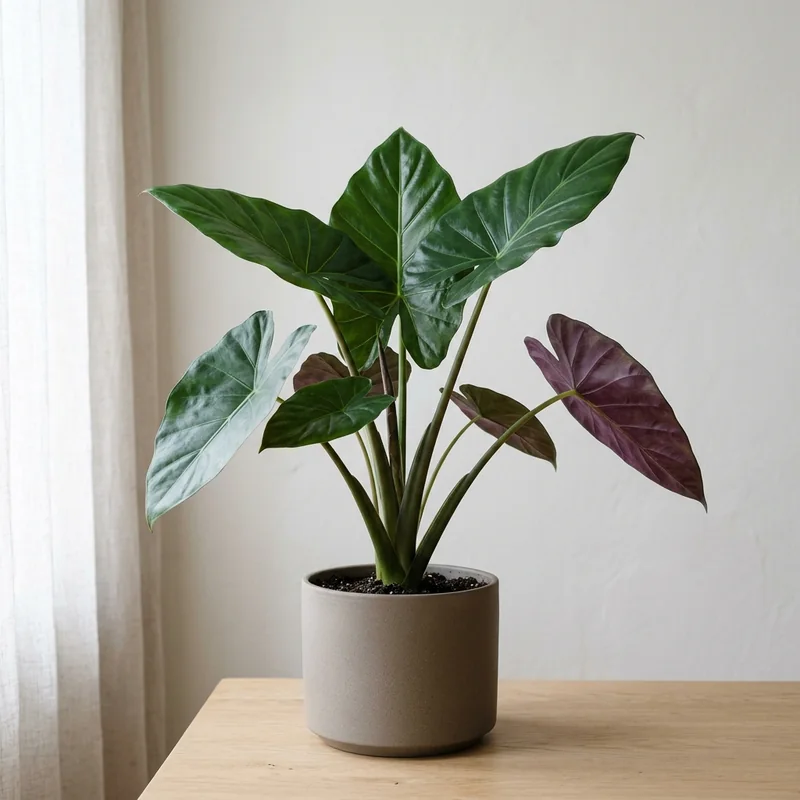
Bold rhizomatous aroid with glossy shield-shaped deep green leaves brushed in metallic bronze beneath. Thrives in bright filtered light, humidity and airy soil.
Essential care to help it thrive
Light and placement
Give bright filtered light near an east or shaded south window. Too little light drops lower leaves rapidly, while fierce midday sun bleaches and scorches blades.
Climate and season
Keep in steady warmth away from cold window drafts and dry heaters. Wipe wide leaves regularly to keep pores clear and boost ambient humidity moderately.
Soil and repotting
Coarse airy aroid blend combining fibrous coco coir, chunky pine bark and plenty of perlite for drainage.
Conditions vary with pot, season and location. Always check the mix and your plant's response.
Hardy elephant ear (A. wentii): when to check the soil
Check the upper half of the pot before watering every 5–8 days in warm growth. Empty saucers promptly and cut back noticeably when cool winter growth slows.
Let Grovia remind you when to check your Hardy elephant ear (A. wentii)Save the plant, get watering reminders and adjust the rhythm as the seasons change. Free on iPhone and Android.
See table by pot size
| Ø | Summer | Winter |
|---|---|---|
| 10 cm | 3–4 days | 6–9 days |
| 15 cm | 4–6 days | 8–11 days |
| 25 cm | 5–7 days | 11–15 days |
How to identify it
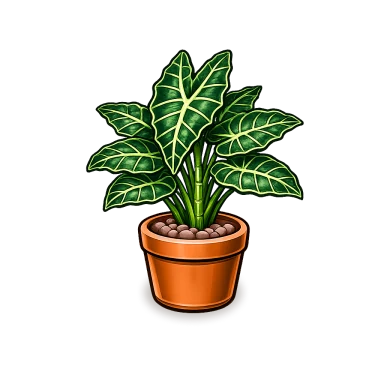
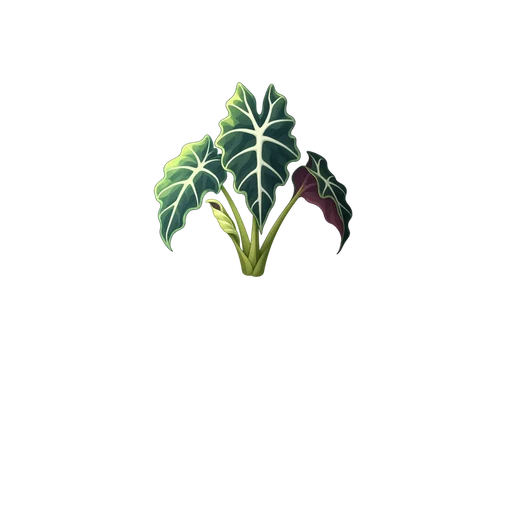
Thick glossy arrow-to-shield green leaves featuring pale ribs, metallic purple-bronze undersides and smooth bronzed petioles rising cleanly from a stout rhizome.
Botanical sheet
- Family
- Araceae
- Origin
- New Guinea
- Size
- ≈ 50–100 cm · Medium upright potted clump
- Climate
- ≈ 18–27 °C · ≥ 10 °C · Warm indoors, frost-free
Approximate figures: reference sources do not publish exact data for this species.
What's wrong with your plant?
Pet safety Toxicity unverified
There is no species-specific toxicity verification for this plant on ASPCA. Check with your veterinarian or search the ASPCA directory before keeping it within reach of pets.
Open the toxicity checkerCommon questions
Why does Alocasia wentii drop leaves in winter?
Shorter days and cooler temperatures can trigger partial dormancy while the underground corm rests; cut watering sharply until fresh shoots emerge in spring.
Should I wear gloves when pruning or repotting?
Yes: aroid sap carries insoluble calcium oxalate crystals that irritate skin and mouths, so wear gloves and place it out of reach of children and pets.
When is the best time to repot and feed?
Pot up only when roots fill the container in spring using loose bark-rich media, and feed lightly every 3–4 weeks while active leaves unfurl.