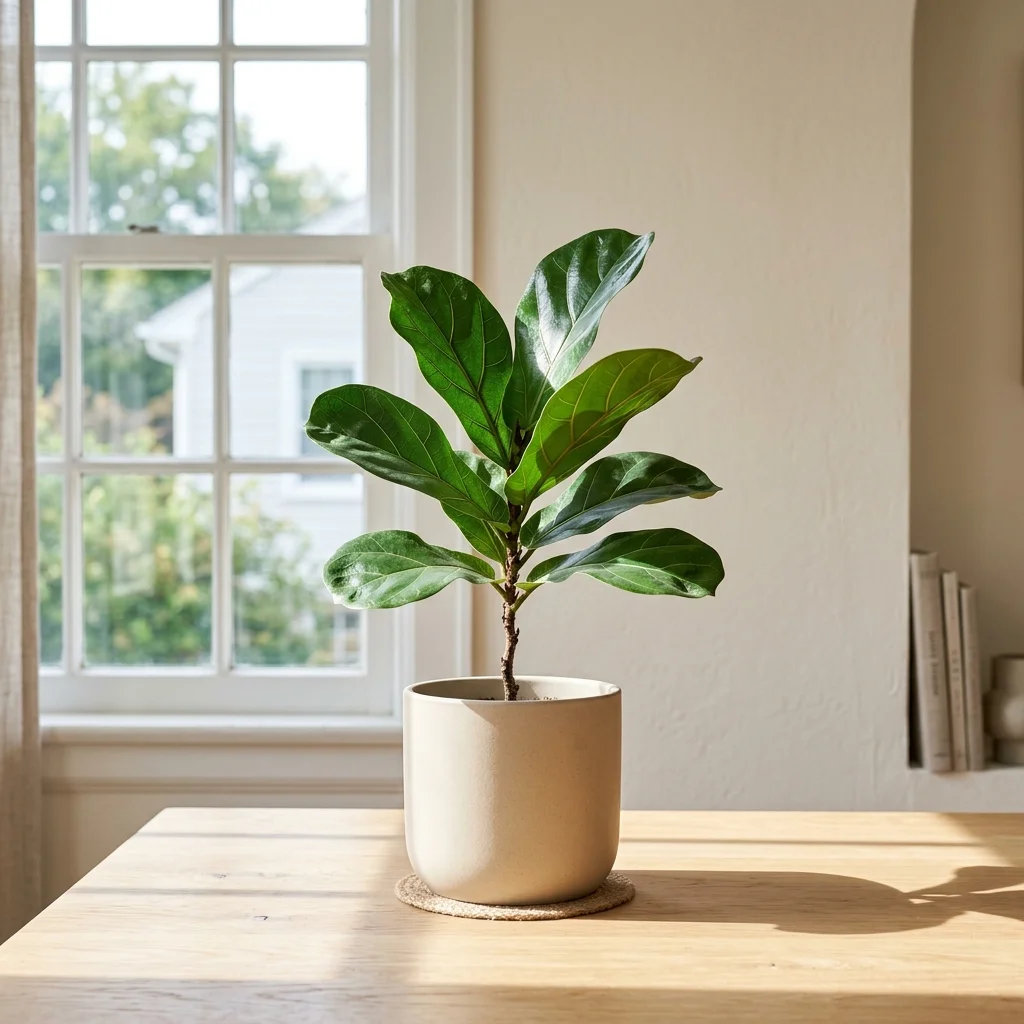
Arabian coffee plant
Coffea arabicaUpdated
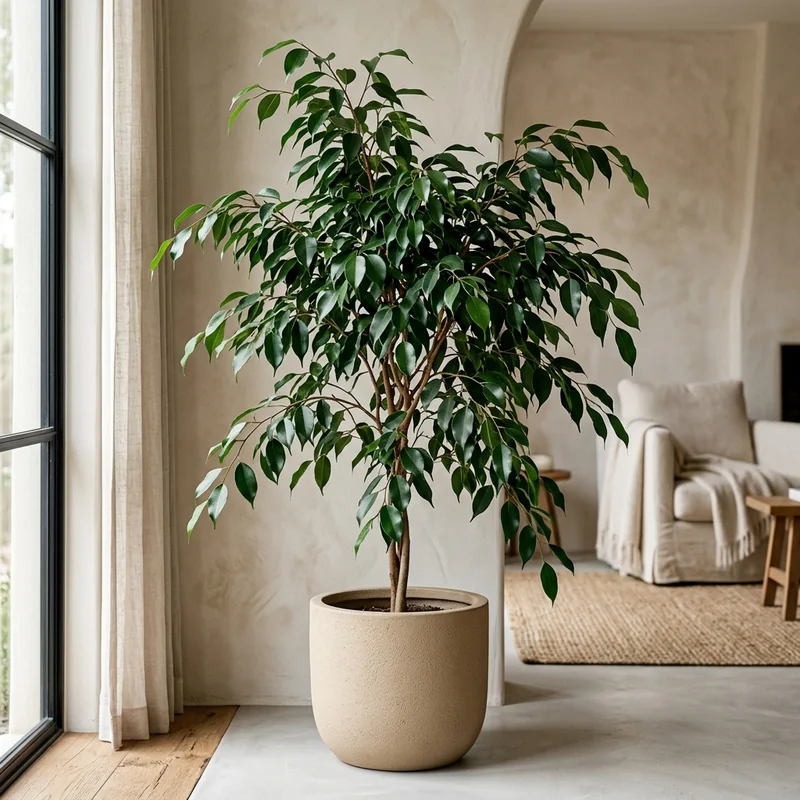
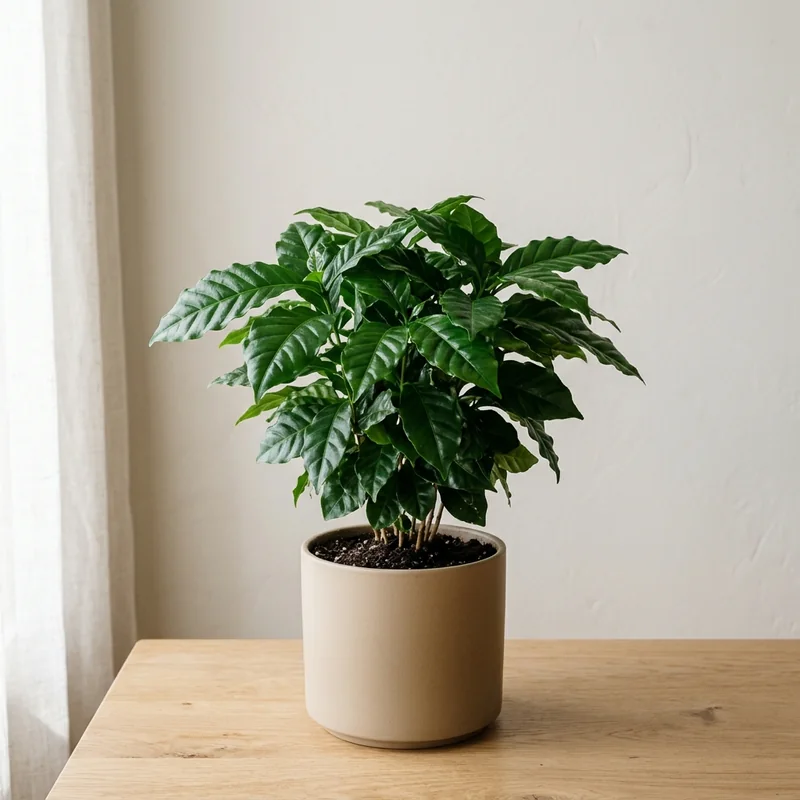
Glossy tropical understory shrub prized for deeply veined wavy dark-green foliage. Thrives in bright indirect light, high humidity and evenly moist acidic potting soil.
Essential care to help it thrive
Light and placement
Place in bright filtered daylight or mild morning sun. Direct midday summer sun scorches glossy blades brown, while dim rooms slow new leaves and thin lower stems.
Climate and season
Needs cozy steady warmth (16–24 °C), well above 13 °C, and humidity above 50% away from chilly window drafts or dry radiator vents.
Soil and repotting
Pot with open drainage in a rich, slightly acidic peat-free loam-based potting mix blended with coco coir, fine bark and perlite for steady aeration.
Conditions vary with pot, season and location. Always check the mix and your plant's response.
Arabian coffee plant: when to check the soil
Check the upper layer every 4–6 days in summer (7–10 days in winter) and keep potting mix lightly moist using rainwater or filtered water, draining excess promptly.
Let Grovia remind you when to check your Arabian coffee plantSave the plant, get watering reminders and adjust the rhythm as the seasons change. Free on iPhone and Android.
See table by pot size
| Ø | Summer | Winter |
|---|---|---|
| 10 cm | 5–7 days | 10–13 days |
| 15 cm | 6–8 days | 12–17 days |
| 25 cm | 8–11 days | 16–22 days |
How to identify it
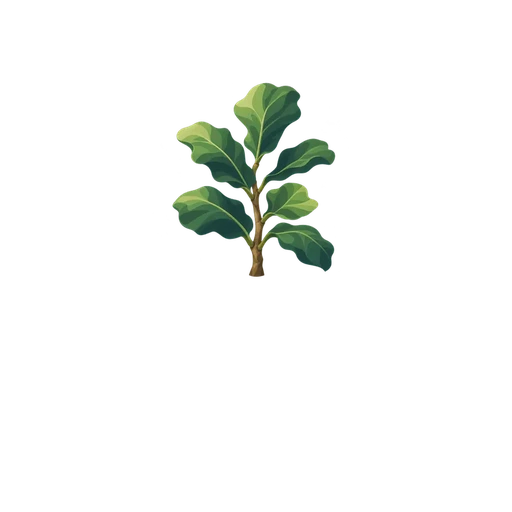
Compact multi-stemmed shrub with shiny opposite dark-green leaves showing pronounced sunken veins. Mature indoor trees bear fragrant white blooms and red coffee cherries.
Botanical sheet
- Family
- Rubiaceae
- Origin
- Ethiopia · NE Tropical Africa
- Size
- 1–1.5 m indoors (4–8 m)
- Climate
- 16–24 °C · min. 13 °C
What's wrong with your plant?
Pet safety Toxicity unverified
There is no species-specific toxicity verification for this plant on ASPCA. Check with your veterinarian or search the ASPCA directory before keeping it within reach of pets.
Open the toxicity checkerCommon questions
Why are indoor coffee plants sold as thick clusters in one pot?
Nurseries sprout multiple seeds together for instant bushy fullness; as stems mature, divide crowded plants or step up the pot so roots stop competing for moisture.
Will an indoor Coffea arabica produce coffee beans?
After three to four years in bright filtered light, mature shrubs often bloom with jasmine-scented white flowers followed by red berries.
Should I water my coffee plant with rainwater?
Yes—rainwater or filtered water keeps soil slightly acidic and prevents mineral salt burn along glossy leaf margins.