Taro / Elephant ear (Colocasia)
Colocasia esculentaUpdated
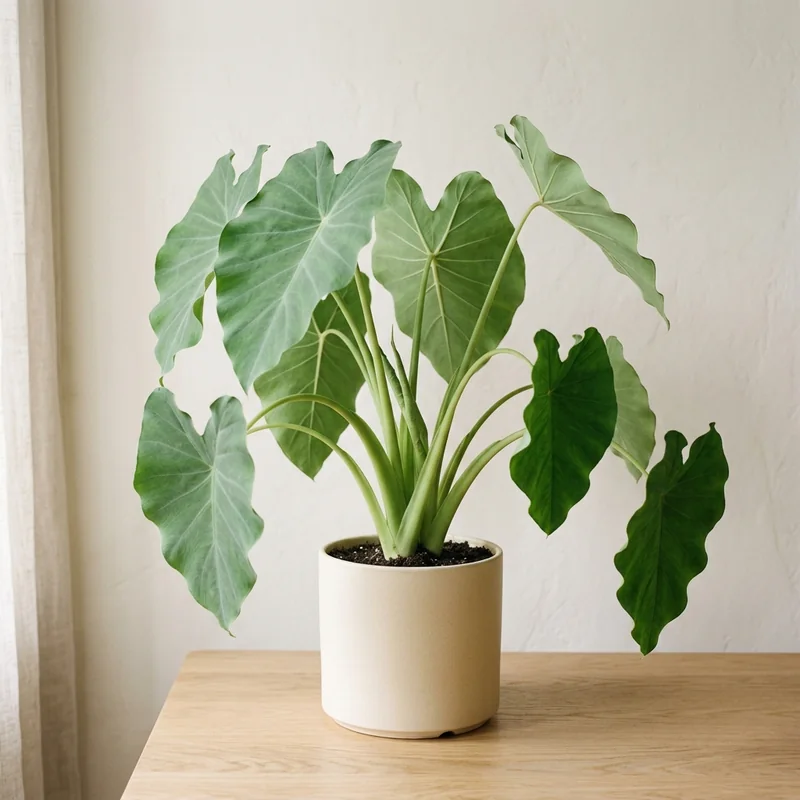
Lush tuberous aroid with huge downward-tilted peltate blades, marked toxic by ASPCA. Craves bright sun-filtered light, steady warm moisture, and rich soil.
Essential care to help it thrive
Light and placement
Give very bright indirect light or mild morning sun indoors, and part sun outdoors when warm. Deep indoor shade weakens tall stalks and shrinks blades.
Climate and season
Flourishes at 18–30 °C with humid air on sheltered patios or bright rooms. Below 10 °C evergreen foliage collapses while the underground corm rests.
Soil and repotting
Roomy drained pot with rich organic compost blended with coco coir and perlite to stay damp yet aerated.
Conditions vary with pot, season and location. Always check the mix and your plant's response.
Taro / Elephant ear (Colocasia): when to check the soil
Check surface moisture actively during warm growth and keep compost steadily moist without drying out. Cut water sharply if cold weather triggers dormancy.
Let Grovia remind you when to check your Taro / Elephant ear (Colocasia)Save the plant, get watering reminders and adjust the rhythm as the seasons change. Free on iPhone and Android.
See table by pot size
| Ø | Summer | Winter |
|---|---|---|
| 10 cm | 4–6 days | 8–12 days |
| 15 cm | 5–7 days | 11–15 days |
| 25 cm | 7–10 days | 14–20 days |
How to identify it
Stout succulent petioles join near the center of huge matte heart-shaped blades pointing downward; formerly listed as Colocasia antiquorum.
Botanical sheet
- Family
- Araceae
- Origin
- India to southern China and Sumatra
- Size
- 1–1.5 m tall clump
- Climate
- 18–30 °C · min 10 °C
What's wrong with your plant?
Pet safety Toxic to pets
ASPCA lists this species as toxic to cats and dogs. Keep pets from chewing it; contact a veterinarian if ingestion is suspected.
Toxic principles and clinical signs quoted from the ASPCA database.
See the ASPCA entryCommon questions
How can you tell Colocasia esculenta apart from Alocasia?
Colocasia leaves are matte, attach slightly inside the blade notch (peltate), and droop downward, whereas most Alocasia leaves shine and point skyward.
Does ornamental taro go dormant outdoors or in cool rooms?
Yes. Once nights stay below 10–15 °C, stems die back naturally so you can keep the firm tuber frost-free and nearly dry until warm spring weather.
Is Colocasia esculenta harmful to dogs, cats, or horses?
Yes. ASPCA lists Colocasia esculenta as toxic to dogs, cats, and horses because insoluble calcium oxalates cause oral burning and swelling.