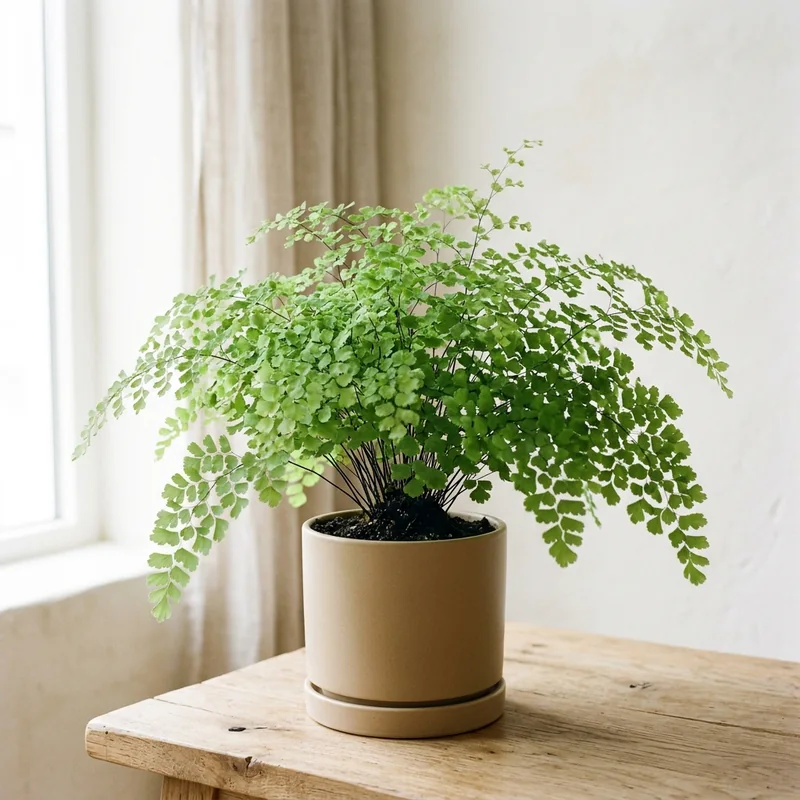
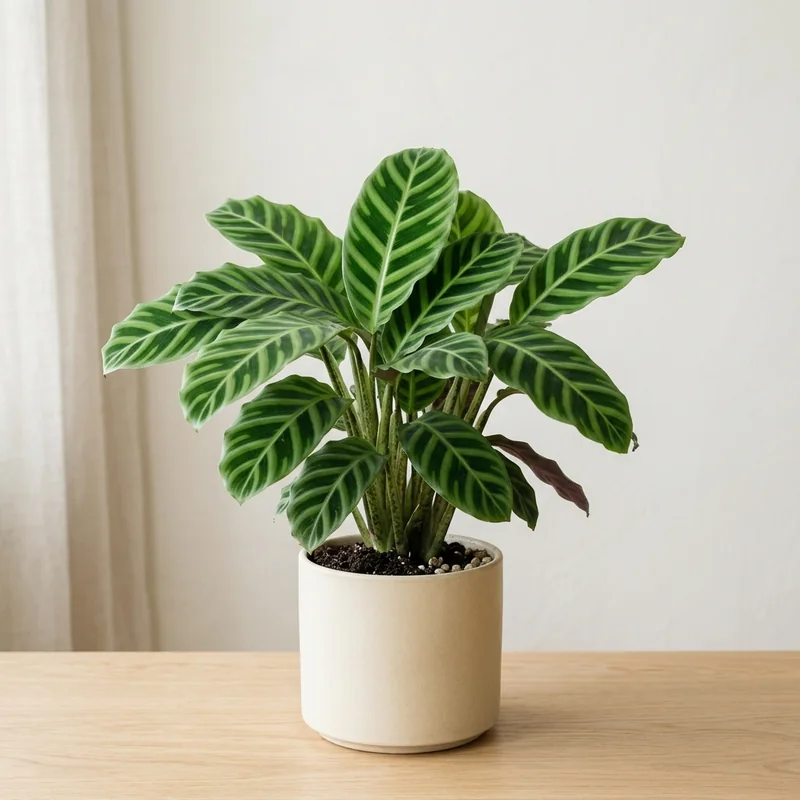
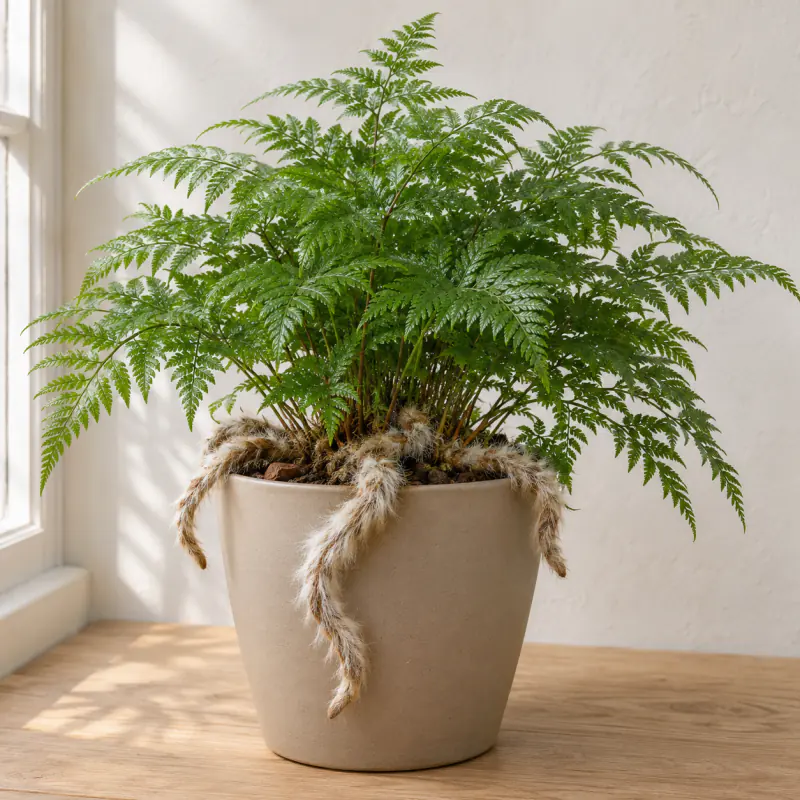
Fishbone prayer plant
Ctenanthe burle-marxiiUpdated
Fishbone prayer plant (Ctenanthe burle-marxii): indirect light. Keep moderate mix moisture with drainage, adjusting for season.
Essential care to help it thrive
Light and placement
Indirect light; harsh sun can fade or mark leaves.
Climate and season
Keep away from very dry air and cold draughts; leaves may shift position during the day.
Soil and repotting
Use a draining mix that retains some moisture, matched to pot size and the drying rate in your home. During active growth, follow a suitable feed label. First check light, water and roots if the plant is declining.
Conditions vary with pot, season and location. Always check the mix and your plant's response.
Fishbone prayer plant: when to check the soil
Keep moderate mix moisture with drainage, adjusting for season.
Let Grovia remind you when to check your Fishbone prayer plantSave the plant, get watering reminders and adjust the rhythm as the seasons change. Free on iPhone and Android.
See table by pot size
| Ø | Summer | Winter |
|---|---|---|
| 10 cm | 3–4 days | 5–7 days |
| 15 cm | 3–5 days | 7–9 days |
| 25 cm | 4–6 days | 9–12 days |
How to identify it
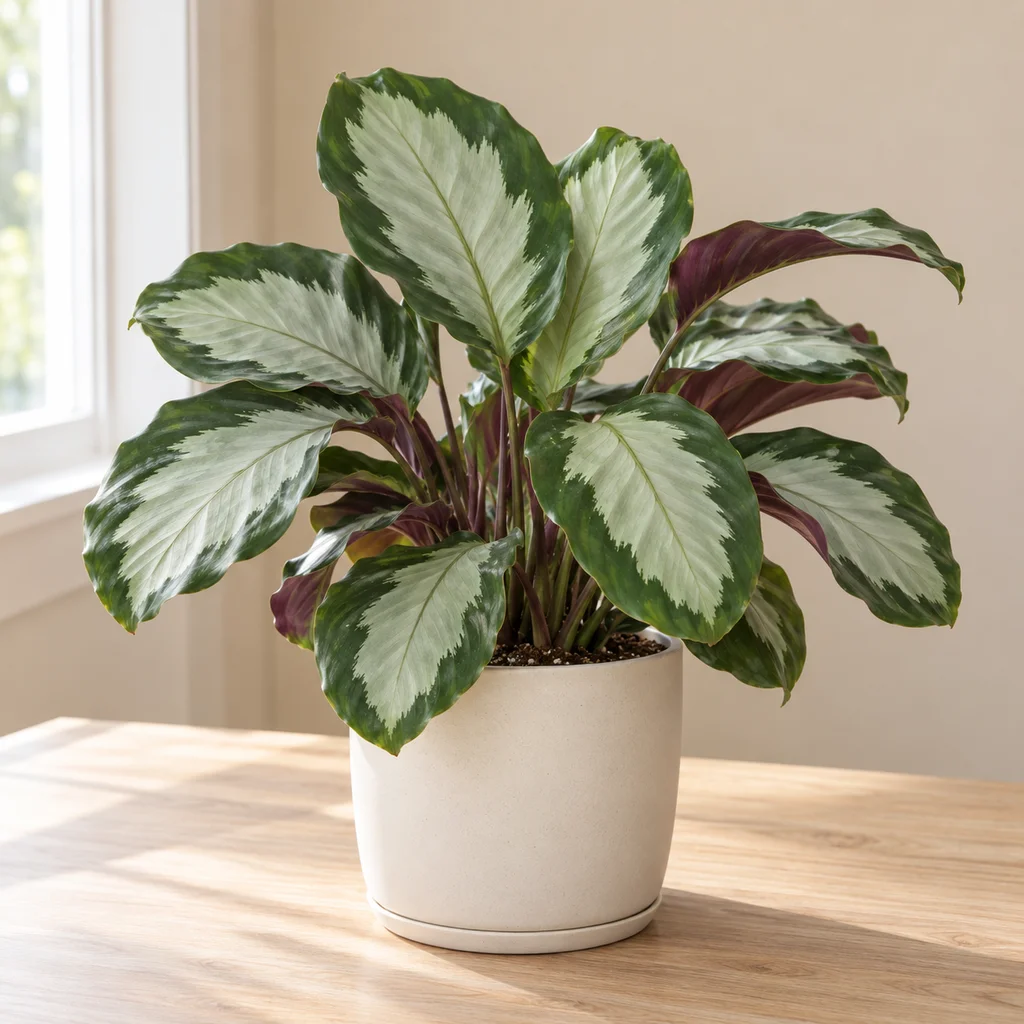
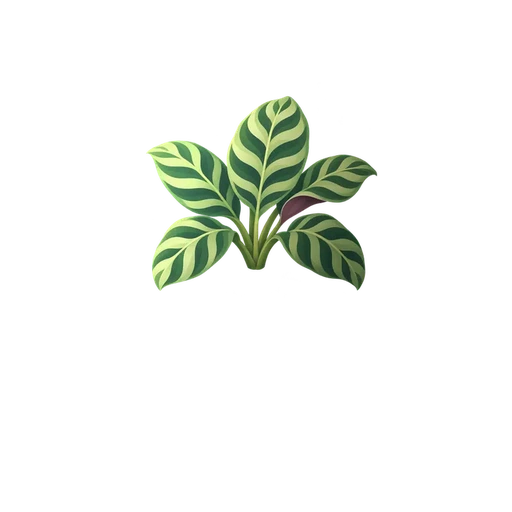
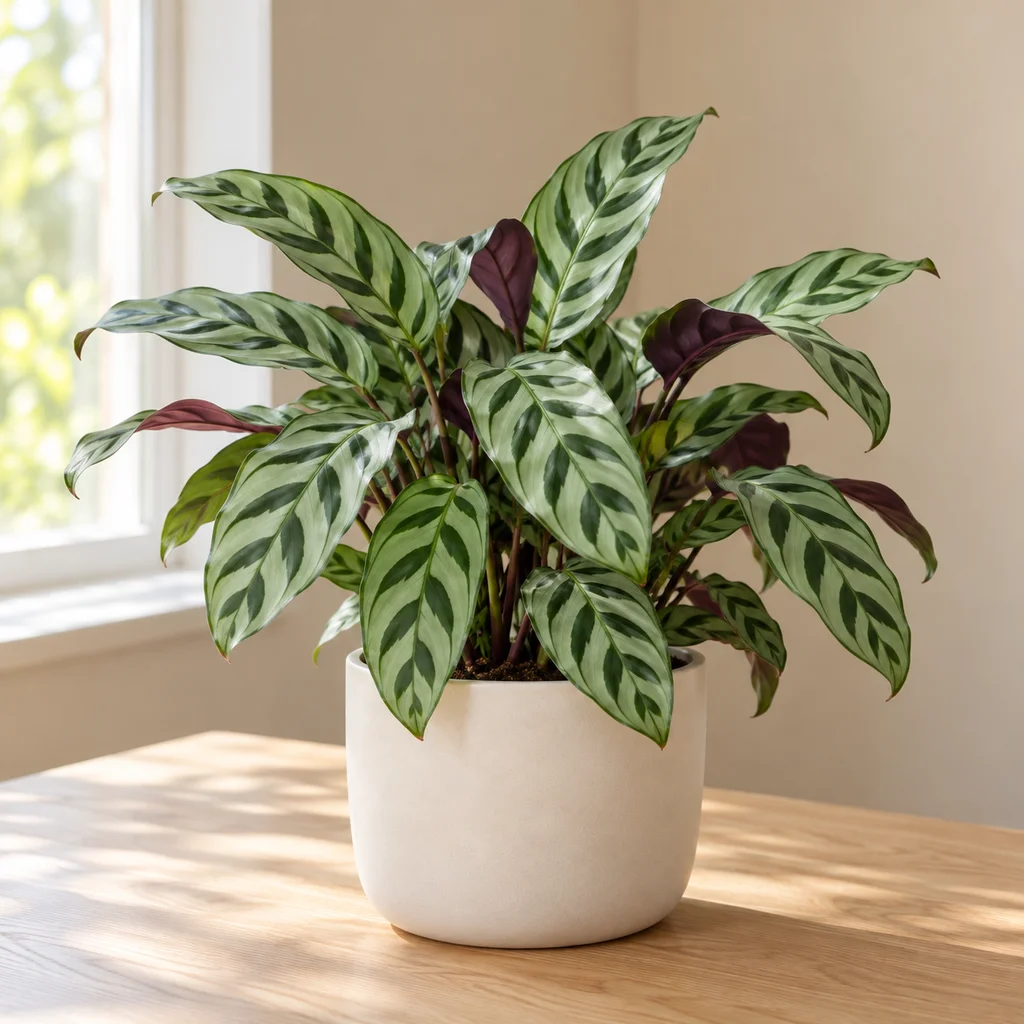
Oval leaves show a fishbone pattern and often purple undersides; verify the variety against cultivars.
Botanical sheet
- Family
- Marantaceae
- Origin
- Southeastern Brazil
- Size
- 30–60 cm
- Climate
- 18–26 °C · ≥ 15 °C
What's wrong with your plant?
Pet safety Toxicity unverified
There is no species-specific toxicity verification for this plant on ASPCA. Check with your veterinarian or search the ASPCA directory before keeping it within reach of pets.
Open the toxicity checkerCommon questions
Is it a calathea?
It is a different genus from Goeppertia, though both are in Marantaceae.