Delta maidenhair fern
Adiantum raddianumUpdated
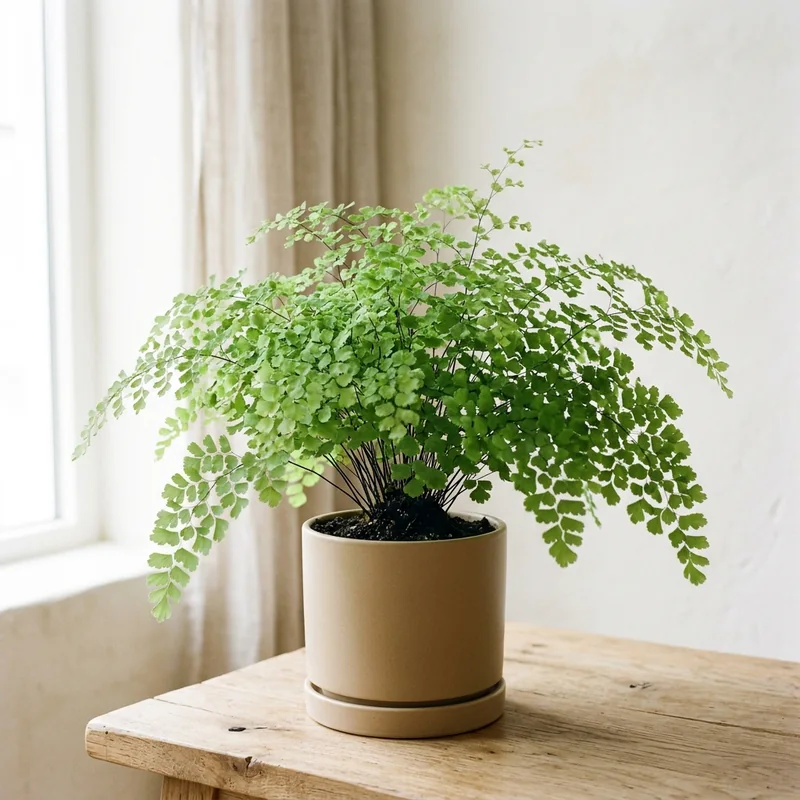
Airy evergreen fern prized for feathery fan-shaped leaflets held on glossy black wiry stalks. Thrives in bright diffused light, high humidity and evenly moist soil.
Essential care to help it thrive
Light and placement
Place in bright indirect light or filtered morning sun. Direct sunbeams quickly scorch the papery leaflets brown, while dim corners yield weak, sparse fronds.
Climate and season
Needs steady warmth (15–24 °C) and high humidity above 60% away from radiators, drafts and temperatures below 10 °C. Naturally suits bright humid bathrooms.
Soil and repotting
Pot with open drainage in a moisture-retentive peat-free potting mix blended with loam, fine bark and a splash of perlite so moisture stays even yet airy.
Conditions vary with pot, season and location. Always check the mix and your plant's response.
Delta maidenhair fern: when to check the soil
Check the soil surface every 3–5 days in summer (5–8 days in winter) and water before it ever dries out; roots die back rapidly if the rootball turns dry.
Let Grovia remind you when to check your Delta maidenhair fernSave the plant, get watering reminders and adjust the rhythm as the seasons change. Free on iPhone and Android.
See table by pot size
| Ø | Summer | Winter |
|---|---|---|
| 10 cm | 3–4 days | 5–7 days |
| 15 cm | 3–5 days | 7–9 days |
| 25 cm | 4–6 days | 9–12 days |
How to identify it
Delicate triangular 3-pinnate fronds with pale-to-mid green wedge leaflets on shiny jet-black stems. Often sold under its older synonym Adiantum cuneatum.
Botanical sheet
- Family
- Pteridaceae
- Origin
- Tropical Americas · Caribbean
- Size
- 30–60 cm tall
- Climate
- 15–24 °C · min. 10 °C
What's wrong with your plant?
Pet safety Toxicity unverified
There is no species-specific toxicity verification for this plant on ASPCA. Check with your veterinarian or search the ASPCA directory before keeping it within reach of pets.
Open the toxicity checkerCommon questions
Can a dried-out maidenhair fern grow back?
Yes, as long as the underground rhizome stays firm: shear withered fronds down to soil level, keep potting mix lightly moist under bright diffused light, and fresh shoots emerge.
Should I mist the delicate leaves every day?
A pebble tray with water or room humidifier works far better than misting, which only raises humidity briefly and can spot thin leaflets.
Does tap water harm Adiantum raddianum?
Room-temperature rainwater or filtered water avoids salt buildup in the fine roots and keeps delicate new shoots crisp green.