Noble dendrobium orchid
Dendrobium nobileUpdated
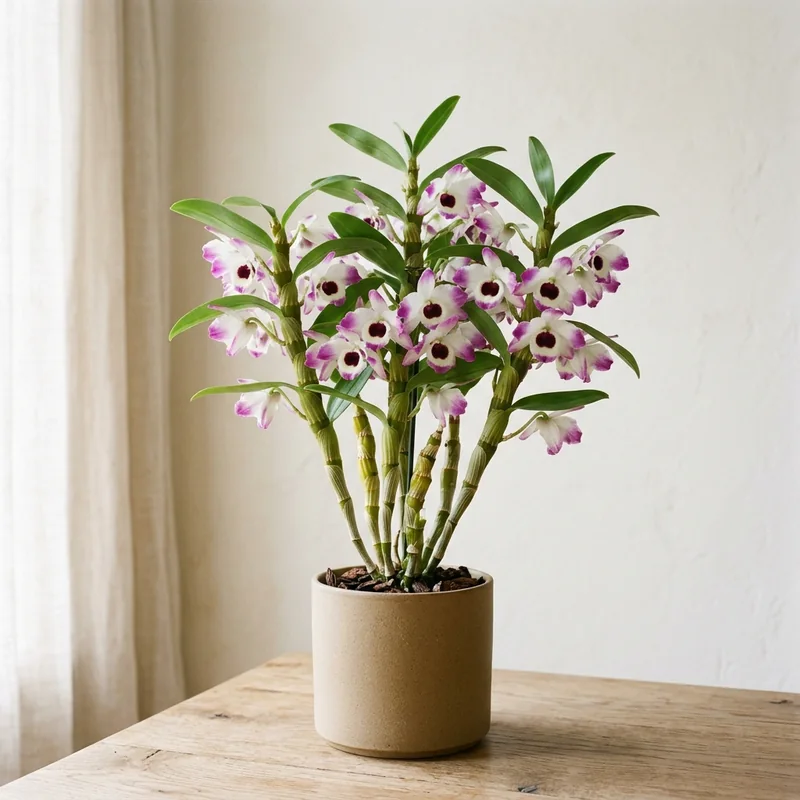
Fragrant cool-growing epiphytic orchid with blooms clustered along upright canes. Thrives in bright filtered light, coarse bark and a dry autumn rest.
Essential care to help it thrive
Light and placement
Give bright indirect light with mild morning or winter sun year-round, shading only fierce summer midday sun so new canes ripen plump enough to flower.
Climate and season
Enjoys 18–25 °C summer warmth with good airflow, followed by several weeks of cool 10–14 °C nights and dry rest in autumn to trigger flower buds over keikis.
Soil and repotting
Pot snugly in an orchid pot filled with chunky pine bark, charcoal and perlite so white roots dry quickly between soakings.
Conditions vary with pot, season and location. Always check the mix and your plant's response.
Noble dendrobium orchid: when to check the soil
Check bark every 5–8 days during spring-summer growth and water freely once nearly dry; cut right back to tiny sips every 2–4 weeks in cool autumn until buds swell.
Let Grovia remind you when to check your Noble dendrobium orchidSave the plant, get watering reminders and adjust the rhythm as the seasons change. Free on iPhone and Android.
See table by pot size
| Ø | Summer | Winter |
|---|---|---|
| 10 cm | 4–5 days | 7–10 days |
| 15 cm | 5–6 days | 9–13 days |
| 25 cm | 6–9 days | 12–17 days |
How to identify it
Jointed yellowish-green cane pseudobulbs bearing oblong leaves and node-borne flowers with deep maroon throats. Clearly distinct from Phalaenopsis moth orchids.
Botanical sheet
- Family
- Orchidaceae
- Origin
- Himalayas · South & SE Asia
- Size
- 30–50 cm upright
- Climate
- 10–25 °C · min. 8 °C
What's wrong with your plant?
Pet safety Toxicity unverified
There is no species-specific toxicity verification for this plant on ASPCA. Check with your veterinarian or search the ASPCA directory before keeping it within reach of pets.
Open the toxicity checkerCommon questions
Why does my Dendrobium nobile grow keikis instead of flowers?
Without a cool (10–14 °C), bright and mostly dry autumn rest with zero fertilizer, nodes switch from forming flower buds to producing leafy baby offsets.
Should I cut off old bare canes after flowering?
Leave green bare canes intact—they store essential water and nutrients for young shoots and can even bloom again along unused nodes.
Are yellow falling leaves on older canes a problem?
Not in autumn: Dendrobium nobile naturally drops leaves from mature canes ahead of winter-spring flowering.