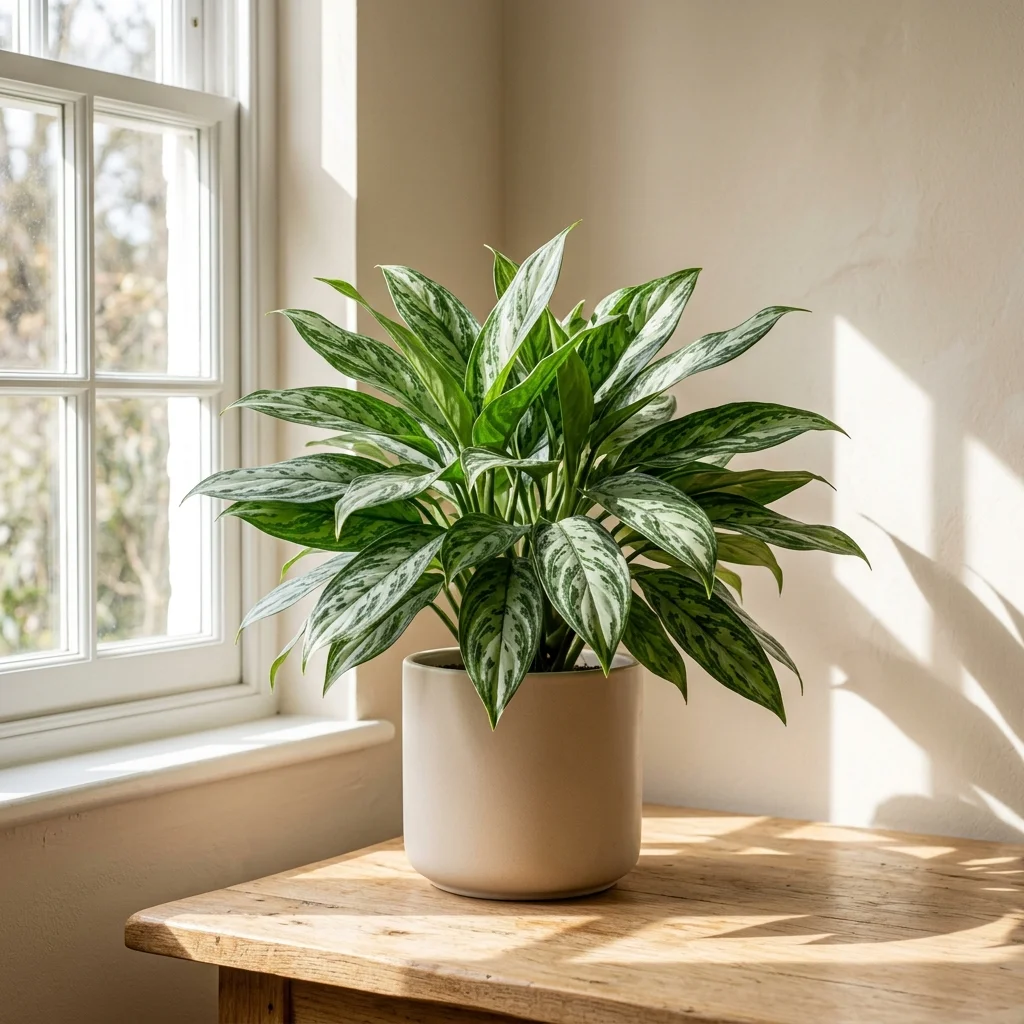
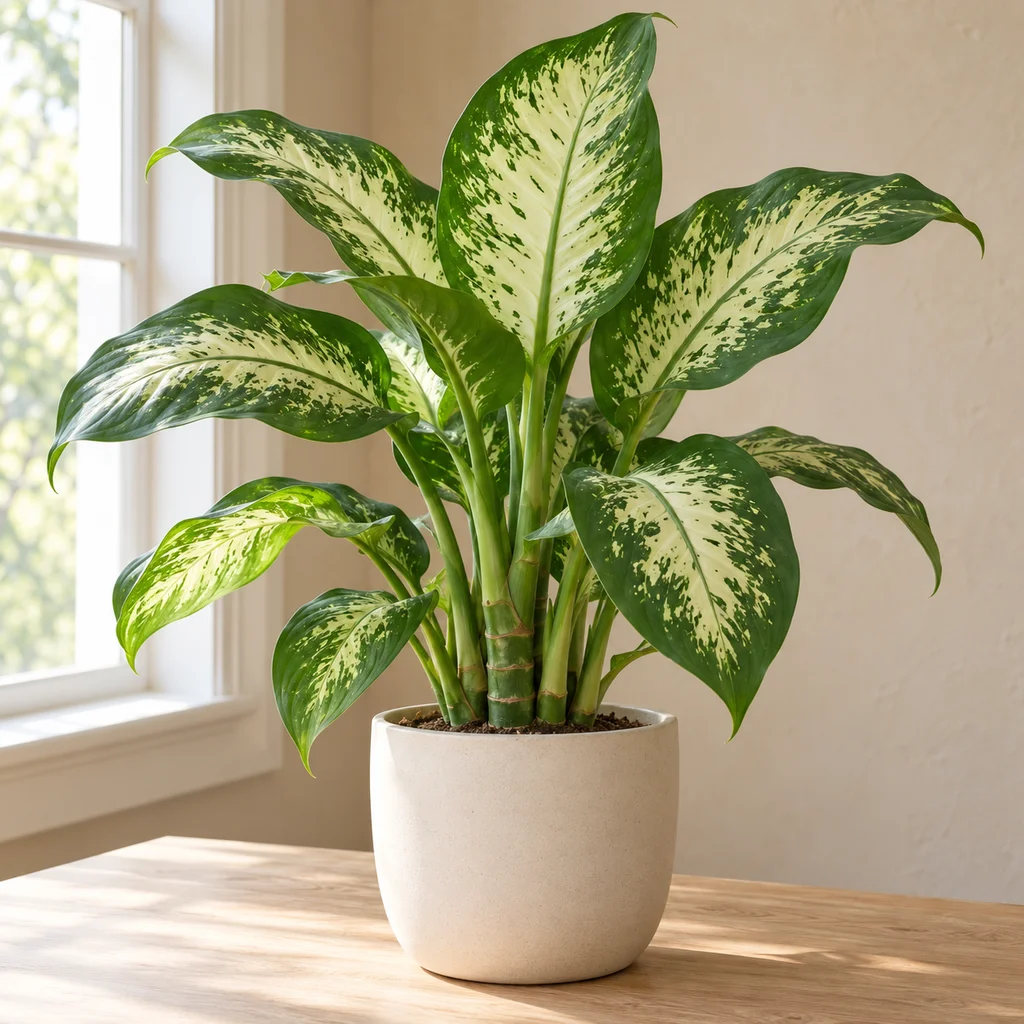
Dumb cane
Dieffenbachia seguineUpdated
Bold variegated aroid suited to warm rooms with filtered light, airy soil, and thorough drying of the top layer between waterings.
Essential care to help it thrive
Light and placement
Give filtered brightness and protect foliage from harsh sun.
Climate and season
Avoid cold and draughts; a stable position helps interpret leaf changes.
Soil and repotting
Use an open aroid blend in a draining pot; wear gloves when pruning because sap is irritating.
Conditions vary with pot, season and location. Always check the mix and your plant's response.
Dumb cane: when to check the soil
Check moisture before watering; do not leave the pot in a water-filled saucer.
Let Grovia remind you when to check your Dumb caneSave the plant, get watering reminders and adjust the rhythm as the seasons change. Free on iPhone and Android.
See table by pot size
| Ø | Summer | Winter |
|---|---|---|
| 10 cm | 4–6 days | 8–12 days |
| 15 cm | 5–7 days | 11–15 days |
| 25 cm | 7–10 days | 14–20 days |
How to identify it
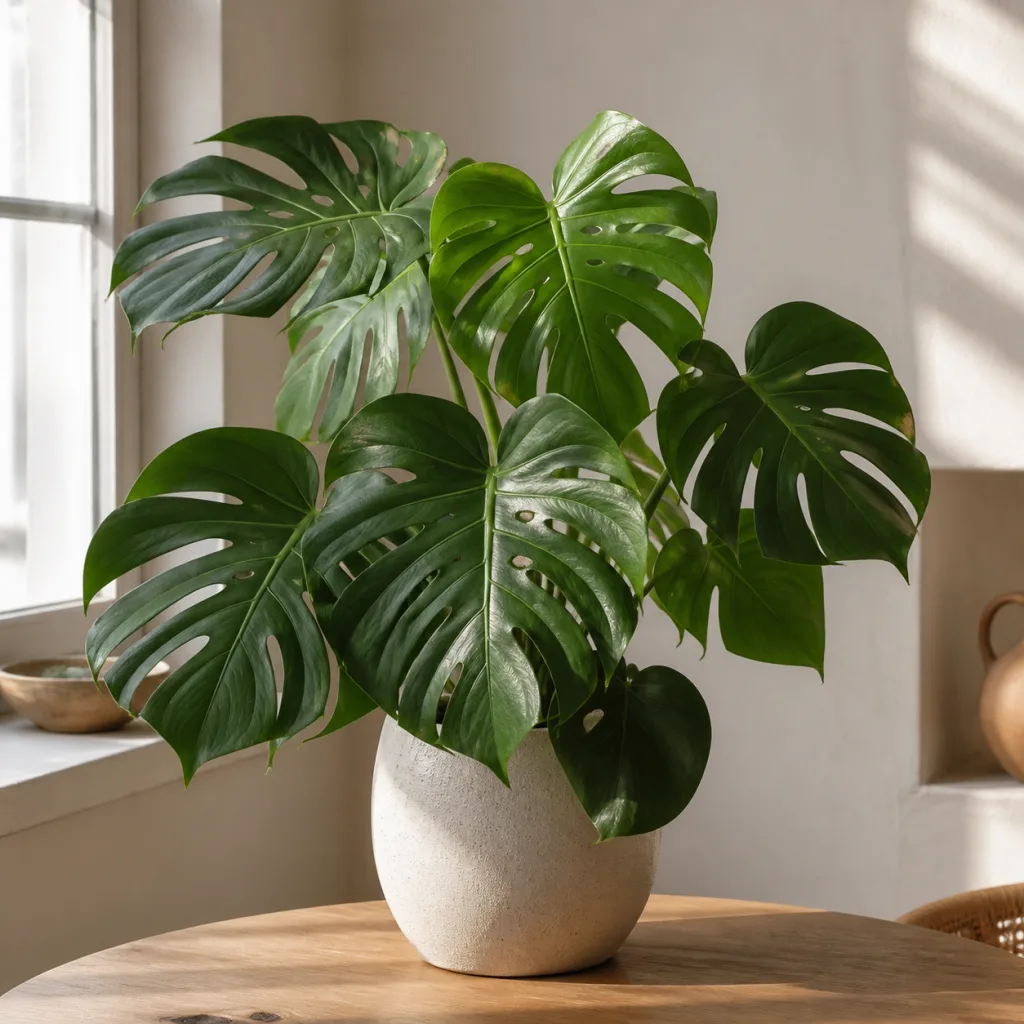
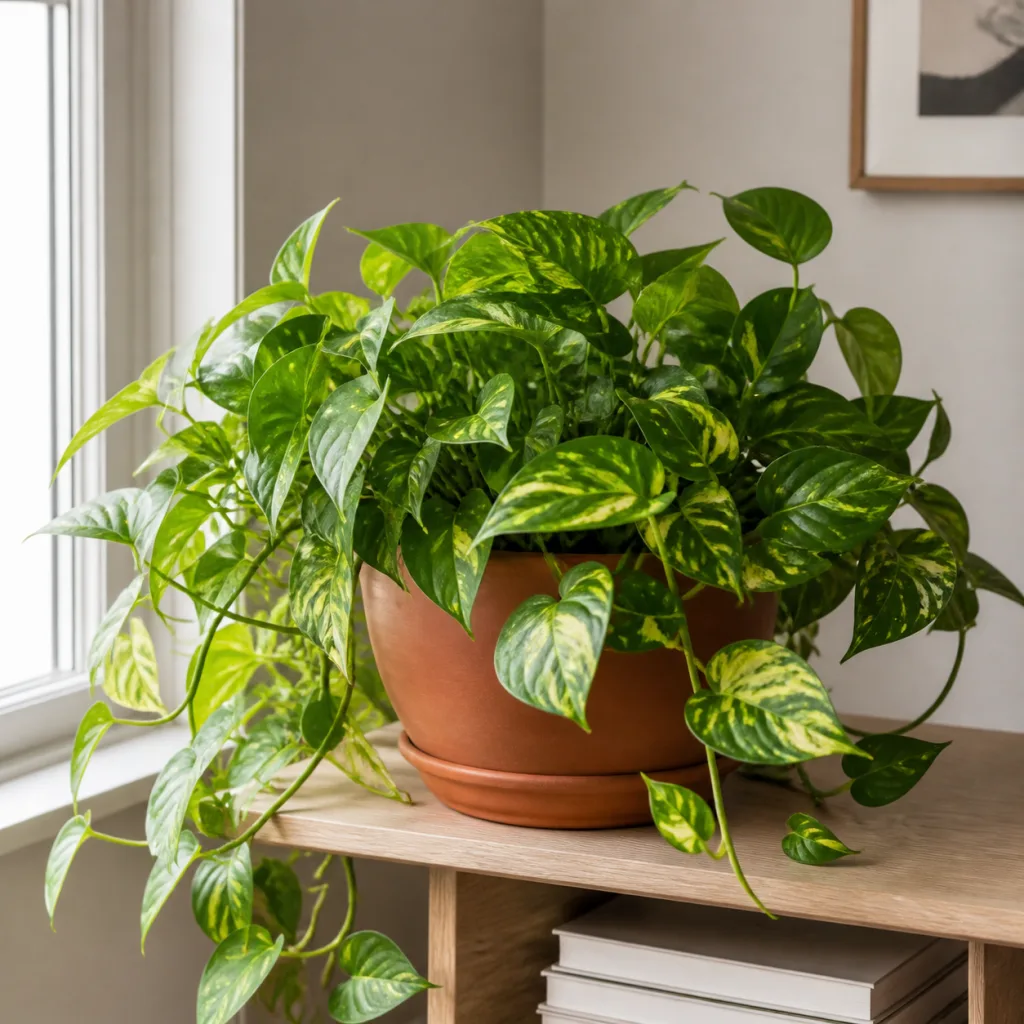
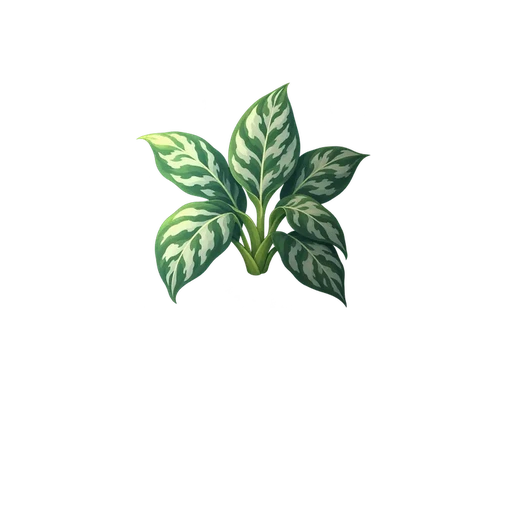
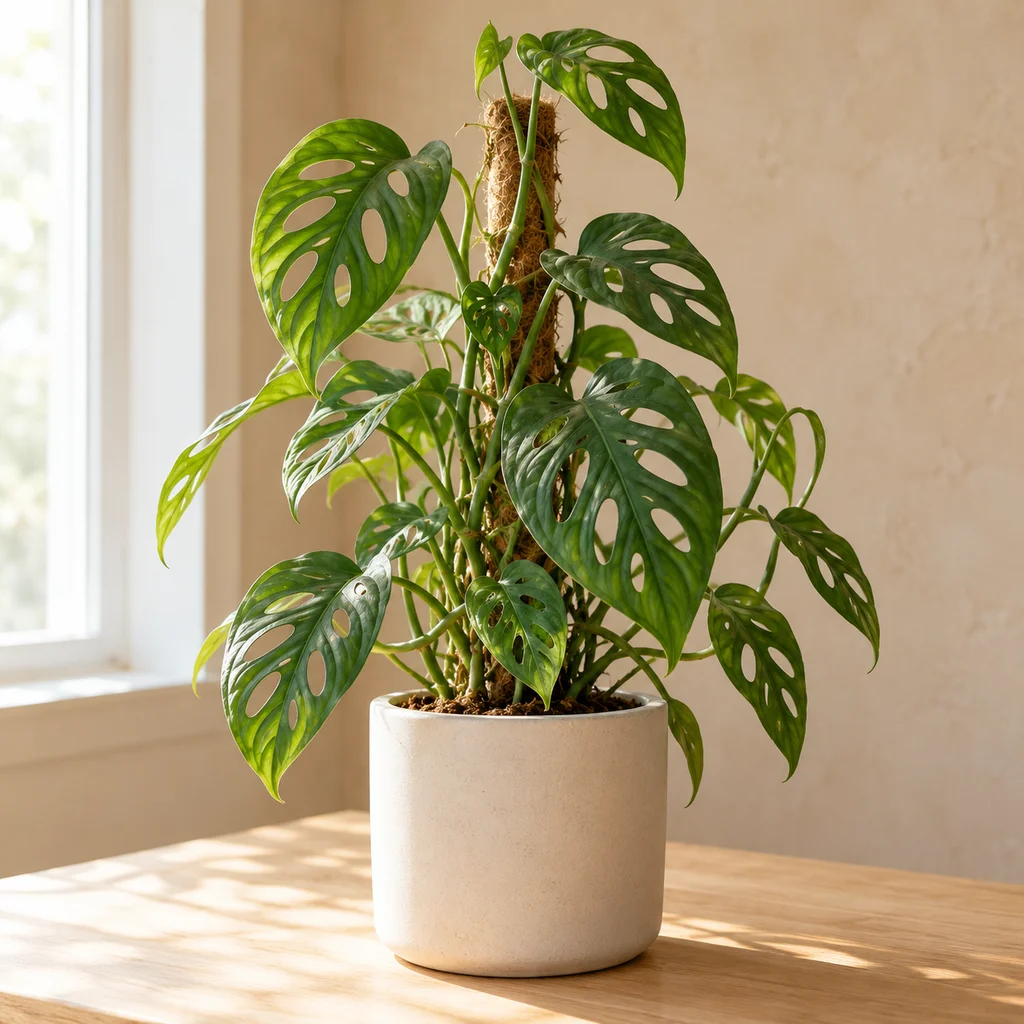
Fleshy stems hold large leaves; pale leaf patterns differ among cultivars.
Botanical sheet
- Family
- Araceae
- Origin
- Caribbean · Tropical America
- Size
- 1–2 m indoors
- Climate
- 18–26 °C · min. 15 °C
What's wrong with your plant?
Pet safety Toxic to pets
ASPCA lists this species as toxic to cats and dogs. Keep pets from chewing it; contact a veterinarian if ingestion is suspected.
Toxic principles and clinical signs quoted from the ASPCA database.
See the ASPCA entryCommon questions
Are all leaf markings disease?
No. Many pale areas are normal cultivar variegation; compare older leaves.
How often should you water in winter?
Cooler dark days slow uptake—check moisture every 11–15 days and water more lightly.
What can I do if the lower stem gets bare and leggy?
Mature canes naturally drop oldest leaves; repot or propagate stem sections in spring while wearing gloves.