Adanson's monstera
Monstera adansoniiUpdated
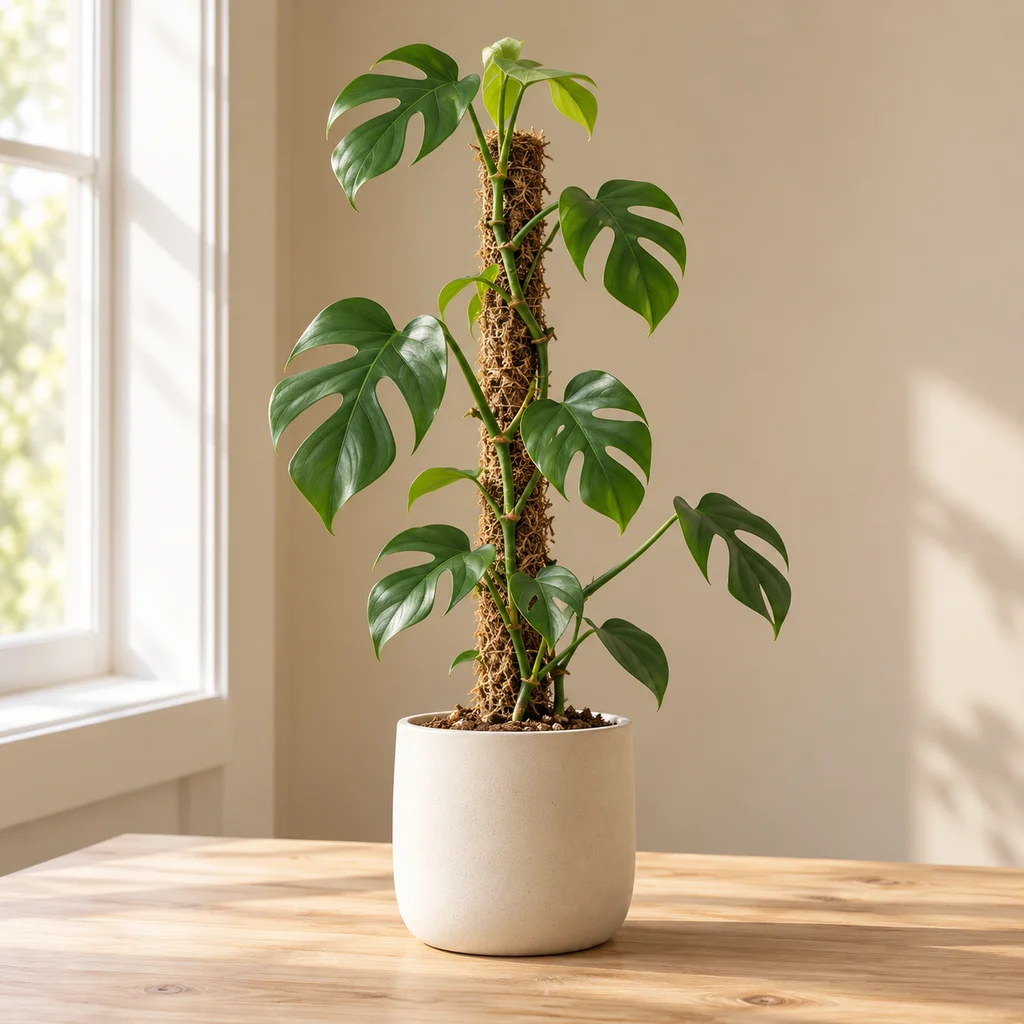
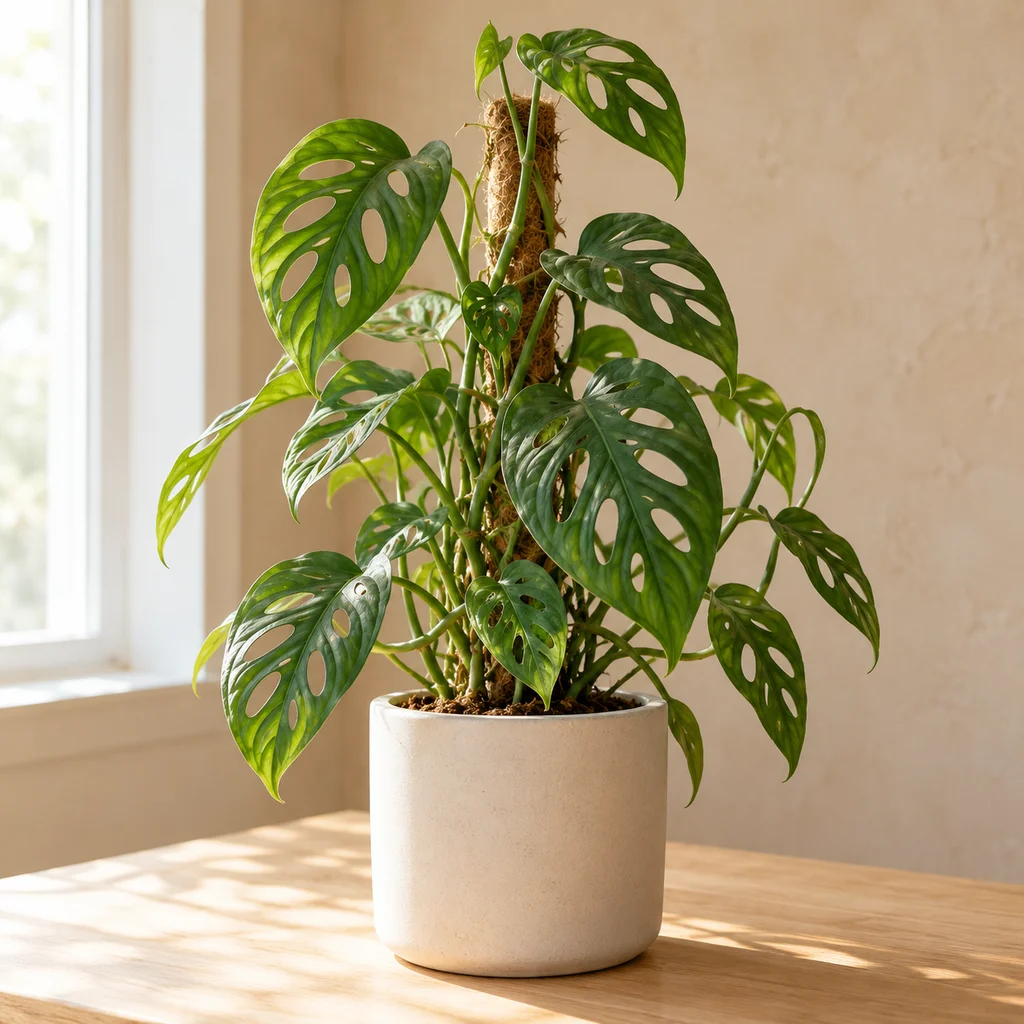
Compact vining aroid prized for lacy fenestrated foliage. Produces noticeably larger leaves when climbing a damp moss pole instead of trailing.
Essential care to help it thrive
Light and placement
Give bright indirect light; avoid scorching sun through glass.
Climate and season
Moderate to high humidity helps; add support if you want upright growth.
Soil and repotting
Plant in a chunky aroid blend inside a draining pot.
Conditions vary with pot, season and location. Always check the mix and your plant's response.
Adanson's monstera: when to check the soil
Keep the mix moist but drained in active growth; reduce water in winter.
Let Grovia remind you when to check your Adanson's monsteraSave the plant, get watering reminders and adjust the rhythm as the seasons change. Free on iPhone and Android.
See table by pot size
| Ø | Summer | Winter |
|---|---|---|
| 10 cm | 4–6 days | 8–12 days |
| 15 cm | 5–7 days | 11–15 days |
| 25 cm | 7–10 days | 14–20 days |
How to identify it
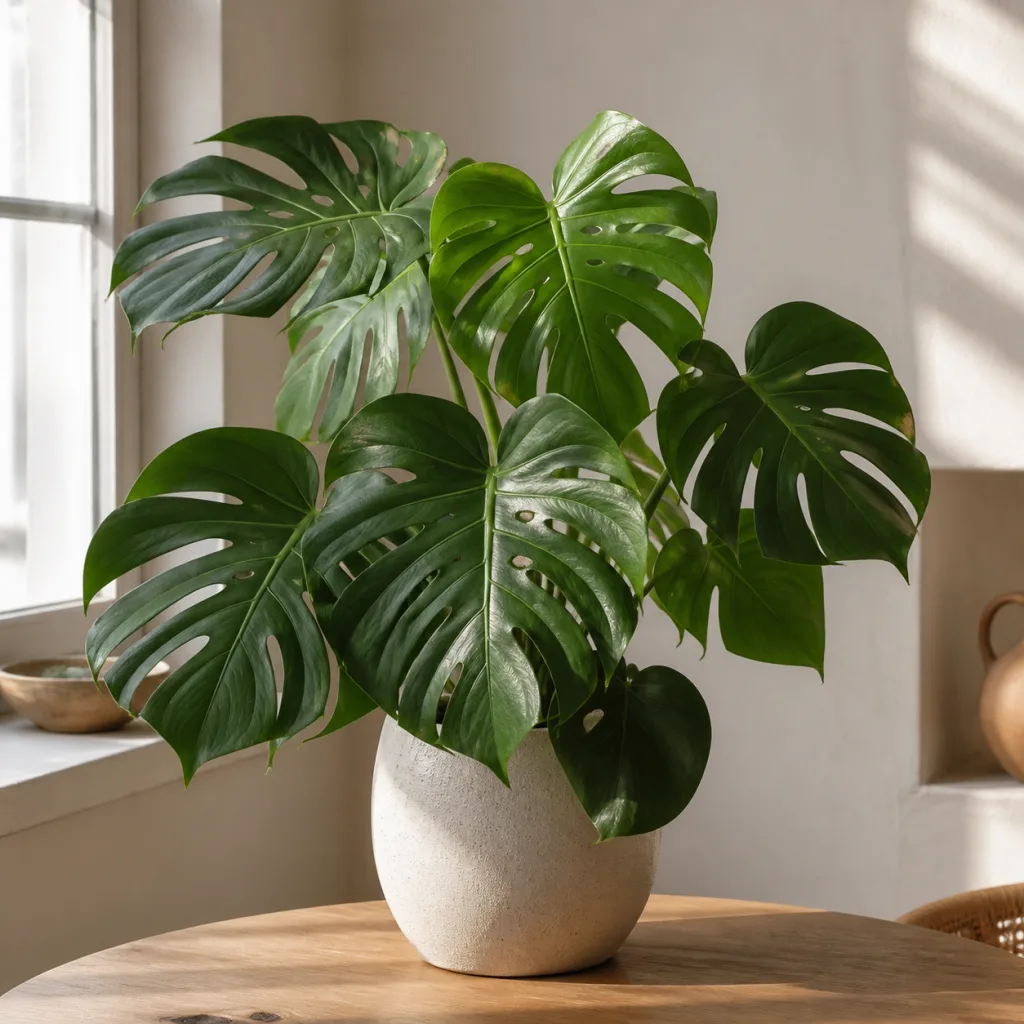
A smaller climber than M. deliciosa, with heart-shaped leaves and oval holes between the veins.
Botanical sheet
- Family
- Araceae
- Origin
- Tropical America
- Size
- 1.5–2.5 m
- Climate
- 18–26 °C · min. 15 °C
What's wrong with your plant?
Pet safety Toxicity unverified
There is no species-specific toxicity verification for this plant on ASPCA. Check with your veterinarian or search the ASPCA directory before keeping it within reach of pets.
Open the toxicity checkerCommon questions
Can it trail?
Yes, though a support lets you train its climbing stems.
Does it grow larger leaves on a moss pole?
Yes—aerial roots anchor into a damp moss pole, triggering bigger, more deeply fenestrated foliage.
How do you prune leggy stems for propagation?
Snip just below a stem node in spring and root cuttings in clean water or damp sphagnum moss.