Nerve plant
Fittonia albivenisUpdated
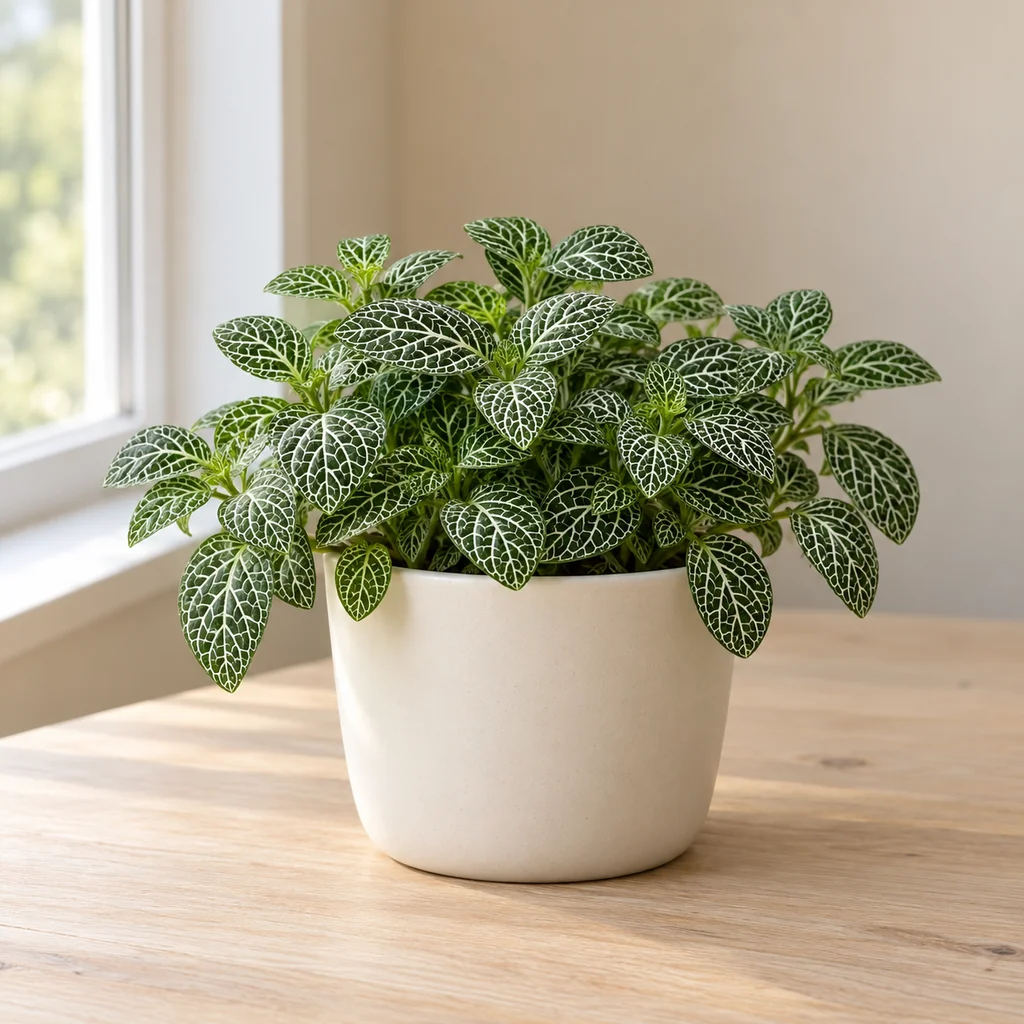
Peruvian rainforest groundcover celebrated for dramatic leaf venation. Demands high humidity, gentle warmth, and consistently damp, breathable soil.
Essential care to help it thrive
Light and placement
Filtered light; harsh direct sun can damage the thin leaves.
Climate and season
It benefits from steady warmth and humidity; avoid dry draughts.
Soil and repotting
Moisture-retentive yet airy potting mix. Use lime-free water; never let it sit in pooled drainage water.
Conditions vary with pot, season and location. Always check the mix and your plant's response.
Nerve plant: when to check the soil
Check the mix often: do not let it dry completely or remain waterlogged.
Let Grovia remind you when to check your Nerve plantSave the plant, get watering reminders and adjust the rhythm as the seasons change. Free on iPhone and Android.
See table by pot size
| Ø | Summer | Winter |
|---|---|---|
| 10 cm | 3–4 days | 5–7 days |
| 15 cm | 3–5 days | 7–9 days |
| 25 cm | 4–6 days | 9–12 days |
How to identify it
A low plant with a contrasting network of white, pink or red veins depending on variety.
Botanical sheet
- Family
- Acanthaceae
- Origin
- Tropical South America
- Size
- 10–20 cm creeping
- Climate
- 18–26 °C · 60–80% RH
What's wrong with your plant?
Pet safety Pet-friendly
ASPCA lists this species as non-toxic to cats and dogs. Even so, prevent heavy chewing or ingestion of potting mix or fertiliser.
See the ASPCA entryCommon questions
Why does it suddenly collapse?
Check moisture, temperature and roots first; not every wilt means thirst.
Can nerve plants thrive in closed terrariums?
Wonderfully: their compact creeping habit and high moisture requirements make them ideal cornerstone plants for closed glass terrariums.
How do you keep a nerve plant bushy?
Pinch back the growing shoot tips with your fingertips every few weeks in spring and summer to force branching from lower nodes.