Purple pitcher plant
Sarracenia purpureaUpdated
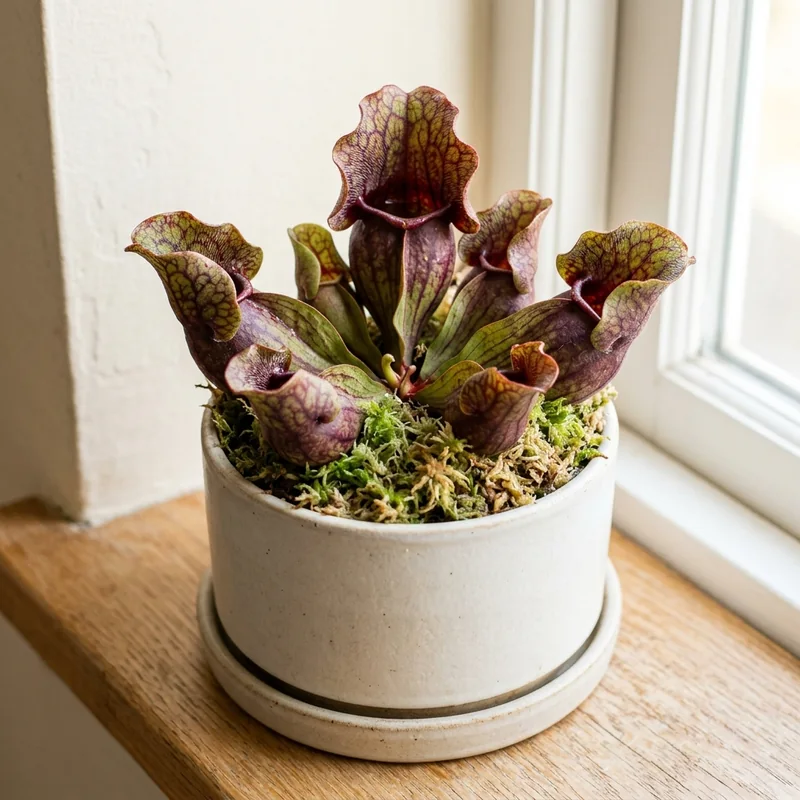
Hardy North American bog carnivore forming squat hooded pitchers with purple veining. Thrives on rainwater, nutrient-poor acidic media and winter dormancy.
Essential care to help it thrive
Light and placement
Give full light for deep crimson markings; under glass, shield unacclimatised plants from scorching midday summer sun to avoid bleached patches.
Climate and season
Provide a cool, well-ventilated winter dormancy when older leaves naturally die back; avoid hard tap water, rich garden soil and standard fertiliser.
Soil and repotting
Use a peat-free acidic medium of sustainably sourced sphagnum moss and lime-free grit or perlite in a deep draining pot, with zero added fertiliser.
Conditions vary with pot, season and location. Always check the mix and your plant's response.
Purple pitcher plant: when to check the soil
Stand the pot in a shallow tray of rainwater or distilled water all summer; during cool winter dormancy keep the acidic medium just damp, not waterlogged.
Let Grovia remind you when to check your Purple pitcher plantSave the plant, get watering reminders and adjust the rhythm as the seasons change. Free on iPhone and Android.
See table by pot size
| Ø | Summer | Winter |
|---|---|---|
| 10 cm | 1–2 days | 1–3 days |
| 15 cm | 1–2 days | 1–3 days |
| 25 cm | 1–2 days | 1–3 days |
How to identify it
Clumping rhizomatous rosette of squat tubular phyllode pitchers with open hooded lids, joined in spring by solitary nodding cup-shaped flowers.
Botanical sheet
- Family
- Sarraceniaceae
- Origin
- Canada · USA
- Size
- 15–50 cm
- Climate
- 5–26 °C · min. -15 °C
What's wrong with your plant?
Pet safety Toxicity unverified
There is no species-specific toxicity verification for this plant on ASPCA. Check with your veterinarian or search the ASPCA directory before keeping it within reach of pets.
Open the toxicity checkerCommon questions
Why do old pitchers die back in winter?
Normal seasonal dormancy: it rests in cold weather and pushes fresh pitchers from the rhizome in spring.
Can I water with ordinary tap water?
No. Dissolved lime and minerals damage bog roots; always use rainwater or distilled water.
Does it need fertiliser or hand feeding?
Never apply fertiliser and do not force-feed traps; outdoor bugs or occasional light prey are ample.