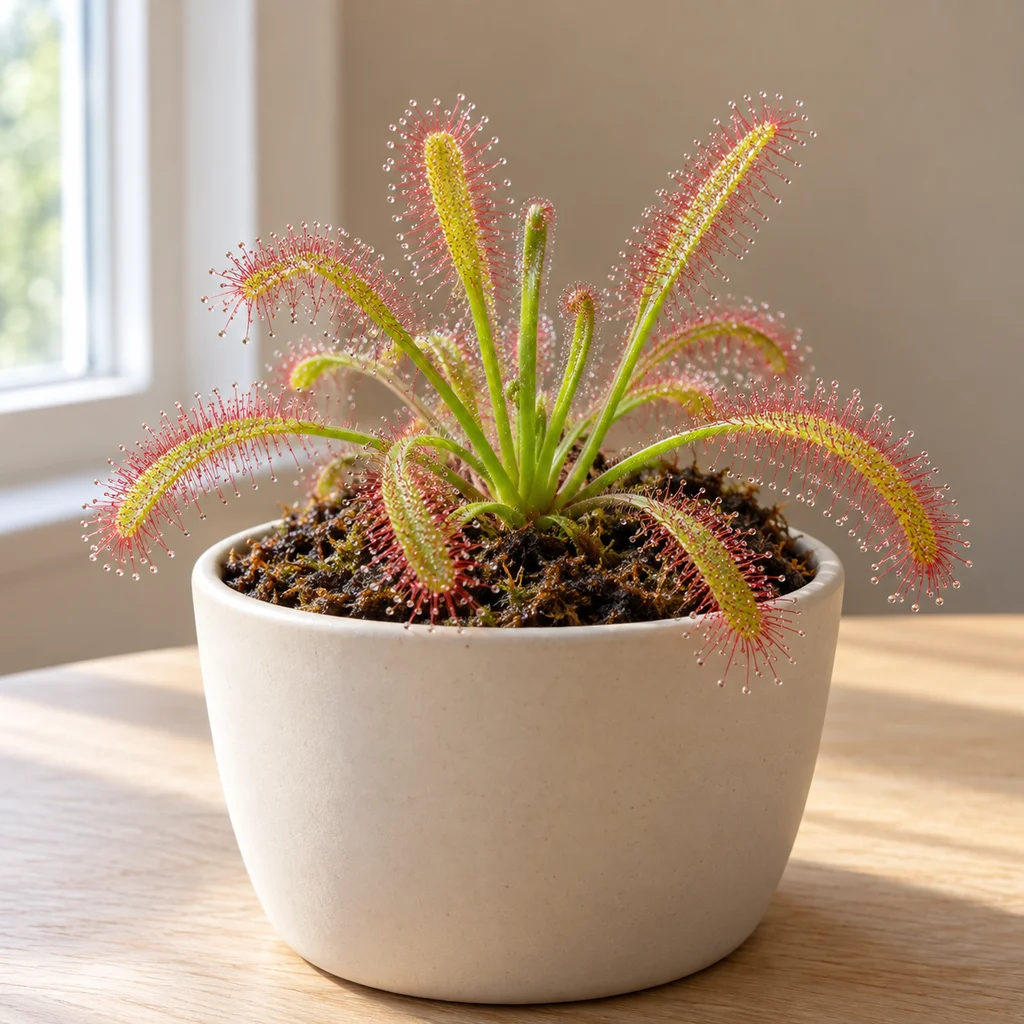
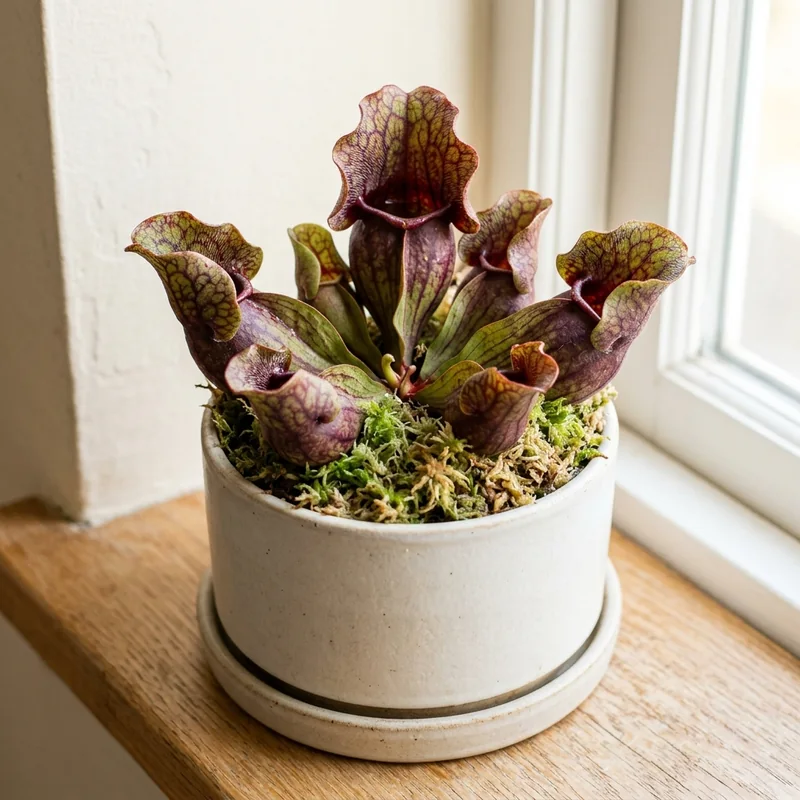
Tropical pitcher plant
Nepenthes mirabilisUpdated
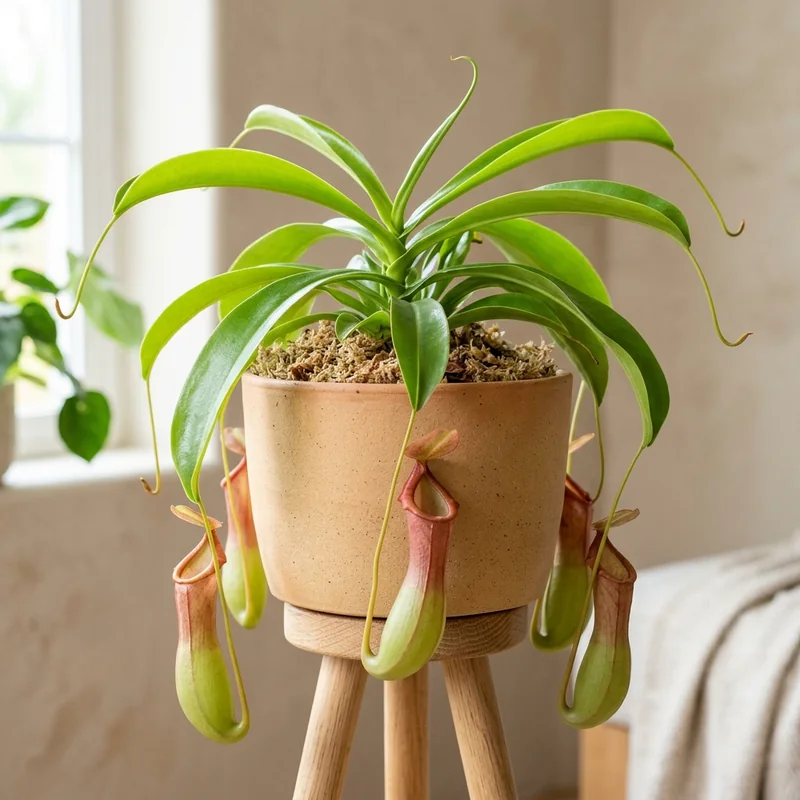
Mostly epiphytic tropical carnivore ('monkey cup') producing pendulous lidded pitchers on leaf tendrils. Needs airy moist moss, never standing bog trays.
Essential care to help it thrive
Light and placement
Give bright filtered or indirect light year-round. Gentle morning sun encourages vivid pitcher colour and formation without scorching broad leaves.
Climate and season
Warm, humid, frost-free tropical conditions with gentle airflow. Steady ambient humidity helps developing tendril tips inflate into healthy pitchers.
Soil and repotting
Use a loose, nutrient-free epiphyte mix of long-fibre sphagnum moss, coarse orchid bark and perlite inside a well-drained hanging basket.
Conditions vary with pot, season and location. Always check the mix and your plant's response.
Tropical pitcher plant: when to check the soil
Keep airy sphagnum and bark evenly moist using rainwater or distilled water. Never use hard tap water or leave pots in stagnant flooded trays like Sarracenia.
Let Grovia remind you when to check your Tropical pitcher plantSave the plant, get watering reminders and adjust the rhythm as the seasons change. Free on iPhone and Android.
See table by pot size
| Ø | Summer | Winter |
|---|---|---|
| 10 cm | 1–2 days | 1–3 days |
| 15 cm | 1–2 days | 1–3 days |
| 25 cm | 1–2 days | 1–3 days |
How to identify it
Evergreen, mostly epiphytic insectivorous perennial ('monkey cup') with leaf tendrils tipped by colourful, pendulous lidded pitchers that trap insects.
Botanical sheet
- Family
- Nepenthaceae
- Origin
- SE Asia · S China · N Australia
- Size
- ≈ 0.5–2 m · Pitcher vine (medium)
- Climate
- ≈ 21–38 °C · ≥ 19 °C · Warm humid tropical
Approximate figures: reference sources do not publish exact data for this species.
What's wrong with your plant?
Pet safety Toxicity unverified
There is no species-specific toxicity verification for this plant on ASPCA. Check with your veterinarian or search the ASPCA directory before keeping it within reach of pets.
Open the toxicity checkerCommon questions
Should Nepenthes mirabilis sit in a flooded water tray like Sarracenia?
No: unlike bog pitchers such as Sarracenia, epiphytic Nepenthes roots suffocate in stagnant water; keep airy sphagnum and bark evenly moist and drain excess.
Why does a healthy vine stop forming new monkey cups?
Dry heated room air or insufficient brightness prevents new tendril tips from inflating into pitchers.
What water and feeding routine keep pitchers healthy?
Water strictly with rainwater or distilled water and skip soil fertilisers; natural prey inside pitchers feeds the vine.