Pencil cactus (Euphorbia tirucalli)
Euphorbia tirucalliUpdated
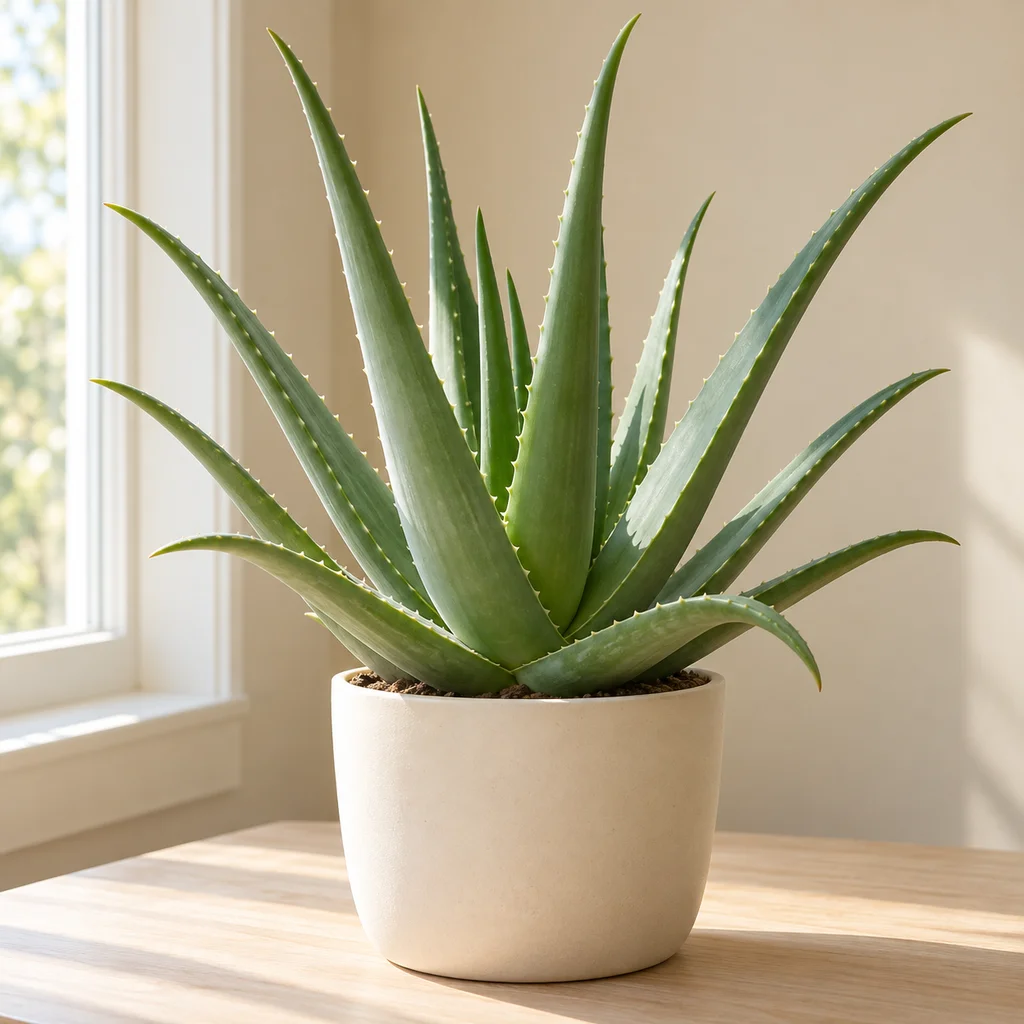
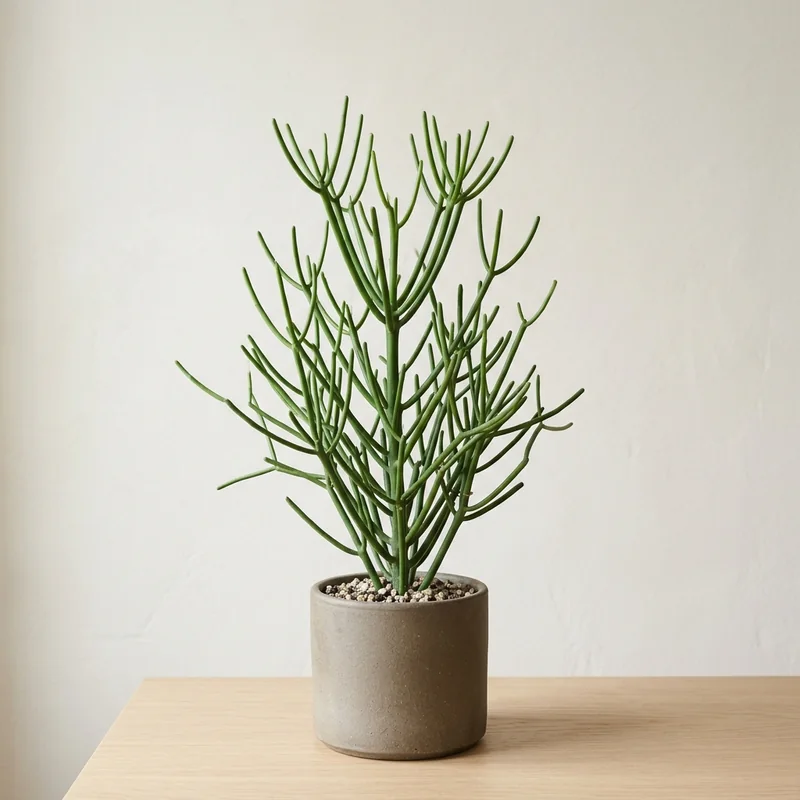
Sculptural African succulent shrub branching into smooth leafless pencil-thick green stems, listed toxic by ASPCA with caustic sap. Needs strong sun and dry grit.
Essential care to help it thrive
Light and placement
Give hours of direct sunny window light every day to hold sturdy upright branching; dim shade quickly stretches pale weak drooping stems.
Climate and season
Thrives at 15–30 °C (above 10 °C night minimum per NC State Extension) in dry low-humidity air, positioned safely away from walkways and pets.
Soil and repotting
Heavy drained terracotta pot filled with coarse cactus soil blended half-and-half with pumice, scoria, or sharp grit.
Conditions vary with pot, season and location. Always check the mix and your plant's response.
Pencil cactus (Euphorbia tirucalli): when to check the soil
Drench thoroughly only once gritty cactus mix dries all the way down from top to bottom. Keep nearly dry through cooler low-light winters.
Let Grovia remind you when to check your Pencil cactus (Euphorbia tirucalli)Save the plant, get watering reminders and adjust the rhythm as the seasons change. Free on iPhone and Android.
See table by pot size
| Ø | Summer | Winter |
|---|---|---|
| 10 cm | 7–10 days | No water |
| 15 cm | 9–12 days | No water |
| 25 cm | 11–16 days | No water |
How to identify it
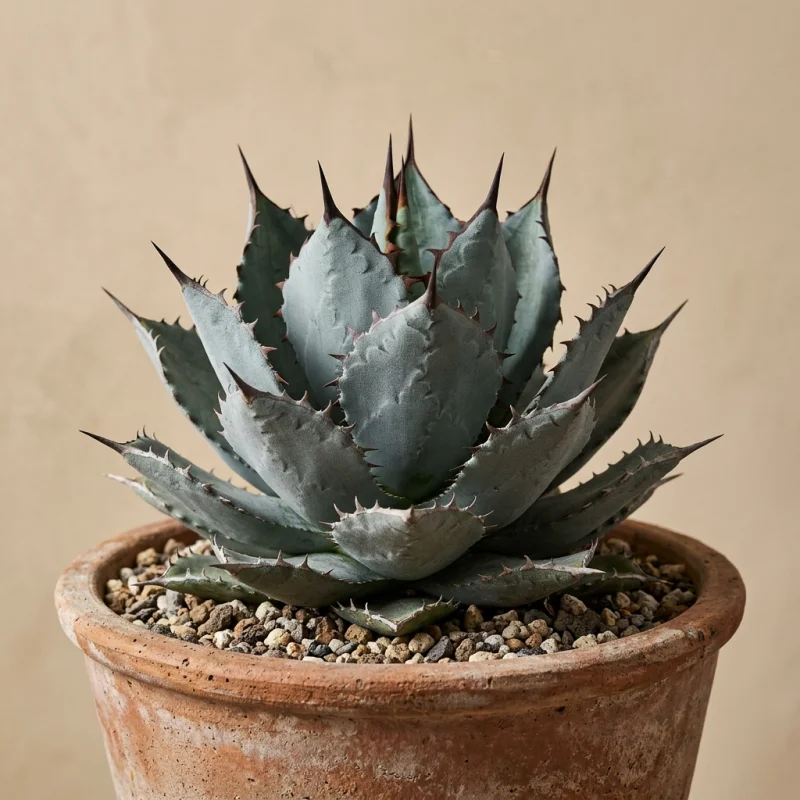
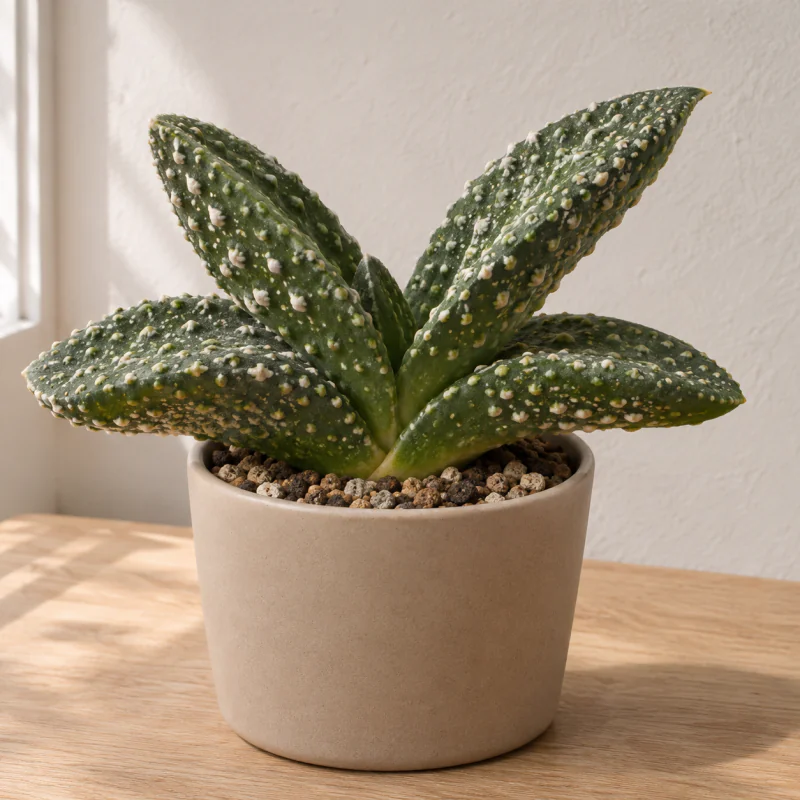
Cylindrical smooth pencil-thin green succulent branches with tiny shedding leaves and caustic white sap; formerly listed as Tirucalia tirucalli.
Botanical sheet
- Family
- Euphorbiaceae
- Origin
- Tropical and southern Africa and Madagascar
- Size
- 0.6–2 m potted (up to 9 m)
- Climate
- 15–30 °C · min 10 °C
What's wrong with your plant?
Pet safety Toxic to pets
ASPCA lists this species as toxic to cats and dogs. Keep pets from chewing it; contact a veterinarian if ingestion is suspected.
Toxic principles and clinical signs quoted from the ASPCA database.
See the ASPCA entryCommon questions
Why is Euphorbia tirucalli milky sap considered dangerous to handle?
Snapped stems ooze caustic white latex that severely burns eyes and blisters skin, so always wear nitrile gloves and eye protection before pruning.
Is Pencil Cactus toxic to dogs, cats, or horses?
Yes. ASPCA lists Euphorbia tirucalli as toxic to dogs, cats, and horses because caustic milky latex irritates mouth, eyes, and stomach.
Why do nursery 'Firesticks' turn orange while green species stay green?
Botanical E. tirucalli stays lime-to-forest green, while 'Sticks on Fire' cultivars flush coral-orange tips under intense winter light and drought.