Croton
Codiaeum variegatumUpdated
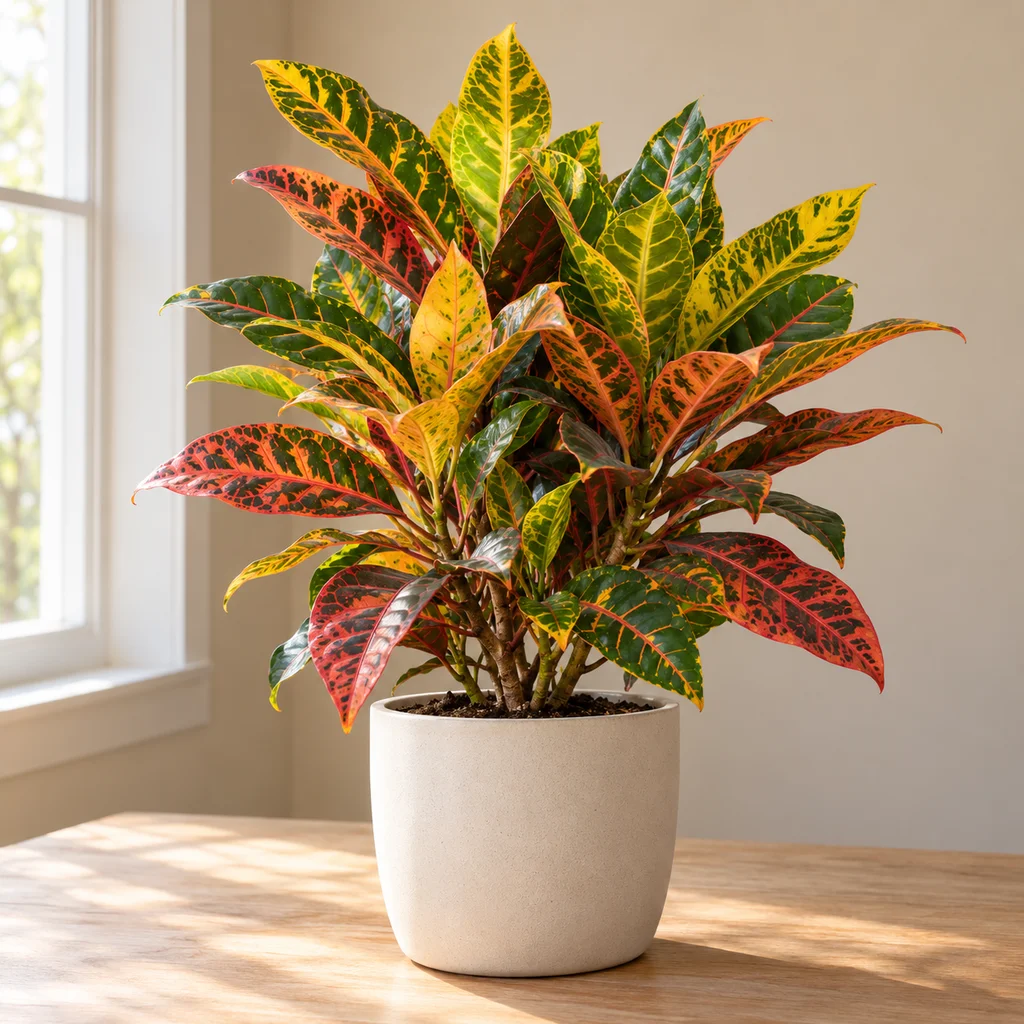
Vibrant tropical shrub with kaleidoscopic leathery foliage. Demands copious bright light, warm steady temperatures above 15 °C, and high humidity.
Essential care to help it thrive
Light and placement
Ample light supports colour; acclimatise it to avoid scorch.
Climate and season
It prefers warmth and humidity; protect from abrupt changes and draughts.
Soil and repotting
Rich, moisture-retentive mix with reliable drainage. Feed biweekly in spring and summer.
Conditions vary with pot, season and location. Always check the mix and your plant's response.
Croton: when to check the soil
Check the mix often in active growth without keeping it waterlogged.
Let Grovia remind you when to check your CrotonSave the plant, get watering reminders and adjust the rhythm as the seasons change. Free on iPhone and Android.
See table by pot size
| Ø | Summer | Winter |
|---|---|---|
| 10 cm | 4–5 days | 7–10 days |
| 15 cm | 5–6 days | 9–13 days |
| 25 cm | 6–9 days | 12–17 days |
How to identify it
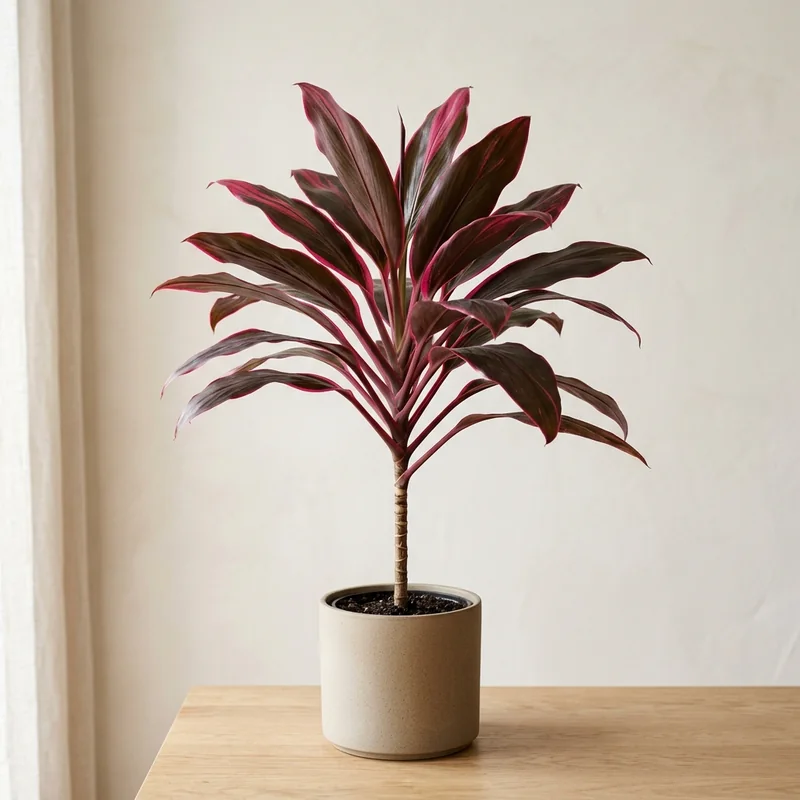
A leathery-leaved shrub with green, yellow, red or orange patterns depending on cultivar.
Botanical sheet
- Family
- Euphorbiaceae
- Origin
- Malesia · Oceania
- Size
- 1–1.5 m bushy shrub
- Climate
- 18–26 °C · 60–80% RH
What's wrong with your plant?
Pet safety Toxicity unverified
There is no species-specific toxicity verification for this plant on ASPCA. Check with your veterinarian or search the ASPCA directory before keeping it within reach of pets.
Open the toxicity checkerCommon questions
Why is the colour fading?
Check light and cultivar first; not all have the same pattern.
How do you propagate croton from cuttings?
Take 10–15 cm semi-ripe tip cuttings in spring, dip briefly in cold water to stop latex drip, and root in moist perlite mix.
Why does white sap leak when trimmed?
Crotons produce caustic milky latex typical of Euphorbiaceae; wear gloves to avoid skin and eye irritation.