Dancing bones cactus (Hatiora)
Hatiora salicornioidesUpdated
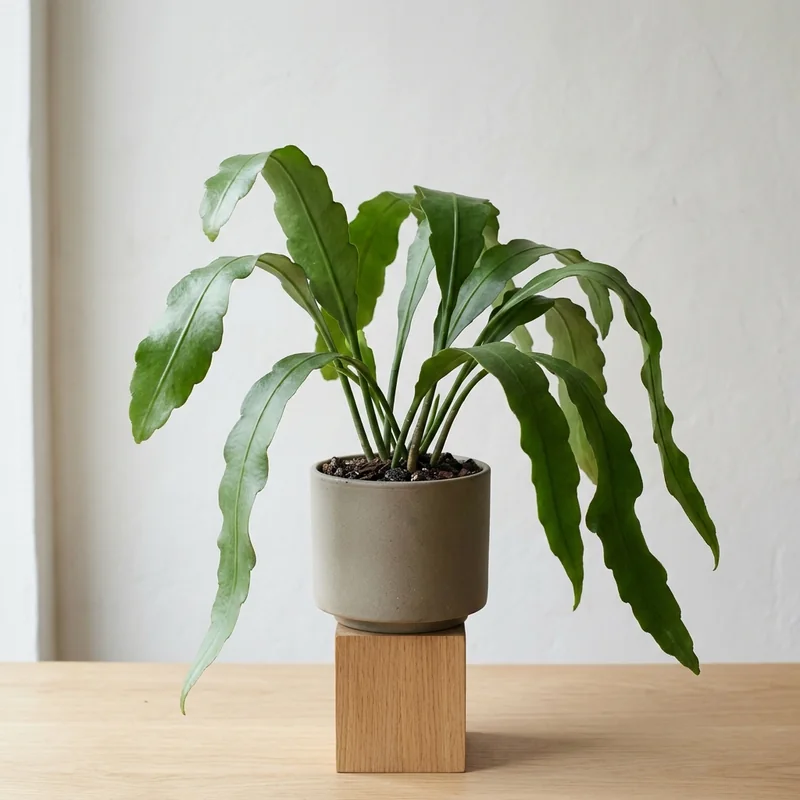
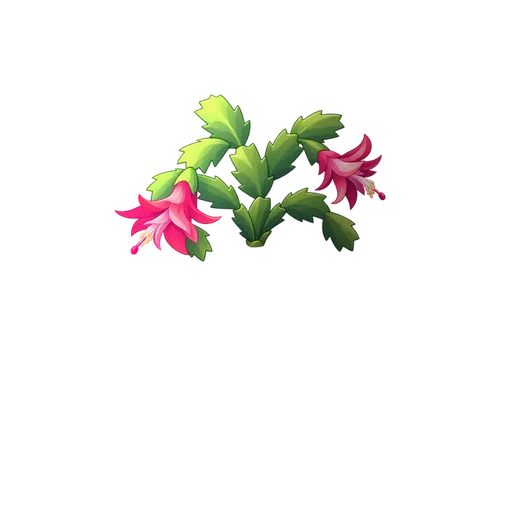
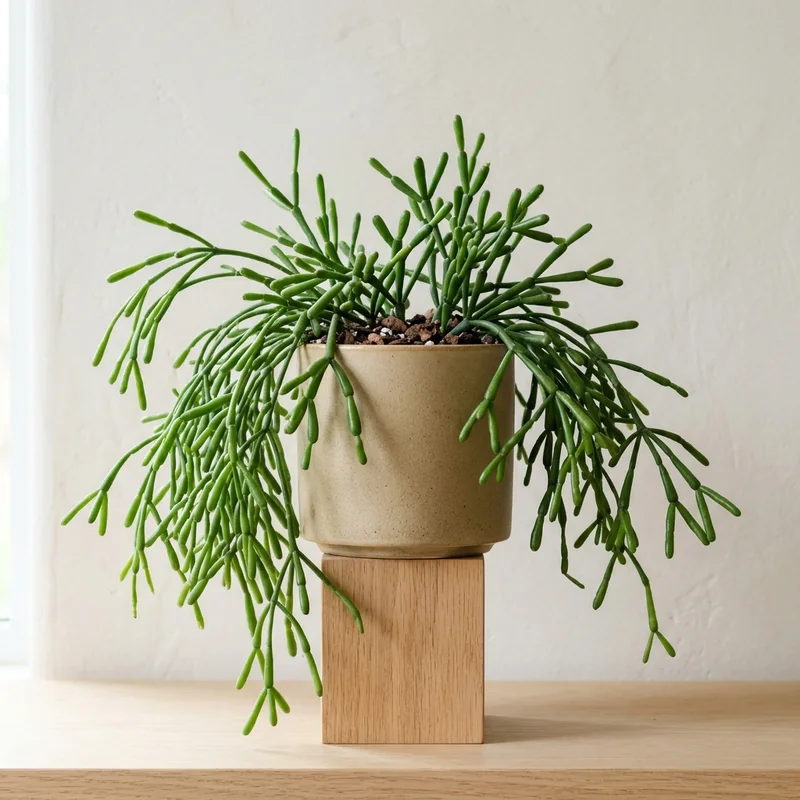
Spineless Brazilian jungle epiphyte branching into cascades of tiny green bottle-shaped joints tipped by golden bell blooms. Wants bright shade and airy bark.
Essential care to help it thrive
Light and placement
Keep in bright filtered indirect window light or soft early morning sun. Intense afternoon rays stress segments dull bronze-red, while dim rooms limit flowering.
Climate and season
Thrives at 16–26 °C (frost-free minimum 10 °C per RHS) in medium home humidity; cool slightly drier winter rest encourages spring bud set.
Soil and repotting
Small drained hanging pot packed loosely with airy epiphytic blend of fine pine bark, coco coir, and perlite.
Conditions vary with pot, season and location. Always check the mix and your plant's response.
Dancing bones cactus (Hatiora): when to check the soil
Unlike arid desert cacti, water evenly once the upper 2–3 cm of airy bark compost turn dry in warm months, tapering carefully over cool winter weeks.
Let Grovia remind you when to check your Dancing bones cactus (Hatiora)Save the plant, get watering reminders and adjust the rhythm as the seasons change. Free on iPhone and Android.
See table by pot size
| Ø | Summer | Winter |
|---|---|---|
| 10 cm | 7–10 days | 14–19 days |
| 15 cm | 9–12 days | 17–24 days |
| 25 cm | 11–16 days | 23–32 days |
How to identify it
Dense spineless hanging shrub built of slender green bottle-shaped segments and winter orange-yellow terminal blooms; formerly Rhipsalis salicornioides.
Botanical sheet
- Family
- Cactaceae
- Origin
- Eastern and southeastern Brazil
- Size
- 30–50 cm arching bush
- Climate
- 16–26 °C · min 10 °C
What's wrong with your plant?
Pet safety Toxicity unverified
There is no species-specific toxicity verification for this plant on ASPCA. Check with your veterinarian or search the ASPCA directory before keeping it within reach of pets.
Open the toxicity checkerCommon questions
How is Hatiora salicornioides care different from desert cacti?
Native to damp Brazilian coastal forests, this spineless tree epiphyte dislikes baked sand and wants filtered light plus steadier moisture in porous bark mix.
What triggers the tiny bright yellow-orange flowers at segment tips?
Bright winter daylight paired with slightly cooler nights (around 10–15 °C) and reduced watering prompts clusters of small funnel flowers cleanly.
Can broken green bottle segments root easily into new pots?
Yes. Let snapped multi-joint twigs dry for one day, then lay stems lightly across barely damp bark or coco coir out of harsh sun until rooted.