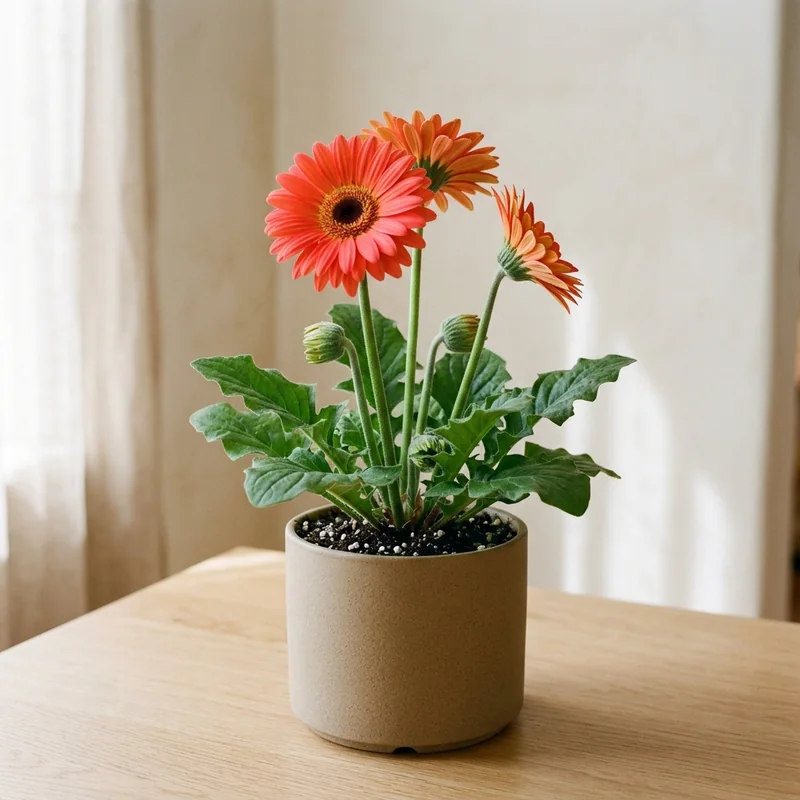
Amaryllis (Hippeastrum)
Hippeastrum spp.Updated
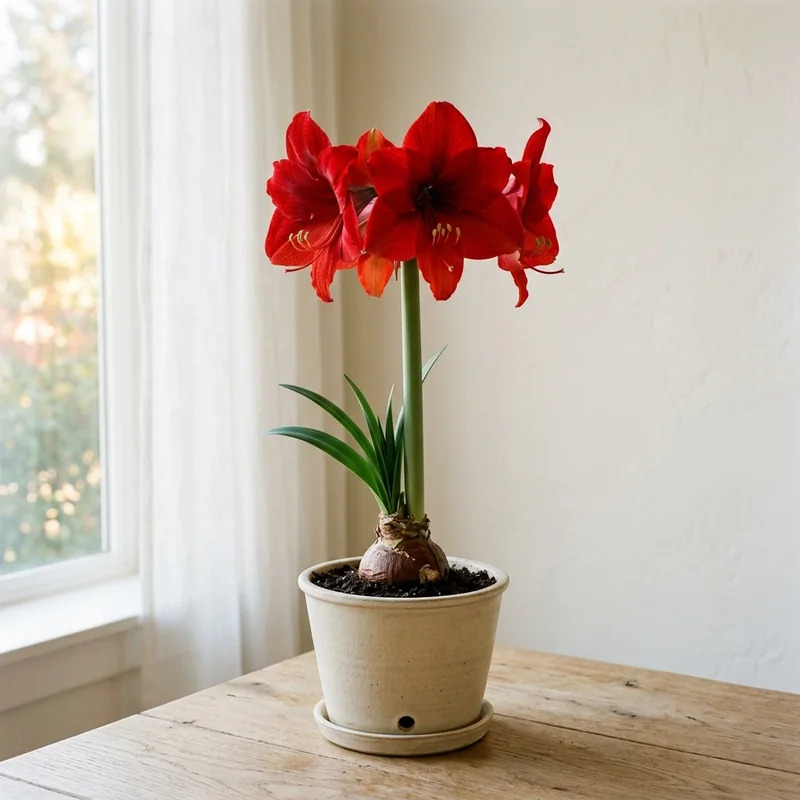
Bold winter-blooming South American bulb prized for giant trumpet flowers on stout hollow stalks. Needs bright light, its upper third exposed and careful watering.
Essential care to help it thrive
Light and placement
Place on a bright windowsill around 21 °C to start growth and turn the pot regularly. Once buds open, a slightly cooler room (15–18 °C) makes blooms last longer.
Climate and season
Keep frost-free indoors. To trigger next winter's flowers, feed green leaves through summer and give an 8–10 week cool rest around 13 °C starting late September.
Soil and repotting
Pot in a heavy container just wider than the bulb using peat-free potting mix plus coarse grit, always leaving the upper third of the bulb exposed above soil level.
Conditions vary with pot, season and location. Always check the mix and your plant's response.
Amaryllis (Hippeastrum): when to check the soil
Water sparingly until shoots emerge, then check the top 2–3 cm every 5–8 days during bloom and summer leaf growth, keeping water off the bulb neck. Rest nearly dry in autumn.
This plant is not watered in a pot
Its watering routine does not fit a soil-check interval: follow the care sheet.
Let Grovia remind you when to check your Amaryllis (Hippeastrum)Save the plant, get watering reminders and adjust the rhythm as the seasons change. Free on iPhone and Android.
How to identify it
Large round bulb producing leafless hollow flower scapes and strap-shaped green leaves. Traded as amaryllis, though true Amaryllis belladonna is South African.
Botanical sheet
- Family
- Amaryllidaceae
- Origin
- Central & South America
- Size
- 25–90 cm tall
- Climate
- 13–24 °C · min. 10 °C
What's wrong with your plant?
Pet safety Toxic to pets
ASPCA lists this species as toxic to cats and dogs. Keep pets from chewing it; contact a veterinarian if ingestion is suspected.
See the ASPCA entryCommon questions
What should I do after amaryllis blooms fade?
Snip off spent flowers while leaving green leaves intact, then water and feed through summer so the bulb rebuilds energy before its cool autumn rest.
How deep should I pot a Hippeastrum bulb?
Leave the top third of the bulb above the potting mix so moisture never pools against the neck.
Is amaryllis safe around dogs and cats?
No. ASPCA lists Hippeastrum as toxic to dogs and cats due to lycorine, with the bulb being the most poisonous part.