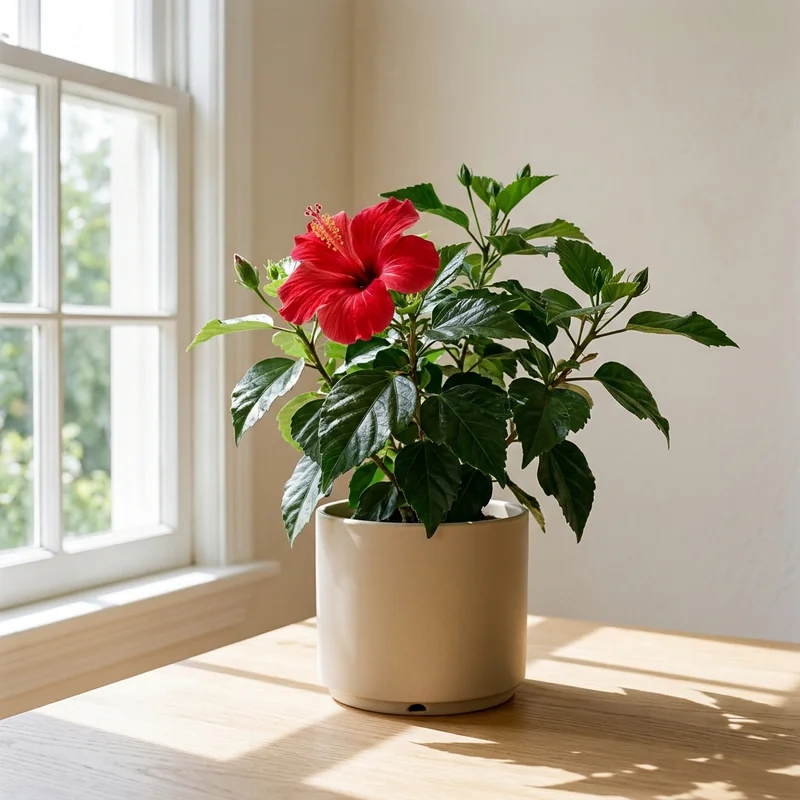
Rose of Sharon (Hibiscus syriacus)
Hibiscus syriacusUpdated
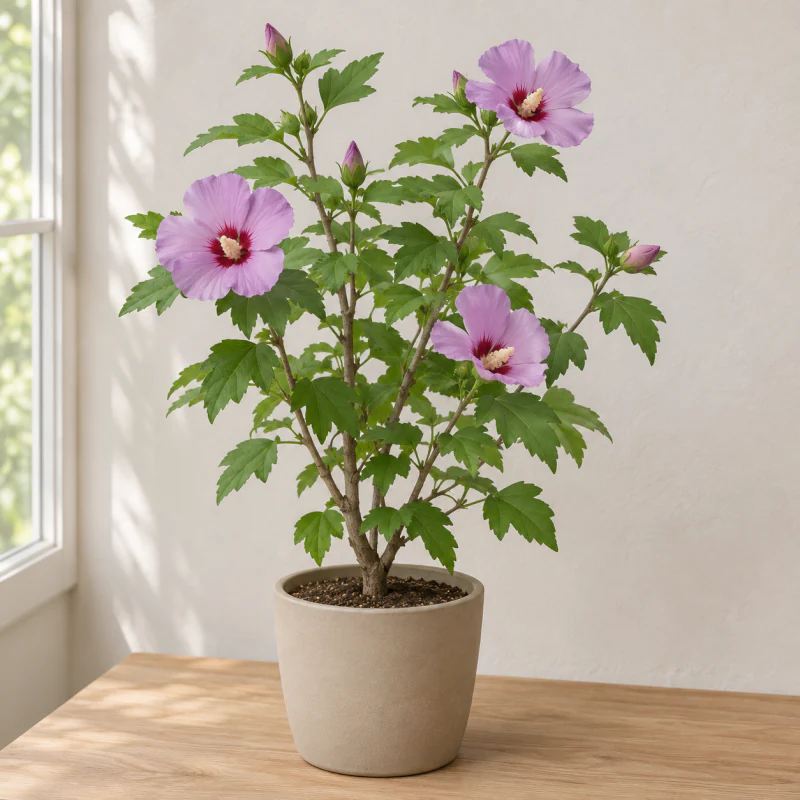
Hardy deciduous shrub bursting into large summer-to-autumn trumpet flowers when tropical hibiscus struggles indoors. Frost-tough to -10 °C and ASPCA pet-safe.
Essential care to help it thrive
Light and placement
Give warm full sun for maximum flower production from midsummer into autumn; light shade dramatically shrinks bud numbers on weak leafy stems.
Climate and season
Excels outdoors at 10–30 °C and withstands winter frosts down to -10 °C in free-draining patio pots without needing indoor winter shelter.
Soil and repotting
Pot in sturdy deep containers with fertile loam-based compost and open drainage grit to prevent winter rot.
Conditions vary with pot, season and location. Always check the mix and your plant's response.
Rose of Sharon (Hibiscus syriacus): when to check the soil
Water steadily whenever upper soil dries during summer blooming so tight buds never drop from drought, and keep compost only slightly damp in winter.
Let Grovia remind you when to check your Rose of Sharon (Hibiscus syriacus)Save the plant, get watering reminders and adjust the rhythm as the seasons change. Free on iPhone and Android.
See table by pot size
| Ø | Summer | Winter |
|---|---|---|
| 10 cm | 4–5 days | 7–10 days |
| 15 cm | 5–6 days | 9–13 days |
| 25 cm | 6–9 days | 12–17 days |
How to identify it
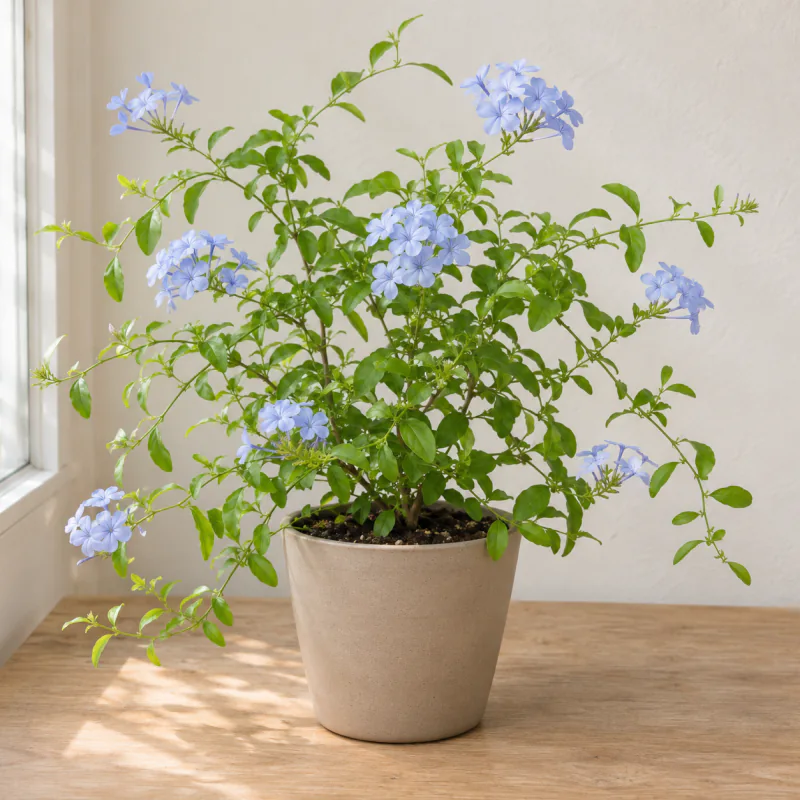
Upright deciduous shrub with three-lobed late-spring leaves and bold trumpet blooms bearing central staminal columns; formerly called Althaea frutex.
Botanical sheet
- Family
- Malvaceae
- Origin
- China, Taiwan, and Korea
- Size
- 1–2 m potted (2.5–4 m)
- Climate
- 10–30 °C · min -10 °C
What's wrong with your plant?
Pet safety Pet-friendly
ASPCA lists this species as non-toxic to cats and dogs. Even so, prevent heavy chewing or ingestion of potting mix or fertiliser.
See the ASPCA entryCommon questions
Why does Rose of Sharon leaf out so late compared with other terrace shrubs?
This tough temperate hibiscus stays dormant until steady warm spring nights settle in, keeping tender shoots safe from late frosts before summer blooming.
Does Hibiscus syriacus flower on old wood or new spring growth?
It blooms on fresh current-season shoots, so late-winter or early-spring pruning encourages sturdy upright stems loaded with summer flowers.
How can you tell Rose of Sharon apart from tropical Hibiscus?
Rose of Sharon drops every leaf in autumn and survives snowy freezes down to -10 °C outdoors, whereas Hibiscus rosa-sinensis is evergreen and frost-tender.