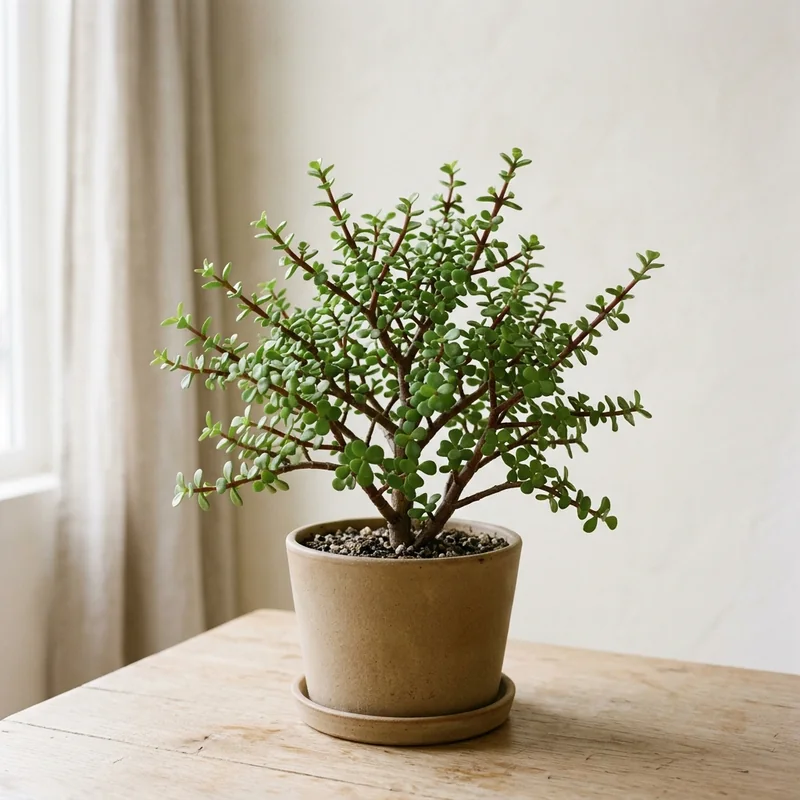
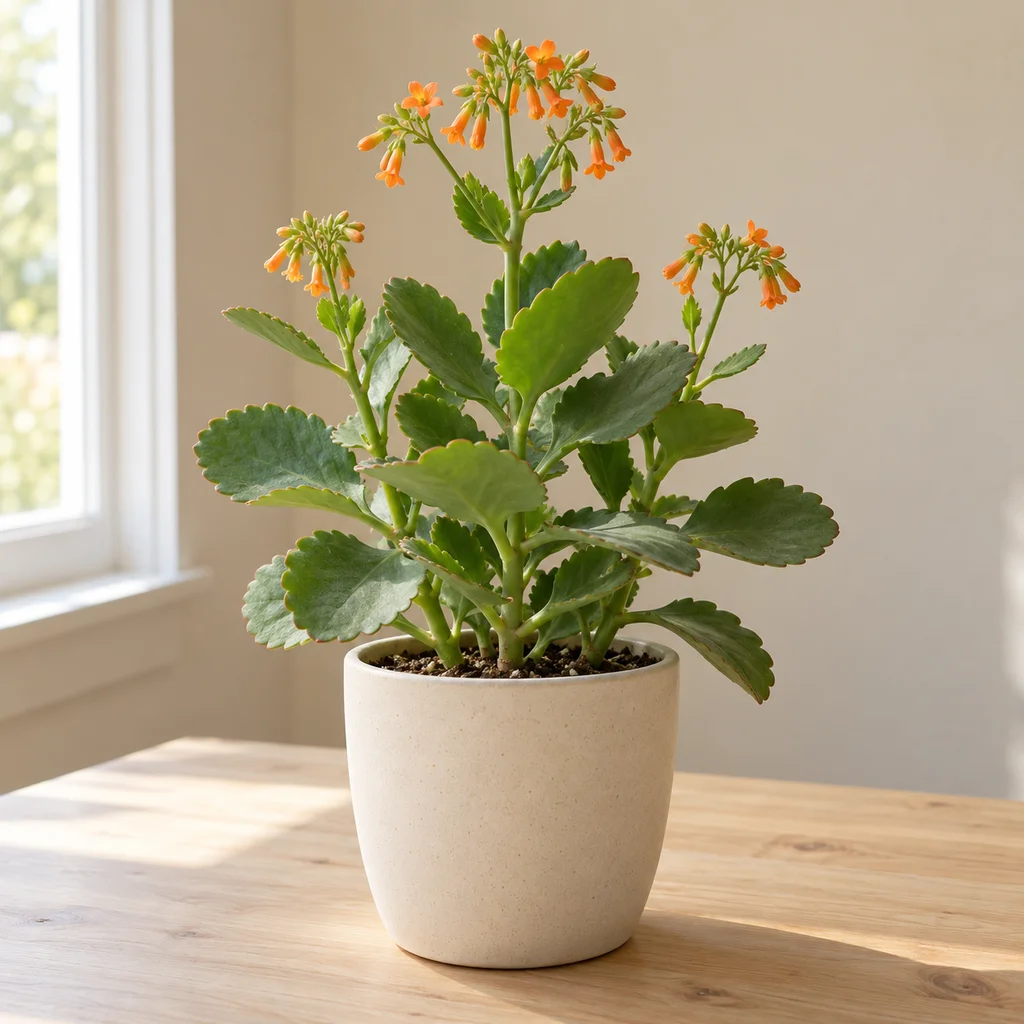
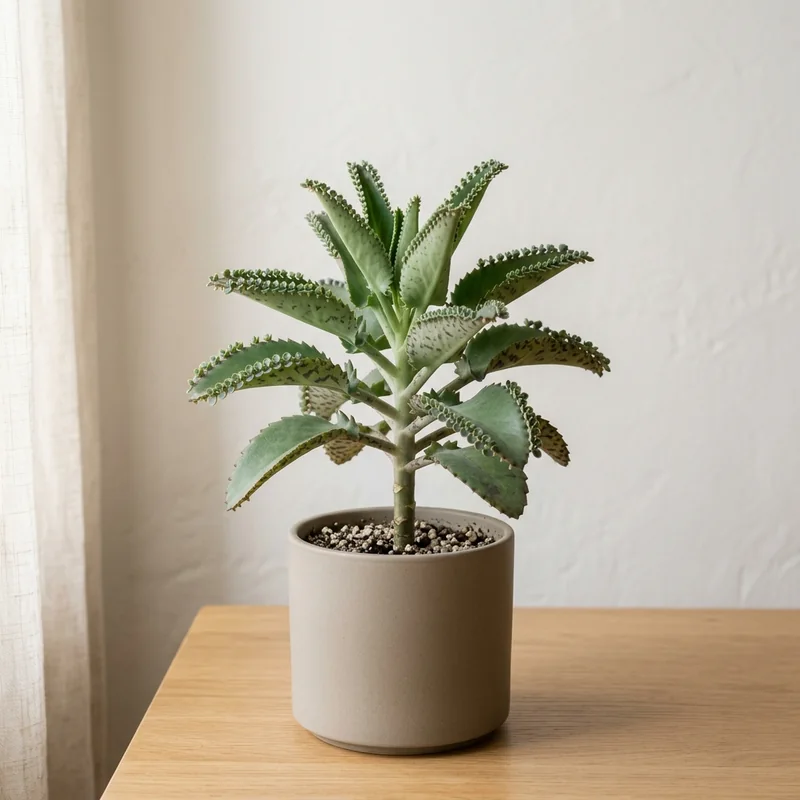
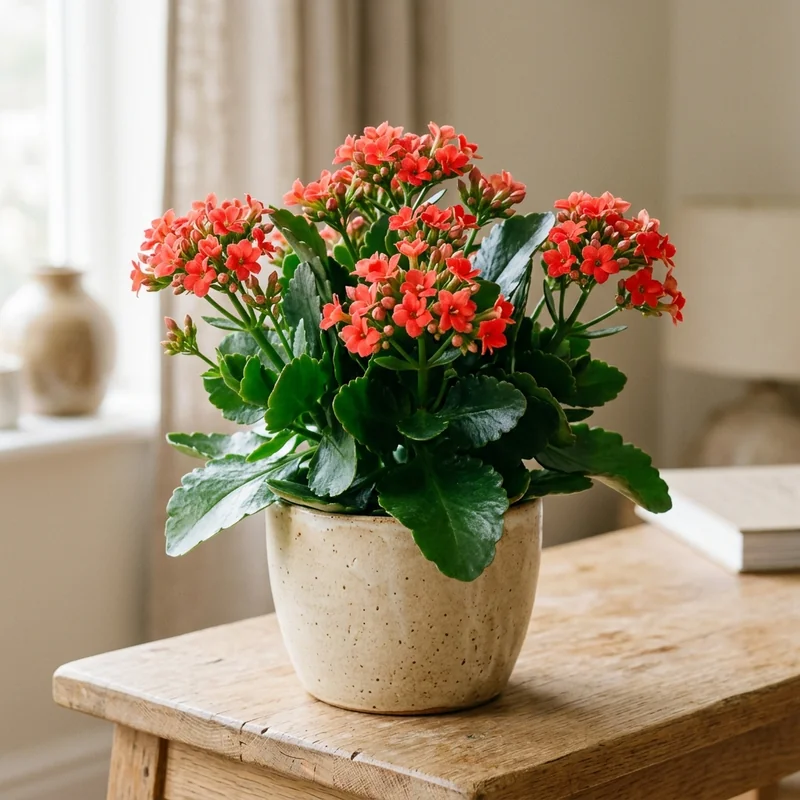
Paddle plant (Kalanchoe thyrsiflora)
Kalanchoe thyrsifloraUpdated
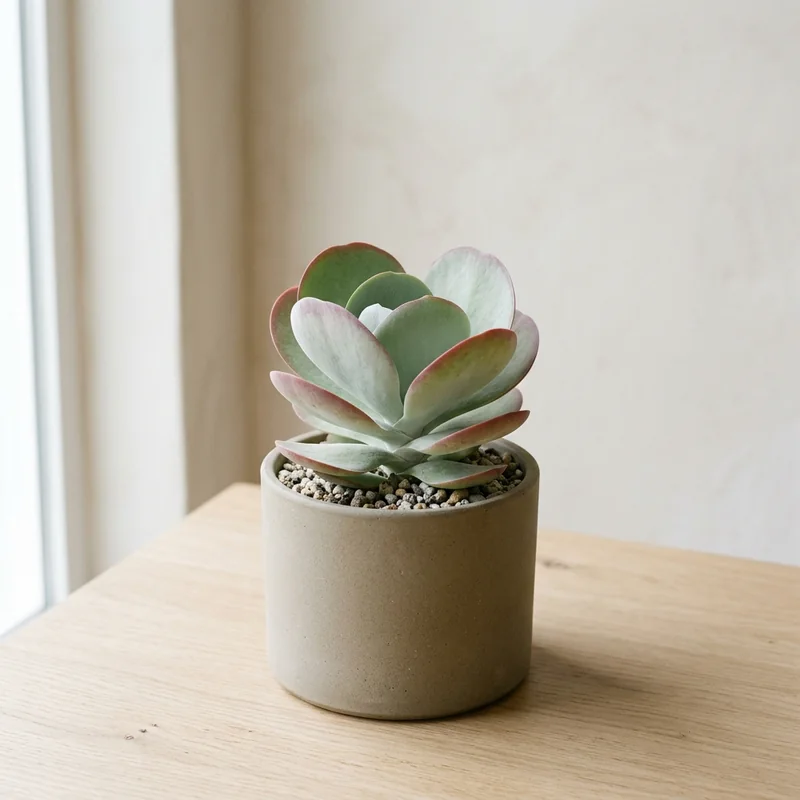
Bold Southern African succulent with stacked chalky-white paddle leaves arranged like upright clamshells. Demands strong sun, gritty mix, and dry rests.
Essential care to help it thrive
Light and placement
Give strong direct window sun daily so stacked paddles stay tight, powdery gray-white, and compact. Shade turns plants flat green and top-heavy fast.
Climate and season
Excels in warm dry indoor air at 15–28 °C (frost-free minimum 10 °C) without touching leaves; offsets cluster slowly around older clumps.
Soil and repotting
Heavy terracotta pot with drainage hole and gritty cactus soil blended fifty-fifty with pumice, scoria, or perlite.
Conditions vary with pot, season and location. Always check the mix and your plant's response.
Paddle plant (Kalanchoe thyrsiflora): when to check the soil
Wait until gritty compost dries completely through before watering cleanly around the soil rim so you never wash off chalky leaf wax. Keep very dry in winter.
Let Grovia remind you when to check your Paddle plant (Kalanchoe thyrsiflora)Save the plant, get watering reminders and adjust the rhythm as the seasons change. Free on iPhone and Android.
See table by pot size
| Ø | Summer | Winter |
|---|---|---|
| 10 cm | 7–10 days | 14–19 days |
| 15 cm | 9–12 days | 17–24 days |
| 25 cm | 11–16 days | 23–32 days |
How to identify it
Clump-forming basal rosette of broad round flat gray-green paddle blades heavily dusted in silvery-white powdery wax with subtle reddish margins.
Botanical sheet
- Family
- Crassulaceae
- Origin
- Southern Africa
- Size
- 30–50 cm wide clump
- Climate
- 15–28 °C · min 10 °C
What's wrong with your plant?
Pet safety Toxicity unverified
There is no species-specific toxicity verification for this plant on ASPCA. Check with your veterinarian or search the ASPCA directory before keeping it within reach of pets.
Open the toxicity checkerCommon questions
Why does Paddle Plant die back right after flowering?
Kalanchoe thyrsiflora is monocarpic: the main rosette blooms once on a tall yellow flower spike then fades, normally leaving healthy basal offsets behind to continue.
How is Kalanchoe thyrsiflora different from Kalanchoe luciae?
Nurseries often swap labels; K. thyrsiflora keeps paler powdery gray-green leaves and yellow blooms, whereas K. luciae flushes bright crimson across leaf blades.
Are paddle plants safe around dogs or cats in the home?
No safe ASPCA species match applies, and members of Kalanchoe contain cardiac toxins if eaten, so keep pots elevated away from curious pets.