Rose grape (Medinilla)
Medinilla magnificaUpdated
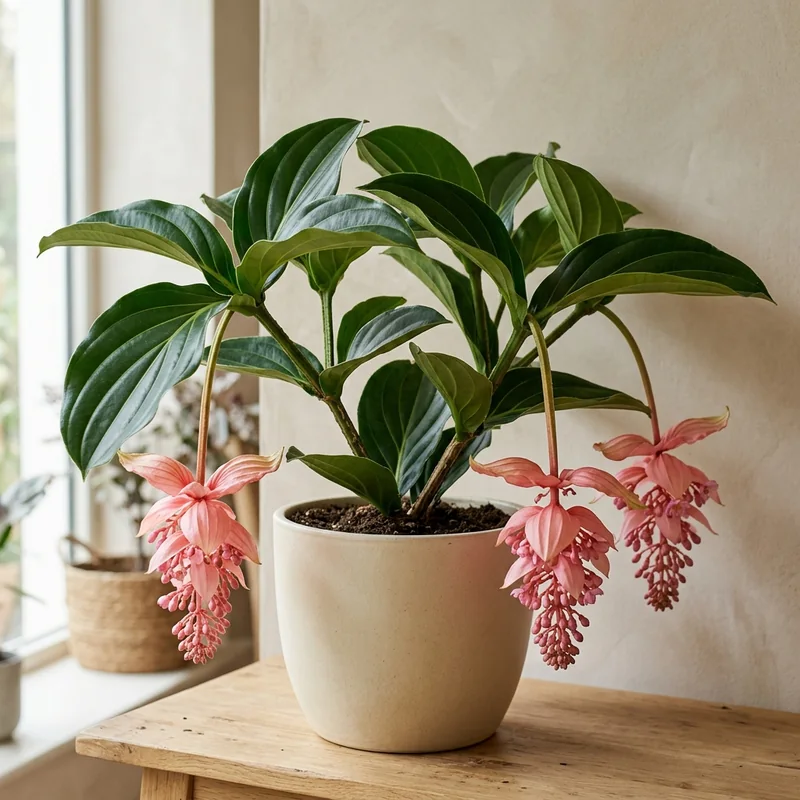
Tropical Philippine shrub prized for pendulous chandeliers of pink flowers and bracts. Needs bright filtered light, high humidity and a drier winter rest.
Essential care to help it thrive
Light and placement
Place in bright filtered light or full glasshouse brightness shaded from scorching hot sun, which bleaches and burns the thick leathery blades.
Climate and season
Provide high humidity and steady warmth away from cold draughts. RHS advises standing the pot on an upturned saucer over a tray of moist gravel.
Soil and repotting
Use an airy peat-free loam-based potting compost amended with fine bark or perlite for sharp drainage. Keep root volume snug rather than oversized.
Conditions vary with pot, season and location. Always check the mix and your plant's response.
Rose grape (Medinilla): when to check the soil
Check the mix before watering: water moderately during active growth with monthly liquid feed, then water sparingly through a cooler, drier winter rest above 15 °C.
Let Grovia remind you when to check your Rose grape (Medinilla)Save the plant, get watering reminders and adjust the rhythm as the seasons change. Free on iPhone and Android.
See table by pot size
| Ø | Summer | Winter |
|---|---|---|
| 10 cm | 4–5 days | 7–10 days |
| 15 cm | 5–6 days | 9–13 days |
| 25 cm | 6–9 days | 12–17 days |
How to identify it
Evergreen woody shrub bearing ribbed stems, large leathery veined leaves and dramatic hanging panicles of pink-white blossoms sheltered by showy pink bracts.
Botanical sheet
- Family
- Melastomataceae
- Origin
- Philippines
- Size
- 1.5–2.5 m arched shrub
- Climate
- 18–26 °C · min. 15 °C
What's wrong with your plant?
Pet safety Toxicity unverified
There is no species-specific toxicity verification for this plant on ASPCA. Check with your veterinarian or search the ASPCA directory before keeping it within reach of pets.
Open the toxicity checkerCommon questions
Why are the pink flower buds dropping early?
Sudden bud drop usually follows dry radiator air, cold draughts below 15 °C, overwatered winter roots or moving the pot once buds form.
How do I trigger Medinilla magnifica to rebloom?
Give a slightly cooler, drier rest over winter (around 15–18 °C) with sparing water until flower buds emerge in warmer spring light.
How can I raise humidity without rotting roots?
Follow RHS guidance: rest the pot on an upturned saucer inside a wide tray filled with wet gravel so drainage holes stay above water.