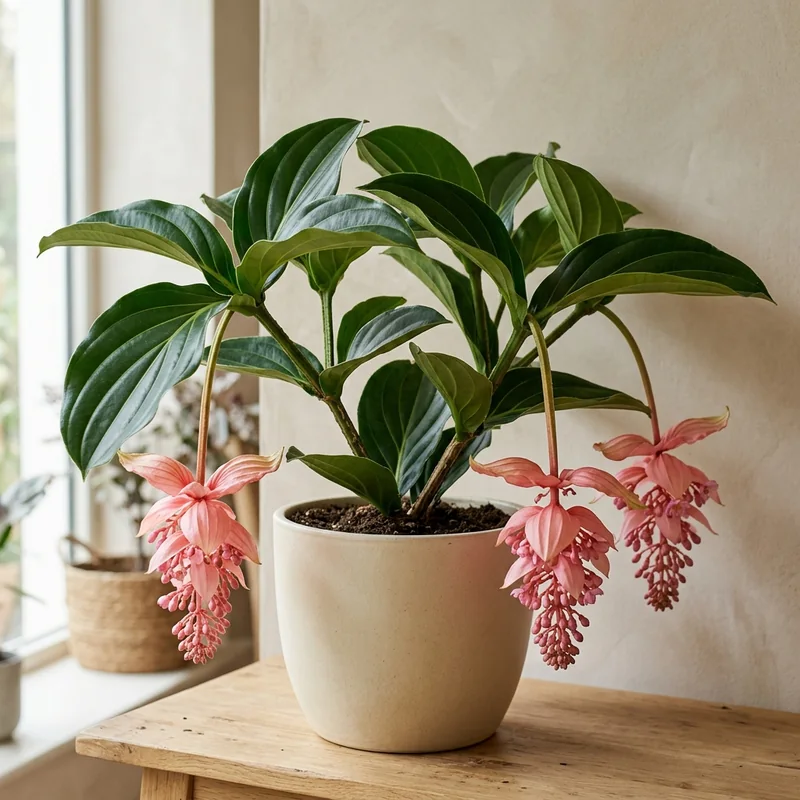
Air plant (Tillandsia ionantha)
Tillandsia ionanthaUpdated
Epiphytic bromeliad needing zero potting compost: absorbs moisture through silvery leaf scales. Soak in rainwater and dry upside-down with steady airflow.
Essential care to help it thrive
Light and placement
Position in bright diffused light with strong air movement; gentle morning sun deepens the pre-bloom red blush, while harsh midday glass sun scorches tips.
Climate and season
Warm, well-ventilated spaces between 15 and 28 °C (minimum 10 °C). Can stand outdoors in summer shade for rain and airflow; avoid sealed glass globes.
Soil and repotting
Requires no potting compost or soil at all: wire or mount securely to untreated cork/driftwood, or rest dry in an open breathable wire or ceramic holder.
Conditions vary with pot, season and location. Always check the mix and your plant's response.
Air plant (Tillandsia ionantha): when to check the soil
Needs no soil: immerse in rainwater or soft water twice weekly from spring to autumn (less in winter), shake gently and drain upside-down to dry fast.
This plant is not watered in a pot
Its watering routine does not fit a soil-check interval: follow the care sheet.
Let Grovia remind you when to check your Air plant (Tillandsia ionantha)Save the plant, get watering reminders and adjust the rhythm as the seasons change. Free on iPhone and Android.
How to identify it
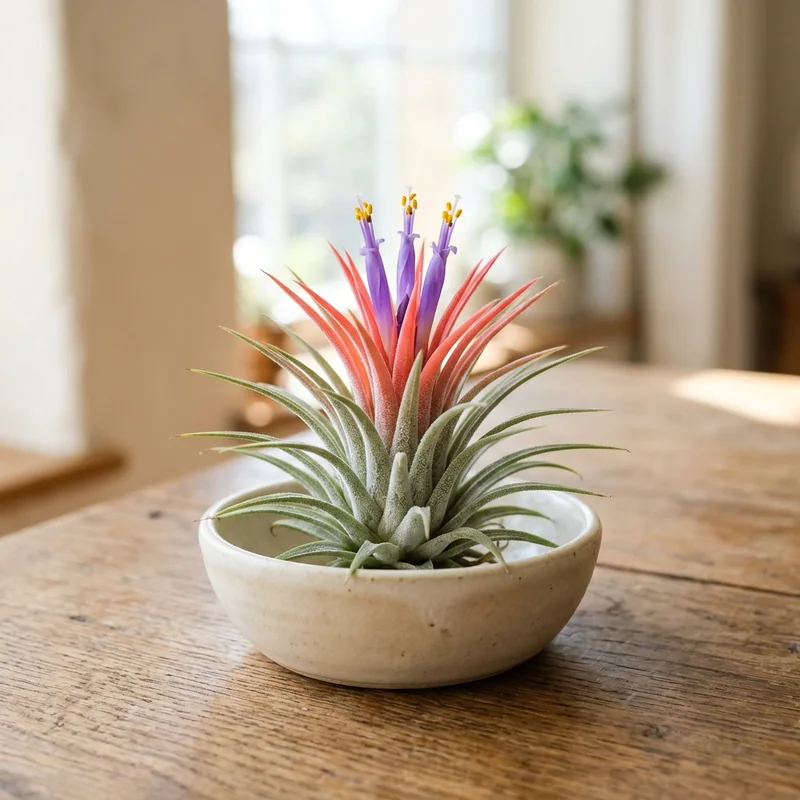
Compact stemless epiphytic bromeliad forming rosettes of stiff silvery-scaly linear leaves that blush vivid coral-red around tubular violet flowers.
Botanical sheet
- Family
- Bromeliaceae
- Origin
- Mexico · Central America
- Size
- 10–25 cm rosette
- Climate
- 15–28 °C · min. 10 °C
What's wrong with your plant?
Pet safety Toxicity unverified
There is no species-specific toxicity verification for this plant on ASPCA. Check with your veterinarian or search the ASPCA directory before keeping it within reach of pets.
Open the toxicity checkerCommon questions
Does Tillandsia ionantha really need zero soil or compost?
Yes: as an epiphyte per RHS, it takes up moisture and nutrients through leaf trichomes and uses roots only to cling onto bark or open mounts.
How do you soak and dry an air plant without rotting it?
Submerge in rainwater for 20–30 minutes once or twice weekly in warm weather, shake out excess droplets and rest upside-down until fully dry in hours.
What happens after the rosette blushes red and blooms?
After flowering, the parent rosette slowly fades while growing offsets at its base; wait until pups reach one-third parent size before separating.