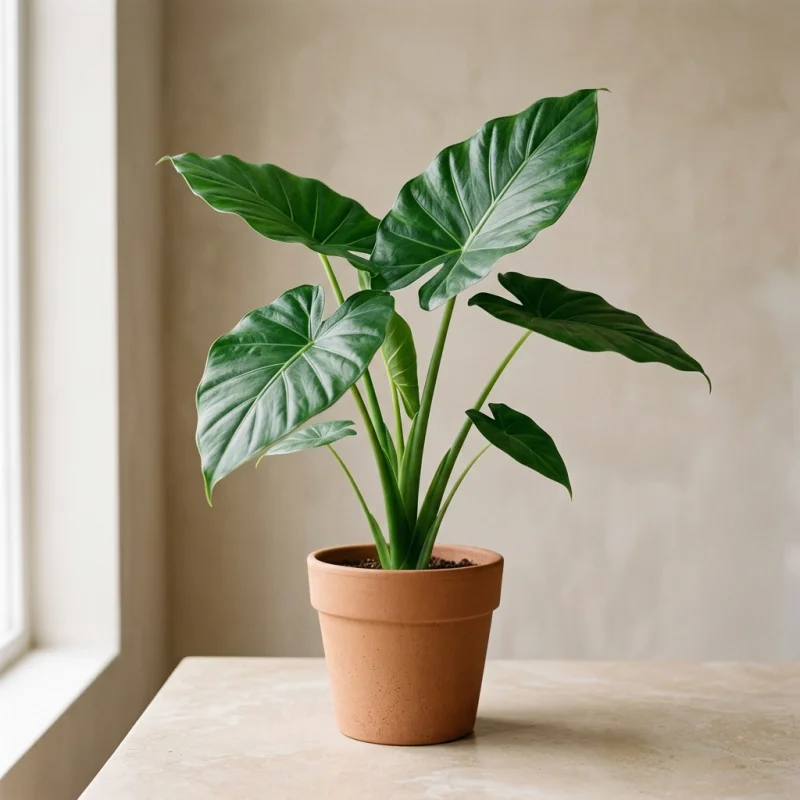
Dwarf banana plant
Musa acuminataUpdated
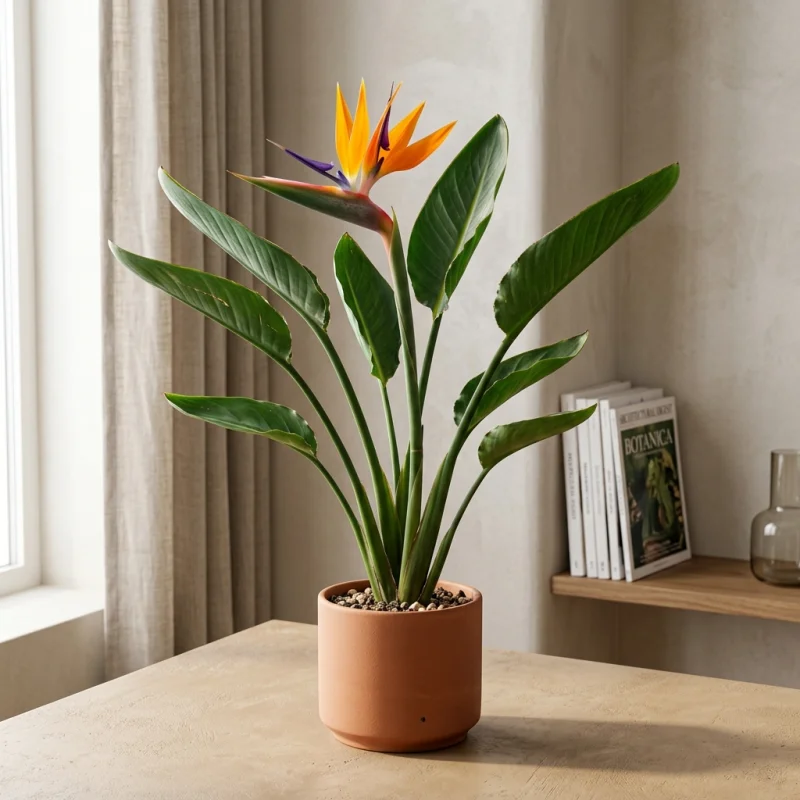
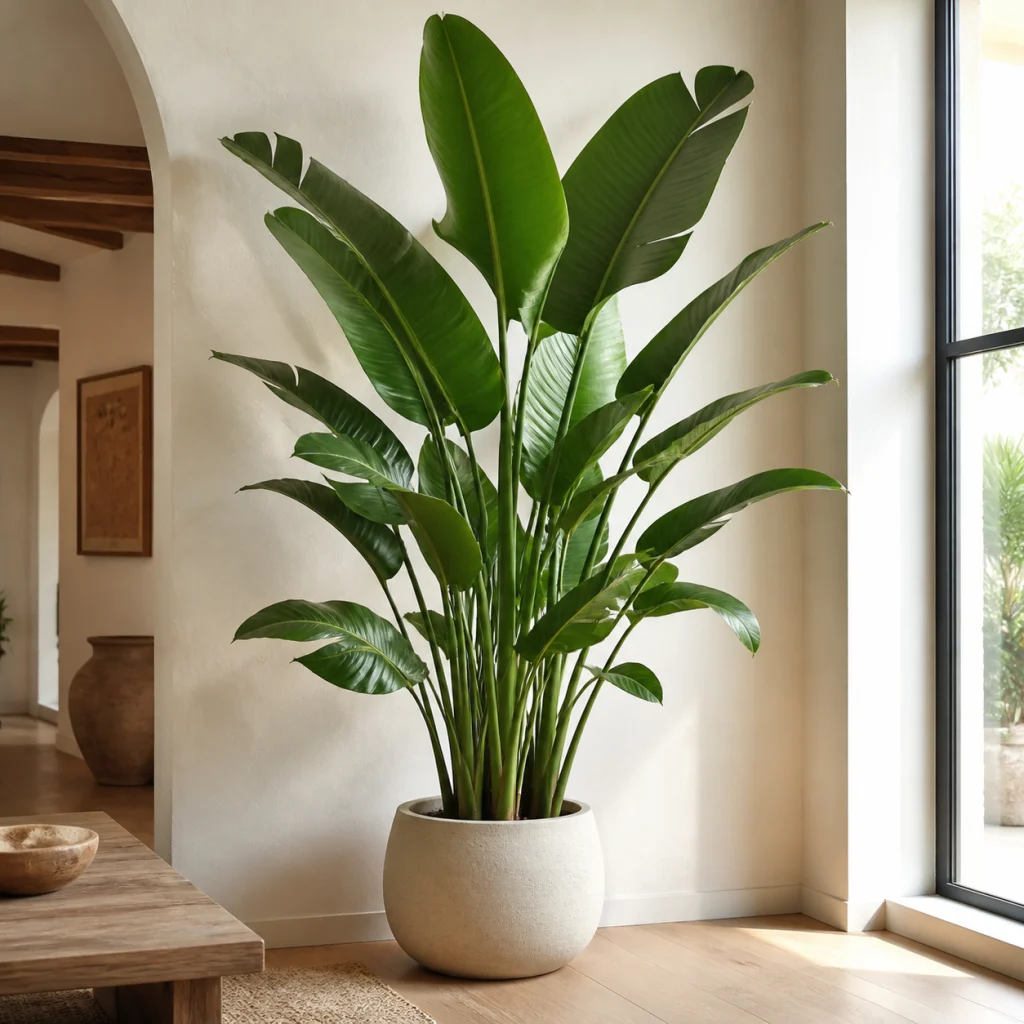
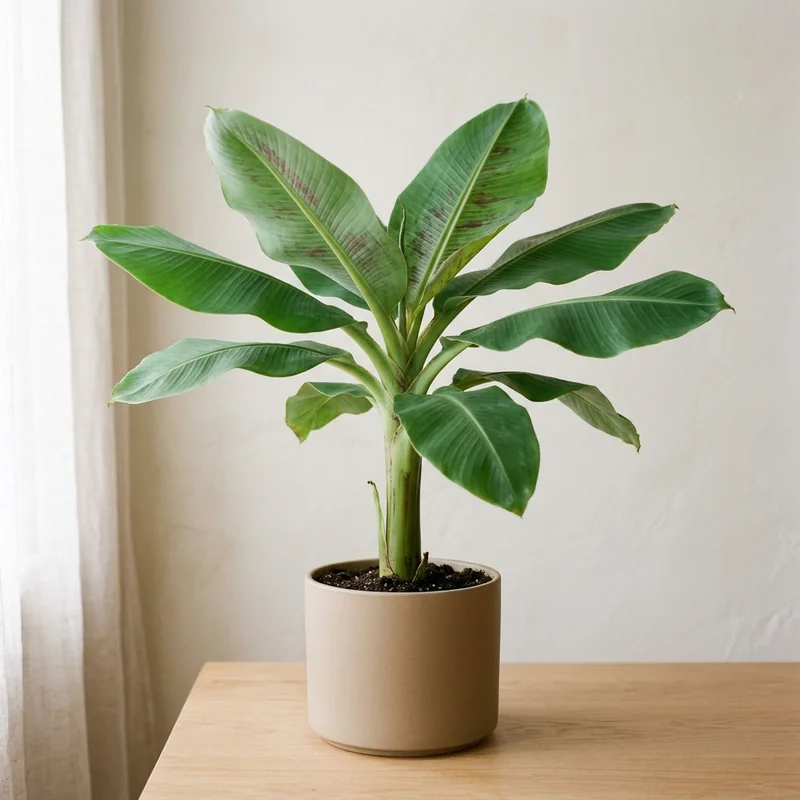
Fast-growing pet-safe tropical prized for lush paddle-shaped leaves arching from a sturdy pseudostem. Thrives in bright sunlight, warm humidity and rich moist soil.
Essential care to help it thrive
Light and placement
Provide abundant bright light and several hours of direct sun daily, shielding only from sudden unacclimated glare. Dim rooms produce weak pale leaves and tall gaps.
Climate and season
Loves warm temperatures (18–28 °C), high ambient humidity and shelter from cold drafts below 10 °C or strong winds that shred broad leaves.
Soil and repotting
Pot in a sturdy draining tub filled with an organically rich peat-free potting mix blended with compost, coco coir and perlite for fast growth.
Conditions vary with pot, season and location. Always check the mix and your plant's response.
Dwarf banana plant: when to check the soil
Check the upper layer every 3–5 days in warm summer growth so rich soil stays evenly moist; ease sharply to every 8–12 days in cool winter light so stems never rot.
Let Grovia remind you when to check your Dwarf banana plantSave the plant, get watering reminders and adjust the rhythm as the seasons change. Free on iPhone and Android.
See table by pot size
| Ø | Summer | Winter |
|---|---|---|
| 10 cm | 4–5 days | 7–10 days |
| 15 cm | 5–6 days | 9–13 days |
| 25 cm | 6–9 days | 12–17 days |
How to identify it
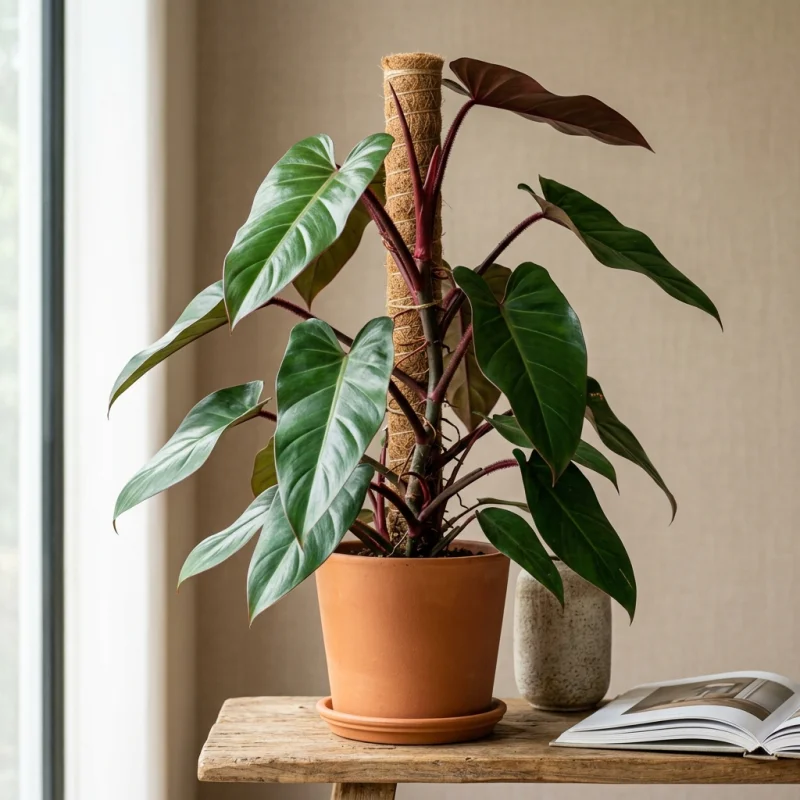
Overlapping leaf sheaths forming an upright trunk topped by broad arching paddle leaves, including popular indoor cultivars 'Dwarf Cavendish' and burgundy 'Zebrina'.
Botanical sheet
- Family
- Musaceae
- Origin
- Southeast & South Asia
- Size
- 1.5–2.5 m dwarf (3.5–6 m)
- Climate
- 18–28 °C · min. 10 °C
What's wrong with your plant?
Pet safety Pet-friendly
ASPCA lists this species as non-toxic to cats and dogs. Even so, prevent heavy chewing or ingestion of potting mix or fertiliser.
See the ASPCA entryCommon questions
Why are clear water drops dripping from my banana plant's leaves?
This harmless process is guttation, where lush roots pump excess moisture out of leaf pores after watering; check soil moisture before watering again.
Should I trim split leaves on Musa acuminata?
Only if ragged and dry—banana leaves tear along lateral veins naturally to let wind pass safely without snapping the plant.
Is the indoor banana plant safe for cats and dogs?
Yes. ASPCA lists Musa acuminata as non-toxic to dogs, cats and horses.